-
06-05 2026
How To Choose Hardness Testing Equipment For Casting And Forging Factories
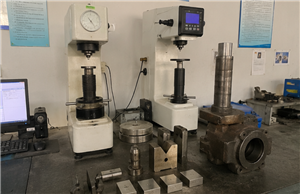
Hardness testing equipment for casting and forging factories should be selected according to real production conditions. Brinell testing is often the first choice for large, coarse, or uneven metal structures because its larger indentation provides more representative results. Rockwell testing can be useful for faster checks on machined or prepared surfaces. The correct setup should include proper test force, ball diameter, machine capacity, sample support, calibration blocks, indenters, digital measurement options, and traceable reporting tools. For large or irregular parts, fixture and support design can be just as important as the machine itself. If your factory produces castings, forgings, heavy metal parts, or heat-treated components, share your sample size, material, hardness range, and report requirements before ordering. A complete recommendation can help prevent wrong model selection and improve long-term QC stability.
-
05-24 2026
Micro Vickers Hardness Testers: Which One Fits Thin Layers & Small Parts
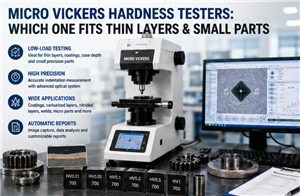
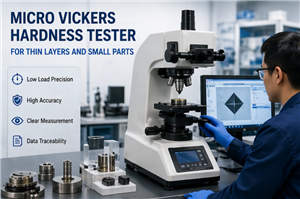
Micro Vickers hardness testers are ideal for thin layers, coatings, small parts, case depth analysis, weld sections, and precision hardness measurement. The right model should be selected according to test force range, layer thickness, sample size, optical clarity, stage control, automation level, and reporting requirements. Buyers should not choose only by price. A low-cost manual model may be enough for occasional testing, while an automatic Micro Vickers tester with motorized stage and software is better for high-volume labs, hardness profiles, traceable reports, and customer documentation. If your factory is testing coatings, carburized layers, nitrided layers, induction-hardened zones, or small precision components, provide your sample details before quotation. A complete recommendation can help you avoid wrong model selection and improve long-term QC reliability.
-
05-23 2026
Reduce Measurement Errors: Tips For Accurate Brinell Hardness Testing
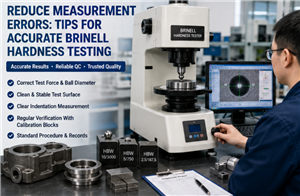
Reducing measurement errors in Brinell hardness testing requires more than selecting a high-force machine. Buyers and QC teams should control the complete process, including test force, ball diameter, indenter condition, sample surface, support stability, indentation spacing, diameter measurement, calibration blocks, and operator procedure. For castings, forgings, large metal parts, aluminum alloys, copper alloys, and steel components, Brinell testing can provide reliable hardness data when the process is properly controlled. Digital diameter measurement and traceable reporting can further improve repeatability and customer confidence. If your factory wants more stable Brinell hardness results, start by reviewing the full workflow instead of only checking the final number. A complete testing solution can reduce rework, avoid quality disputes, and support stronger industrial QC documentation.
-
05-21 2026
How To Choose The Right Vickers Hardness Tester For Your Factory
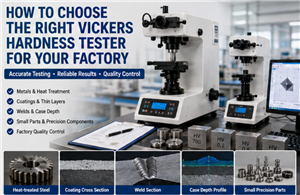
The right Vickers hardness tester should match your material, sample size, test force range, surface preparation condition, daily testing volume, and report requirements. A basic model may be enough for occasional inspection, while an automatic vision system is more suitable for high-volume factory QC, thin layers, coatings, weld sections, case depth testing, and traceable reports. Buyers should avoid choosing only by machine price. Instead, compare the complete testing workflow, including sample preparation, optical measurement, test force, stage control, software, calibration blocks, and after-sales support. If your factory needs reliable hardness inspection for production quality control, share your sample details and testing purpose before requesting a quote. This will help suppliers recommend a more accurate and cost-effective Vickers hardness testing solution.
-
05-11 2026
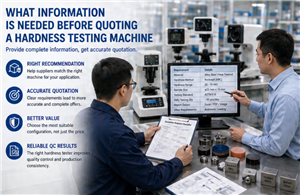
What Information Is Needed Before Quoting A Hardness Testing Machine
A good hardness testing machine quotation should be based on the buyer’s real material, sample condition, testing method, workflow, and documentation needs. Without this information, the quotation may be too vague or the recommended machine may not fit the application. Before requesting a quote, buyers should prepare details about material type, hardness range, sample size, test standard, load range, automation level, accessories, and report requirements. If sample preparation is needed, that should also be included in the discussion. With clear technical information, suppliers can recommend a more suitable machine configuration, reduce unnecessary cost, and help the buyer build a more reliable quality control process.
-
05-07 2026
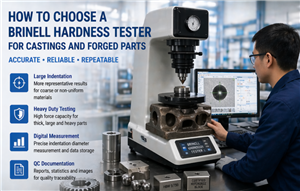
How To Choose A Brinell Hardness Tester For Castings And Forged Parts
Brinell hardness testing is a strong choice for castings, forged parts, large metal blanks, and materials with coarse or uneven structures. The larger indentation can provide a more representative hardness value than smaller indentation methods when testing heavy industrial parts. To choose the right Brinell hardness tester, buyers should compare test force range, ball indenter size, frame rigidity, sample capacity, throat depth, measurement method, digital reporting functions, and accessory support. For large or immovable parts, portable Brinell testing may also be considered. The best tester is not only the one with the highest force. It is the machine that matches your material, sample size, testing standard, quality control workflow, and documentation requirements. Providing detailed sample information before quotation will help ensure a more accurate equipment recommendation.
-
05-06 2026
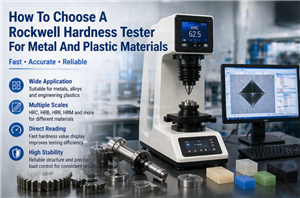
How To Choose A Rockwell Hardness Tester For Metal And Plastic Materials
Choosing a Rockwell hardness tester for metal and plastic materials requires more than comparing price. Buyers should first confirm the material type, required Rockwell scale, indenter, test force, sample thickness, and testing purpose. Hardened metals, softer metals, engineering plastics, and thin samples may all require different configurations. For routine metal quality control, a digital Rockwell tester is often a practical choice. For higher-volume production inspection, an automatic Rockwell tester can improve repeatability and efficiency. For laboratories testing both metals and plastics, scale flexibility and accessory support become especially important. The best Rockwell hardness tester is the one that matches your real samples, testing standard, daily workload, and documentation needs. Before purchasing, provide detailed material and sample information so the tester configuration can be recommended correctly.
-
05-05 2026
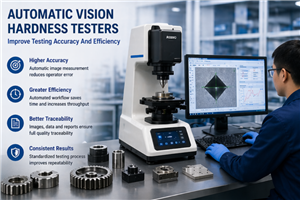
How Automatic Vision Hardness Testers Improve Testing Accuracy And Efficiency
Automatic vision hardness testers help quality control laboratories improve accuracy, repeatability, efficiency, and traceability. By using image recognition, software measurement, digital records, and report export, they reduce manual reading differences and make hardness testing easier to manage. For thin layers, coatings, case depth analysis, welded sections, small precision parts, and high-volume batch inspection, automatic vision measurement can provide strong long-term value. It is especially useful when test results must be consistent, reviewable, and suitable for customer or internal quality documentation. The best system should match your hardness method, sample type, load range, measurement accuracy, daily testing volume, and reporting needs. Before purchasing, prepare your sample details and quality control requirements so the machine configuration can be selected correctly.
-
05-03 2026
How To Select A Micro Vickers Hardness Tester For Thin Layers And Small Parts
Selecting a Micro Vickers hardness tester for thin layers and small parts requires more than comparing basic specifications. Buyers should evaluate the material, layer thickness, low-load range, optical quality, measurement software, automation level, sample preparation process, and reporting requirements. For occasional laboratory testing, a digital Micro Vickers tester may be sufficient. For case depth analysis, coatings, batch inspection, or high-repeatability QC, an automatic vision Micro Vickers system can provide better consistency, faster operation, and stronger data traceability. The best tester is the one that fits your sample condition, testing standard, daily workload, and quality documentation requirements. Before requesting a quote, prepare your material details and testing purpose so the equipment configuration can be matched accurately.
-
05-01 2026
How To Choose A Vickers Hardness Tester For Industrial Quality Control
Choosing a Vickers hardness tester for industrial quality control should be based on the material, test load, sample condition, measurement accuracy, automation level, and reporting needs. A suitable tester helps improve inspection consistency, reduce operator error, and create reliable quality records for production and customer approval. For factories, laboratories, and testing centers, the best choice is not always the most expensive model. The right choice is the machine that matches your testing purpose, sample preparation process, daily workload, and documentation requirements. If you are not sure which configuration is suitable, providing sample details and testing requirements before quotation is the most efficient way to get a practical recommendation.