

Melt Flow Index Tester MFR MVR System for Industrial Measurement
Measures melt flow rate and melt volume rate for plastic material testing. Supports polymer quality control material selection and production inspection. Stable temperature control helps improve repeatable resin testing results.
Melt Flow Index Tester MFR MVR System Applications and Related Testing Solutions
Melt Flow Index Tester MFR MVR System supports industrial testing and quality inspection applications that require stable operation, clear measurement results, and dependable process control.
Related Products: Electromagnetic Vibration Test System | Automatic Bursting Strength Tester | Ink Abrasion Tester
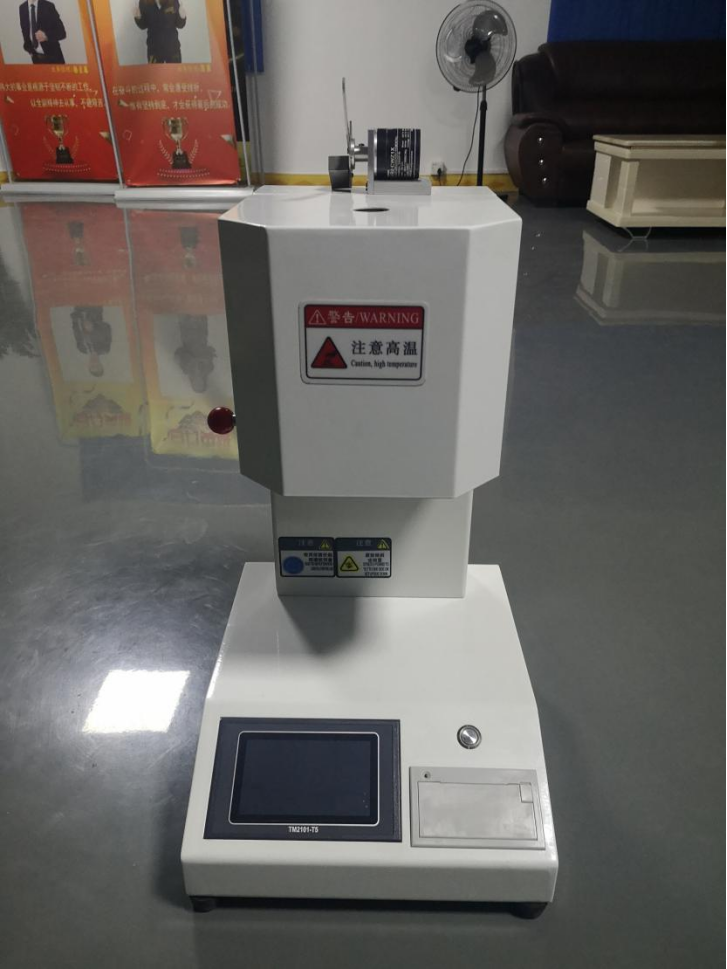
The Melting Flow Index Tester represents a sophisticated instrument for measuring the melt flow rate (MFR) and melt volume rate (MVR) of thermoplastic polymers. This integrated system combines both mass and volume measurement methodologies in a single platform, providing comprehensive characterization of material flow properties under controlled temperature and load conditions. The equipment operates within a temperature range from ambient to 300℃, achieving exceptional temperature control precision of ±0.2℃ with minimal overshoot during heating cycles.
Measurement Principles and Capabilities
The instrument flow characteristics by measuring the amount of material extruded through a standardized die aperture over a specific time period. The MFR method calculates the mass (in grams) of polymer extruded per 10 minutes, while the MVR approach measures the volumetric flow rate (in cm³ per 10 minutes). This dual-capability system accommodates diverse testing requirements across various polymer types, from high-temperature engineering plastics like polycarbonate and polyamide to standard materials including polyethylene and polypropylene.
Key Technical Specifications
The system features a digital display interface with 0.1℃ temperature resolution and ±0.5℃ display accuracy. The timing system offers 1-second precision, while displacement measurement achieves 0.1mm accuracy. The load system supports multiple configurations from 1.2kg to 21.6kg through interchangeable weight combinations. The barrel maintains an exact internal diameter of 9.±0.025mm with a 160mm length, while the tungsten carbide die provides two aperture options: 2.095mm±0.005mm and 1.180mm±0.010mm, both with 8.000mm±0.025mm length.
System Architecture and Components
The instrument comprises four integrated subsystems: the main extrusion unit, temperature control system, temperature measurement system, and automatic cutting mechanism. The main unit includes a heated barrel, precision piston, standardized die, and weight loading system. The temperature control system ensures rapid heating and exceptional stability, recovering equilibrium within seconds after sample introduction. The automatic cutting system enables both timed and manual sample collection with programmable intervals.
Performance Features
The system demonstrates outstanding technical capabilities including rapid temperature after material loading, maintaining ±0.5℃ fluctuation during operation. The piston, manufactured from corrosion-resistant stainless steel, features precisely machined dimensions with a 193mm total length and 9mm diameter, maintaining straightness within 0.02/100 ratio. The innovative sliding plate mechanism facilitates easy die replacement while preventing interference during automated cutting operations.
Application Versatility
This tester serves diverse industrial and research applications, suitable for quality control in plastic manufacturing, compound development in R&D laboratories, and material verification in certification agencies. It handles materials across a wide melt flow range, from high-viscosity engineering polymers to free-flowing commodity plastics. The system's compliance with international standards including ASTM D1238, ISO 1133, and JIS K7210 ensures global acceptance of test results.
Operational Advantages
The integrated design provides significant user benefits including reduced testing time through optimized thermal recovery measurement accuracy via precision temperature control, and operational flexibility through both automated and manual testing modes. The system's robust construction with hardened alloy steel components ensures long-term reliability, while the comprehensive accessory kit including tools, cleaning materials, and calibration weights enables immediate operation upon installation.
Quality Assurance and Compliance
Manufactured to exacting standards, the instrument maintains measurement traceability through calibrated temperature sensors and precision-machined components. The weight loading system achieves ±0.5% accuracy, while the temperature measurement system provides reliable data for material characterization. The system operates effectively within environmental conditions of 10-40℃ temperature and 30-80% relative humidity, requiring stable power supply (AC220V±10%, 50Hz) in vibration-free settings.
SEO Keywords
melting flow index tester, MFR MVR integrated system, polymer melt flow rate, thermoplastic testing equipment, melt flow index instrument, plastic quality control tester, polymer rheology testing, ISO 1133 compliant tester, ASTM D1238 melt index, plastic flow characteristics analyzer