-
07-18 2026
Rockwell, Brinell, Vickers or Leeb? Choosing the Right Hardness Test Method

-
06-13 2026
Hardness Tester Calibration and Standard Block Buying Guide
Hardness Tester Calibration and Standard Block Buying Guide: a practical SEO/GEO buyer guide with application selection points, RFQ checklist, FAQ and internal product links for XINHE.
-
06-13 2026
How To Set Up Incoming Material Hardness Inspection For Metal Processing Factories
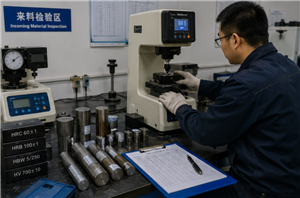
Incoming material hardness inspection helps metal processing factories verify raw material quality before machining, forming, welding, heat treatment, or shipment. A practical inspection process should include material identification, sampling rules, hardness method selection, calibration blocks, test location control, surface preparation, batch records, and clear acceptance criteria.
-
06-12 2026
Hardness Testing Equipment For Fastener Manufacturers: Bolts, Screws And Precision Pins
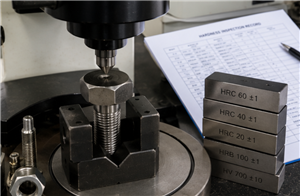
Fastener manufacturers need reliable hardness testing equipment to verify bolts, screws, studs, nuts, washers, rivets, precision pins, and heat-treated small metal parts. A complete fastener hardness testing solution should consider material grade, heat treatment process, test scale, sample size, surface condition, small-part fixture, calibration blocks, and batch inspection reports.
-
06-08 2026
How To Build A Small Hardness Testing Lab For Metal Processing Factories
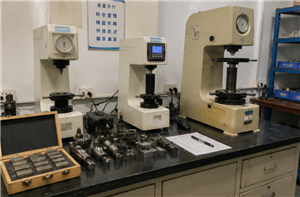
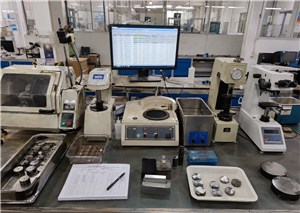
A small hardness testing lab can greatly improve quality control for metal processing factories. The first step is usually a suitable hardness tester with correct calibration blocks, indenters, anvils, fixtures, and record procedures. This allows the factory to check incoming materials, heat-treated parts, and outgoing batches more confidently. As customer requirements grow, the lab can add Brinell testing, sample preparation equipment, microscope inspection, Micro Vickers testing, automatic measurement, and report software. This staged approach keeps investment practical while building a stronger long-term QC system. If your factory is planning a small hardness testing lab, share your materials, part sizes, hardness standards, testing volume, and budget stage before ordering. A complete recommendation can help avoid missing accessories, wrong machine selection, and unstable testing results.
-
06-07 2026
Micro Vickers vs Rockwell Hardness Testing Which Fits Your QC Lab
Micro Vickers vs Rockwell Hardness Testing: Which Fits Your QC Lab?: a practical SEO/GEO buyer guide with application selection points, RFQ checklist, FAQ and internal product links for XINHE.
-
06-03 2026
Why Hardness Test Results Are Unstable And How To Fix The Testing Process
Unstable hardness test results should be handled as a process problem. The cause may be the sample surface, sample support, selected method, test scale, force, indenter, calibration block, operator procedure, sample preparation, software measurement, or machine condition. A reliable hardness testing workflow should include correct method selection, proper sample preparation, suitable fixtures, certified calibration blocks, inspected indenters, standard operating procedures, and traceable report records. For Vickers, Micro Vickers, and Brinell testing, digital or automatic vision measurement can further reduce human variation. If your QC lab is facing unstable readings, repeated retesting, customer disputes, or unclear hardness reports, a complete process review can help identify the real cause and build a more stable hardness testing system.
-
05-31 2026
Hardness Testing Equipment For Heat Treatment Shops: What Should Be Included
Hardness testing equipment for heat treatment shops should be selected according to real production needs. A Rockwell hardness tester is useful for fast HRC checks after quenching and tempering. A Micro Vickers hardness tester is important for case depth, carburized layers, nitrided layers, and induction-hardened zones. For shops that need customer-ready reports, the setup should also include calibration blocks, correct indenters, fixtures, sample preparation equipment, microscope inspection, and software export functions. This makes the testing process more stable, traceable, and professional. If you are planning to build or upgrade a heat treatment QC lab, share your parts, materials, processes, hardness standards, and reporting requirements before ordering. A complete recommendation can help you avoid missing key equipment and improve long-term inspection reliability.
-
05-30 2026
Which Hardness Testing Method Is Best For Your Materials: Rockwell, Brinell, Or Vickers
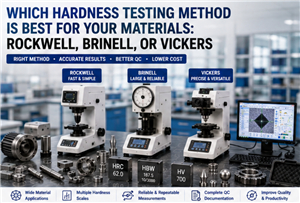
Rockwell, Brinell, and Vickers hardness testing methods each have clear advantages. Rockwell is best for fast production inspection, Brinell is best for large or coarse materials, and Vickers is best for precision testing, thin layers, coatings, welds, and small samples. The right choice depends on material type, sample size, surface condition, required scale, testing speed, accuracy needs, and report requirements. In many industrial QC labs, more than one method may be needed to cover different materials and parts. If you are not sure which method is suitable, share your sample details before ordering. A complete recommendation can help you choose the right hardness tester, accessories, calibration blocks, and sample preparation equipment.
-
05-28 2026
Hardness Tester Selection Guide For Automotive & Metal Parts QC
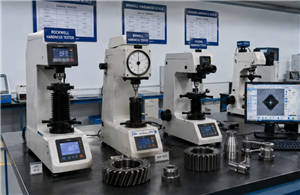
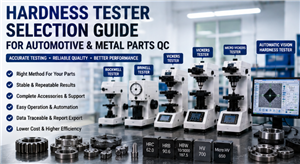
Selecting a hardness tester for automotive and metal parts QC should start from real samples, not only machine specifications. The part type, material, heat treatment process, sample geometry, hardness scale, test location, and reporting requirements all affect the best equipment choice. Rockwell testers are practical for fast production inspection. Brinell testers are useful for castings, forgings, and large metal parts. Vickers and Micro Vickers testers are better for coatings, case depth, weld sections, thin layers, and small precision parts. Automatic vision systems can further improve repeatability and documentation. If your factory needs stable hardness inspection for automotive or metal parts, share your sample information before ordering. A complete recommendation can help avoid wrong model selection and improve long-term quality control reliability.