
How To Build A Small Hardness Testing Lab For Metal Processing Factories
How To Build A Small Hardness Testing Lab For Metal Processing Factories
A small hardness testing lab helps metal processing factories check incoming materials, verify heat treatment results, inspect machined parts, control batch quality, and prepare basic QC reports before shipment. The lab does not need to start with a large investment, but it should include the right hardness tester, calibration blocks, indenters, fixtures, sample preparation tools, records, and a practical testing workflow.
Routine QC
Check raw materials, machined parts, heat-treated parts, and outgoing batches.
Basic Equipment
Start with a Rockwell or universal hardness tester, calibration blocks, indenters, and anvils.
Expandable Setup
Add Brinell, Vickers, Micro Vickers, or sample preparation equipment as testing needs grow.
Simple Reports
Record sample ID, hardness value, method, calibration result, operator, and inspection date.
Why Metal Processing Factories Need A Small Hardness Testing Lab
Metal processing factories often deal with raw materials, machined components, heat-treated parts, castings, forgings, shafts, gears, fasteners, molds, tools, and welded parts. Hardness testing helps verify whether the material and process meet the required mechanical performance before the parts move to the next production stage or leave the factory.
Without an in-house hardness testing lab, factories may depend completely on external inspection or supplier documents. This can slow down production decisions and increase the risk of discovering hardness problems too late. A small internal lab allows the QC team to perform quick checks on incoming materials, production samples, heat-treated batches, and pre-shipment parts.
The goal is not to build a large laboratory from the beginning. A practical small lab should start with the most common hardness testing needs, then gradually add more equipment when the factory begins testing more materials, more methods, or more customer requirements.
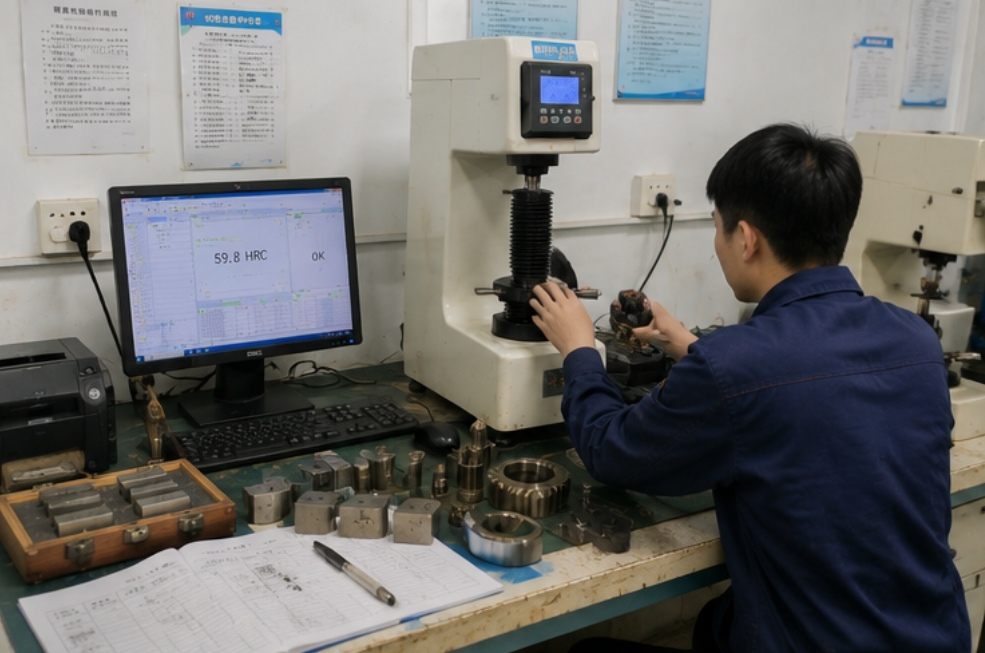
1. Start With The Parts And Materials You Test Most Often
Before buying equipment, the factory should list its main products and materials. A small machining factory may mainly test steel shafts, plates, fasteners, and heat-treated parts. A factory handling castings or forgings may need Brinell testing. A factory making precision surface-treated parts may later need Micro Vickers testing.
The first equipment choice should match the factory’s daily inspection needs. Do not start with the most expensive configuration if the current requirement is only routine HRC or HRB testing. At the same time, avoid buying a machine that cannot be expanded or cannot support future customer requirements.
| Factory Situation | Common Testing Need | Recommended Starting Point |
|---|---|---|
| General metal machining | Incoming material and finished part hardness check | Digital Rockwell hardness tester |
| Heat-treated steel parts | HRC surface hardness and batch consistency | Rockwell tester with HRC calibration blocks |
| Castings and forgings | Representative hardness of large or coarse structures | Brinell hardness tester or digital Brinell system |
| Coatings and thin layers | Microhardness and layer hardness profile | Micro Vickers tester with sample preparation equipment |
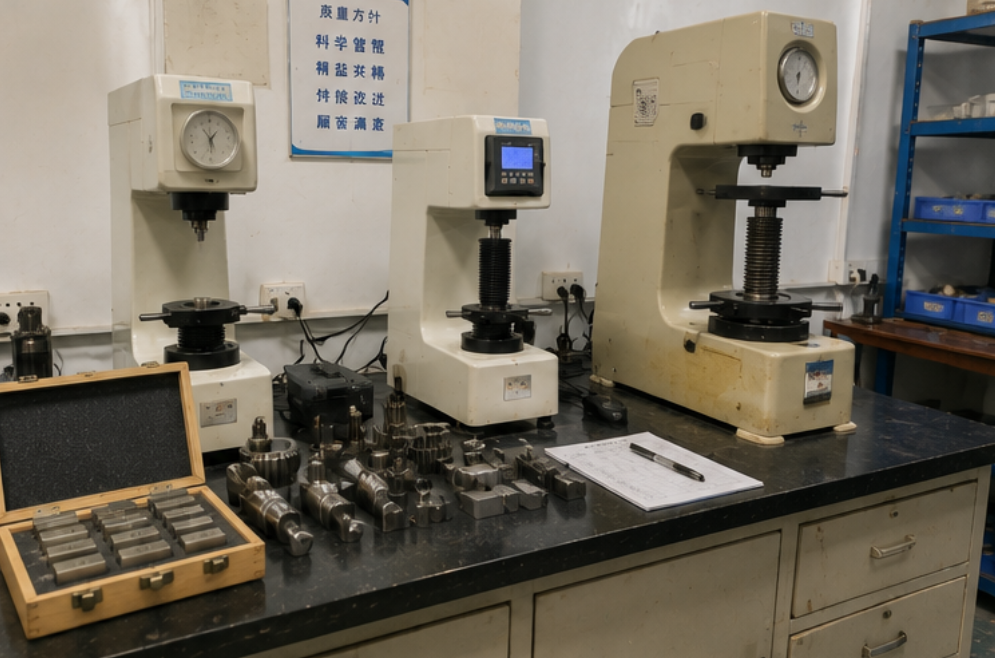
2. Choose The First Hardness Tester Carefully
For many small metal processing factories, a Rockwell hardness tester is the most practical first machine. It is fast, easy to operate, and commonly used for steel, heat-treated parts, tools, shafts, gears, and general metal components. A digital model can make reading and recording easier than a purely manual model.
If the factory frequently handles castings, forgings, or large metal parts, a Brinell hardness tester may be more suitable. If the factory needs coating hardness, case depth, weld section testing, or precision small-area measurement, Micro Vickers testing should be considered as the next stage.
When choosing the first tester, confirm:
Main material types and hardness range.
Required hardness scale, such as HRC, HRB, HBW, HV, or Micro HV.
Maximum sample size, shape, thickness, and weight.
Whether the factory needs fast production checks or detailed lab analysis.
Whether customer reports require digital values, images, or exported files.
Whether the tester can be supported with calibration blocks, indenters, and fixtures.
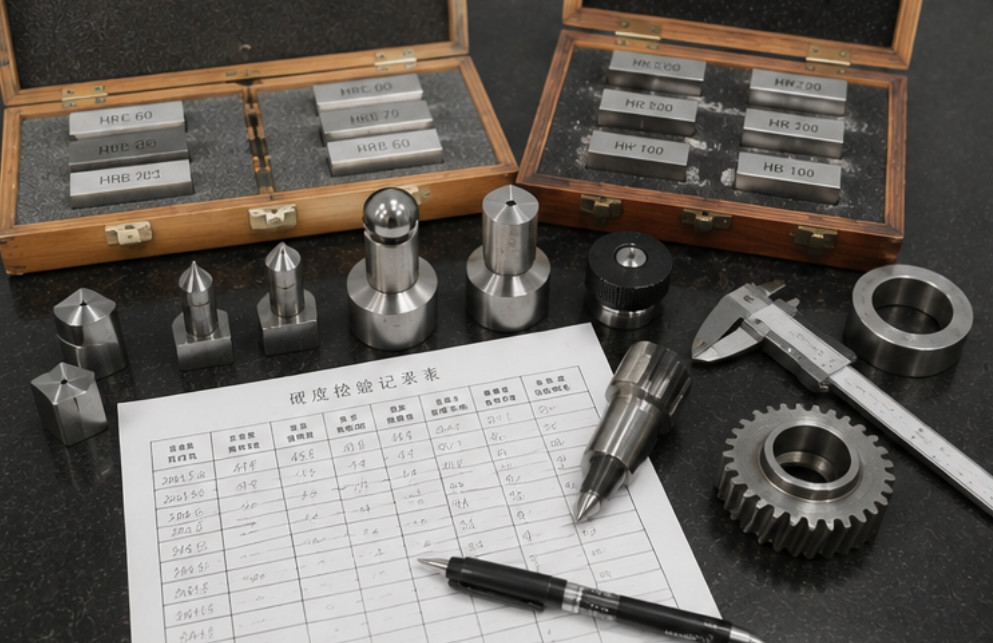
3. Prepare Calibration Blocks, Indenters And Fixtures
A hardness tester alone is not enough. A small lab must also prepare calibration blocks, indenters, anvils, fixtures, and simple records. Calibration blocks are used to verify the tester before batch inspection. Indenters must match the selected method and scale. Fixtures help support real metal parts during testing.
Many unstable readings come from poor support rather than the machine itself. Round shafts may need V anvils. Small parts may need holders. Flat samples need clean support surfaces. If the lab tests different part shapes, accessories should be planned together with the tester.
| Accessory | Purpose | Typical Items |
|---|---|---|
| Calibration blocks | Verify tester accuracy before inspection | HRC, HRB, HBW, HV, Micro HV blocks |
| Indenters | Create correct indentation geometry | Rockwell diamond cone, ball indenter, Vickers diamond indenter |
| Anvils and supports | Hold samples stable during testing | Flat anvil, V anvil, small-part fixture, ring support |
| Inspection records | Support traceability and customer review | Daily check sheet, batch record, calibration log, report template |
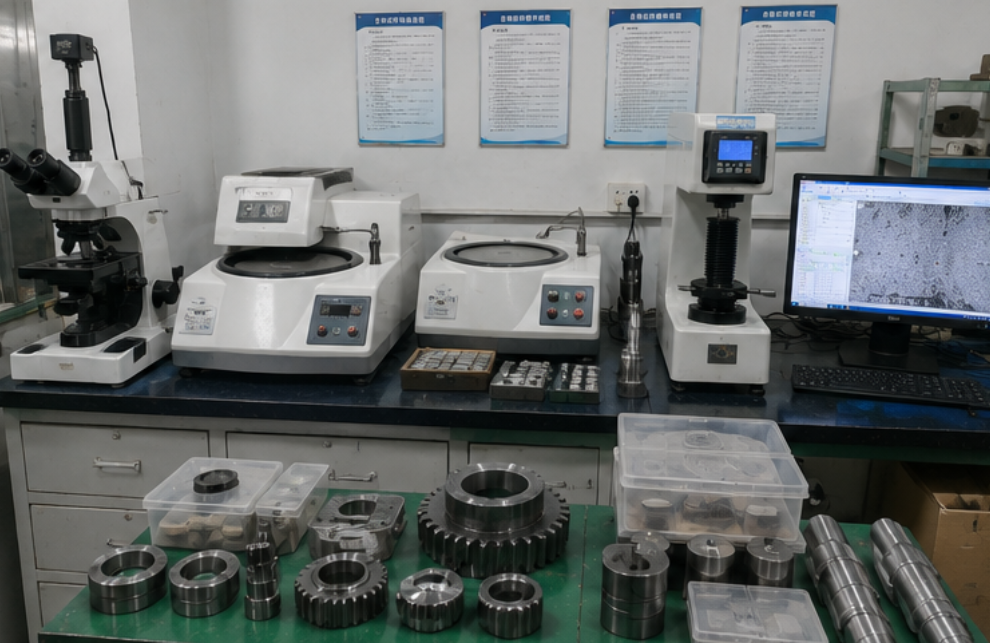
4. Decide Whether Sample Preparation Equipment Is Needed
A basic Rockwell testing lab may only need clean sample surfaces and stable support. However, if the factory needs Vickers, Micro Vickers, case depth, coating hardness, weld section analysis, or cross-section inspection, sample preparation equipment becomes necessary.
Sample preparation may include cutting, mounting, grinding, polishing, and microscope inspection. For small factories, this equipment can be added gradually. The first stage may only include simple surface grinding tools. The next stage may include a metallographic cutting machine and grinding-polishing machine. A more advanced lab may add mounting, microscope, and Micro Vickers testing.
| Testing Need | Sample Preparation Required? | Suggested Equipment |
|---|---|---|
| Routine Rockwell HRC check | Usually basic surface cleaning or grinding | Cleaning tools, surface grinder if needed, stable anvil |
| Brinell testing for castings | Test area may need grinding or machining | Surface preparation tools and digital diameter measurement |
| Micro Vickers case depth | Yes, cross-section preparation is required | Cutting, mounting, grinding, polishing, microscope |
| Coating or thin layer testing | Yes, edge retention and polishing are critical | Precision cutting, mounting, polishing, Micro Vickers tester |
5. Plan The Lab Space And Workflow
A small hardness testing lab does not need a large room, but it should be clean, stable, and organized. The hardness tester should be placed on a solid bench away from strong vibration. Calibration blocks and indenters should be stored properly. Samples should be labeled clearly to avoid batch confusion.
If the lab includes cutting and polishing equipment, wet preparation should be separated from precision testing when possible. Dust, water, abrasive particles, and vibration should not affect the hardness tester or microscope. A simple workflow can start from sample receiving, surface preparation, tester verification, hardness testing, result recording, and report release.
Small lab layout should consider:
Stable bench for hardness tester.
Separate storage for calibration blocks and indenters.
Clear sample labeling and batch management.
Enough space for the largest sample size.
Clean area for testing and report preparation.
Wet area for cutting, grinding, and polishing if required.
Power supply, lighting, ventilation, and basic safety protection.
Recommended Equipment List By Budget Stage
Small factories can build a hardness testing lab in stages. This approach avoids unnecessary upfront investment while keeping room for future testing needs. The key is to start with the most urgent inspection tasks and make sure the first equipment is correctly configured.
| Stage | Recommended Equipment | Suitable For |
|---|---|---|
| Stage 1: Basic QC | Digital Rockwell tester, HRC/HRB blocks, indenters, flat/V anvils, record sheets | Routine inspection of steel parts and heat-treated components |
| Stage 2: Wider Materials | Brinell tester or universal tester, HBW blocks, digital measurement option | Castings, forgings, softer metals, large parts |
| Stage 3: Cross-Section Testing | Cutting machine, mounting system, grinding-polishing machine, microscope | Case depth, weld sections, coatings, and sample preparation |
| Stage 4: Advanced Lab | Micro Vickers tester, XY stage, automatic vision software, report export system | Microhardness, hardness profiles, customer reports, advanced QC |
Key Questions Before Requesting A Small Lab Proposal
To avoid buying the wrong equipment, buyers should prepare clear information before requesting a quotation. This helps the supplier recommend a small lab setup that matches actual factory inspection work.
What metal parts do you need to test most often?
What materials and hardness ranges are involved?
Which hardness scales are required: HRC, HRB, HBW, HV, Micro HV, or others?
Are the parts flat, round, thin, large, heavy, or irregular?
Do you need incoming material inspection, in-process inspection, or pre-shipment inspection?
Do customers require formal reports or only internal QC records?
How many samples are tested per day or per week?
Do you need sample preparation equipment now or later?
What lab space, power supply, and bench area are available?
Do you plan to expand to Micro Vickers, Brinell, or full metallographic testing in the future?
Conclusion: Start Small, But Build The Lab With A Clear Upgrade Path
A small hardness testing lab can greatly improve quality control for metal processing factories. The first step is usually a suitable hardness tester with correct calibration blocks, indenters, anvils, fixtures, and record procedures. This allows the factory to check incoming materials, heat-treated parts, and outgoing batches more confidently.
As customer requirements grow, the lab can add Brinell testing, sample preparation equipment, microscope inspection, Micro Vickers testing, automatic measurement, and report software. This staged approach keeps investment practical while building a stronger long-term QC system.
If your factory is planning a small hardness testing lab, share your materials, part sizes, hardness standards, testing volume, and budget stage before ordering. A complete recommendation can help avoid missing accessories, wrong machine selection, and unstable testing results.
FAQ
What is the first hardness tester a small metal factory should buy?
For many factories, a digital Rockwell hardness tester is a practical first choice because it is fast and suitable for routine metal and heat-treated part inspection.
Does a small lab need sample preparation equipment?
Not always. Basic Rockwell testing may only need surface cleaning. But Vickers, Micro Vickers, case depth, coatings, and cross-section testing usually require sample preparation equipment.
Why are calibration blocks necessary?
Calibration blocks help verify tester accuracy before inspection and support traceable QC records.
Can a small lab be expanded later?
Yes. A small lab can start with Rockwell testing and later add Brinell, Vickers, Micro Vickers, sample preparation, microscope, and software report functions.
Need Help Building A Small Hardness Testing Lab?
Share your metal parts, materials, hardness scales, sample size, daily testing volume, budget stage, and future expansion needs. We can help recommend suitable hardness testers, calibration blocks, fixtures, sample preparation equipment, and small QC lab solutions.