
Micro Vickers vs Rockwell Hardness Testing Which Fits Your QC Lab
Micro Vickers vs Rockwell Hardness Testing: Which Fits Your QC Lab?
Quick answer: Micro Vickers hardness testing is better for small samples, thin layers, surface treatment checks and precise metallographic work, while Rockwell hardness testing is better for faster routine checks on larger metal parts. The right choice depends on sample size, test force, indentation visibility, report format and daily throughput.
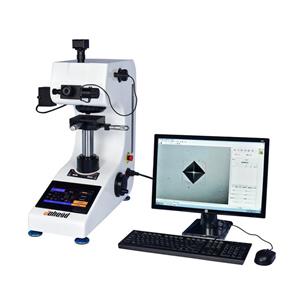
When Micro Vickers testing is the better choice
Micro Vickers testing is often selected when the sample is small, the test area is narrow, or the lab needs to evaluate coating, heat treatment, weld zone or case depth. The method gives a visible indentation that can be measured accurately, which helps engineers compare hardness changes across small areas.
Relevant product categories include Vickers Hardness Testers and Microhardness Testers.
When Rockwell testing is more practical
Rockwell hardness testing is faster and simpler for many routine production checks. It is usually suitable for larger samples, batch inspection and incoming material verification where the QC team needs repeatable readings and short test cycles rather than micro-area mapping.
Buyers comparing both methods can also review Rockwell Hardness Testers for routine production inspection.
RFQ checklist for overseas buyers
Sample material, size, thickness and surface condition.
Required test method, standard and target hardness range.
Expected daily sample quantity and report export requirement.
Whether automatic turret, camera measurement or software analysis is needed.
Calibration blocks, indenter type and after-sales support requirement.
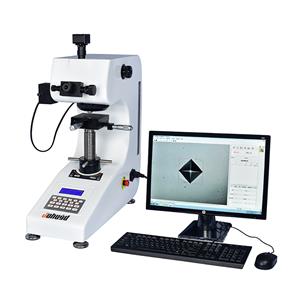
How to avoid wrong equipment selection
A wrong hardness tester choice often happens when buyers only compare model names. A better approach is to describe the real sample, inspection workflow, required standard and report format. XINHE can review these details and help buyers match the hardness tester to the laboratory process.
FAQ
Is Micro Vickers always more accurate than Rockwell? Micro Vickers can measure smaller areas, but the correct method depends on the sample and standard. For routine large-part checks, Rockwell may be more efficient.
Should the RFQ include software requirements? Yes. If the lab needs image capture, automatic calculation, data storage or report export, these details should be included before quotation.
What should buyers send before quotation? Send sample photos, material information, target hardness range, test standard, expected quantity and report requirements.
For project discussion, buyers can contact XINHE through Contact Us and share the testing workflow for a practical hardness tester recommendation.