
Why Hardness Test Results Are Unstable And How To Fix The Testing Process
Why Hardness Test Results Are Unstable And How To Fix The Testing Process
Unstable hardness test results can come from many sources, including poor sample preparation, incorrect test method, wrong scale, worn indenter, unsuitable calibration blocks, unstable sample support, rough surface, operator variation, environmental vibration, or incomplete testing procedures. To fix the problem, factories should review the full process instead of only checking the final hardness number.
Sample Problem
Rough, dirty, tilted, thin, or poorly supported samples can cause unstable readings.
Machine Setup
Wrong scale, force, indenter, dwell time, or calibration block can shift test results.
Operator Variation
Manual focusing, reading, positioning, and recording can create differences between operators.
Process Control
Stable results require standard procedures, verification records, and complete QC workflow control.
Why Hardness Test Results Become Unstable
When hardness test results are unstable, many factories first suspect the hardness tester itself. In some cases, machine drift or mechanical problems may be the cause. But in real industrial quality control, unstable hardness values often come from the full testing process, not only from the machine.
A hardness tester works together with the sample, indenter, force system, anvil, fixture, calibration block, operator, software, and test environment. If any part of this workflow is not controlled, the final result may vary from test to test, operator to operator, or batch to batch.
For Rockwell, Brinell, Vickers, and Micro Vickers testing, the causes of instability are different. Rockwell testing is sensitive to sample support, thickness, scale selection, and indenter condition. Brinell testing depends on force, ball diameter, surface condition, and indentation diameter measurement. Vickers and Micro Vickers testing depend heavily on sample preparation, optical clarity, indentation reading, and test point positioning.
1. Check Whether The Sample Is Causing The Problem
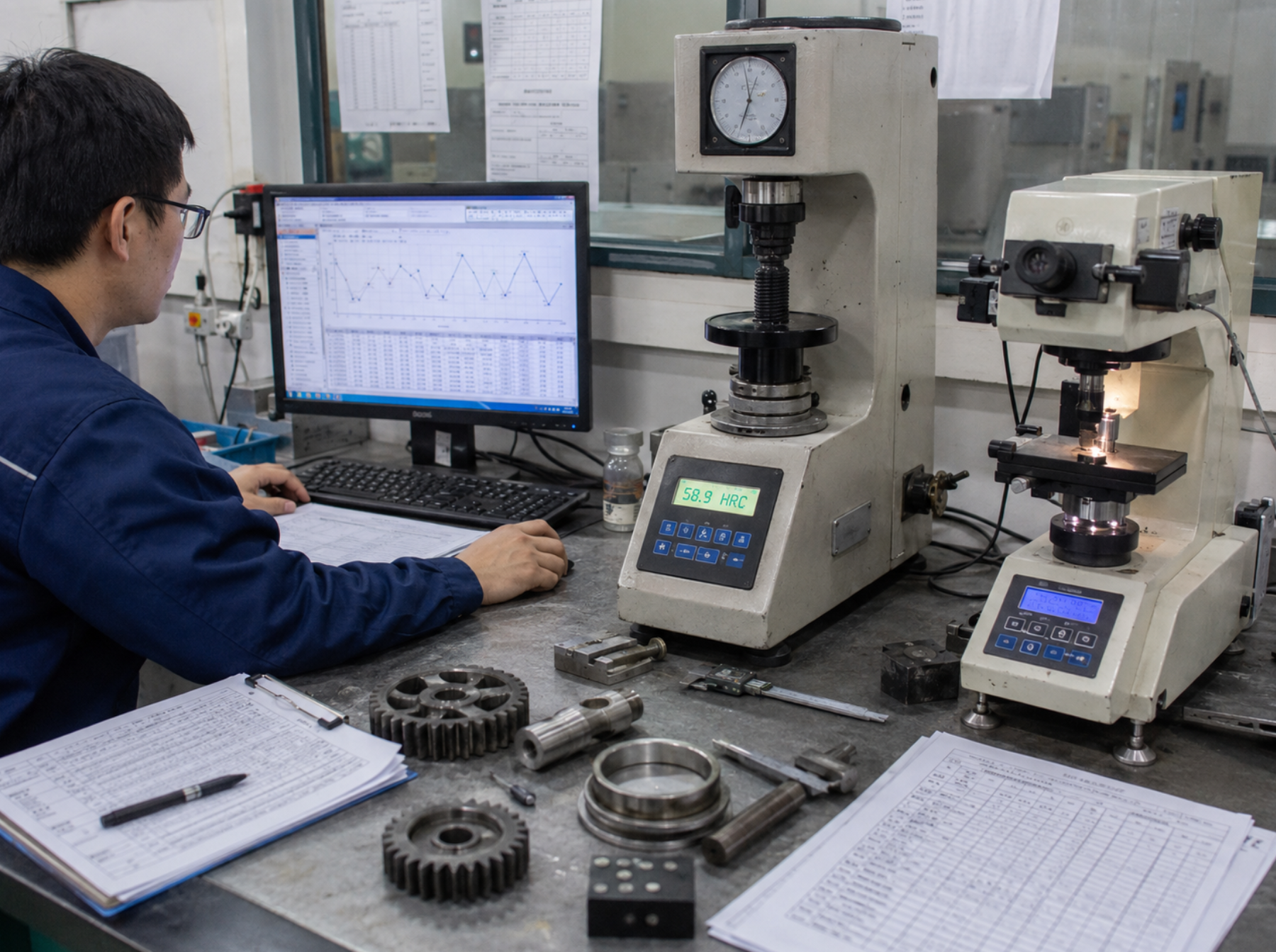
The sample is one of the most common reasons for unstable hardness results. If the surface is rough, oily, oxidized, curved, thin, tilted, or not properly supported, the indentation may not form correctly. A part that moves slightly during loading can create a different result even when the machine itself is working normally.
For heat-treated parts, coatings, weld sections, castings, forgings, gears, shafts, and bearings, the test location must also be representative. If the operator tests different areas on a part with uneven hardness distribution, the values may appear unstable even though the tester is accurate.
| Sample Issue | Possible Result | How To Fix It |
|---|---|---|
| Rough or scaled surface | Indentation shape becomes irregular | Clean or lightly prepare the test surface before testing |
| Sample is too thin | Backing surface affects the result | Use suitable load, superficial scale, or Micro Vickers method |
| Round or curved part moves | Reading changes between test points | Use V anvil, special fixture, or stable sample support |
| Poor polishing for Vickers testing | Indentation edge is unclear | Improve cutting, mounting, grinding, and polishing workflow |
2. Verify The Hardness Tester With Proper Calibration Blocks
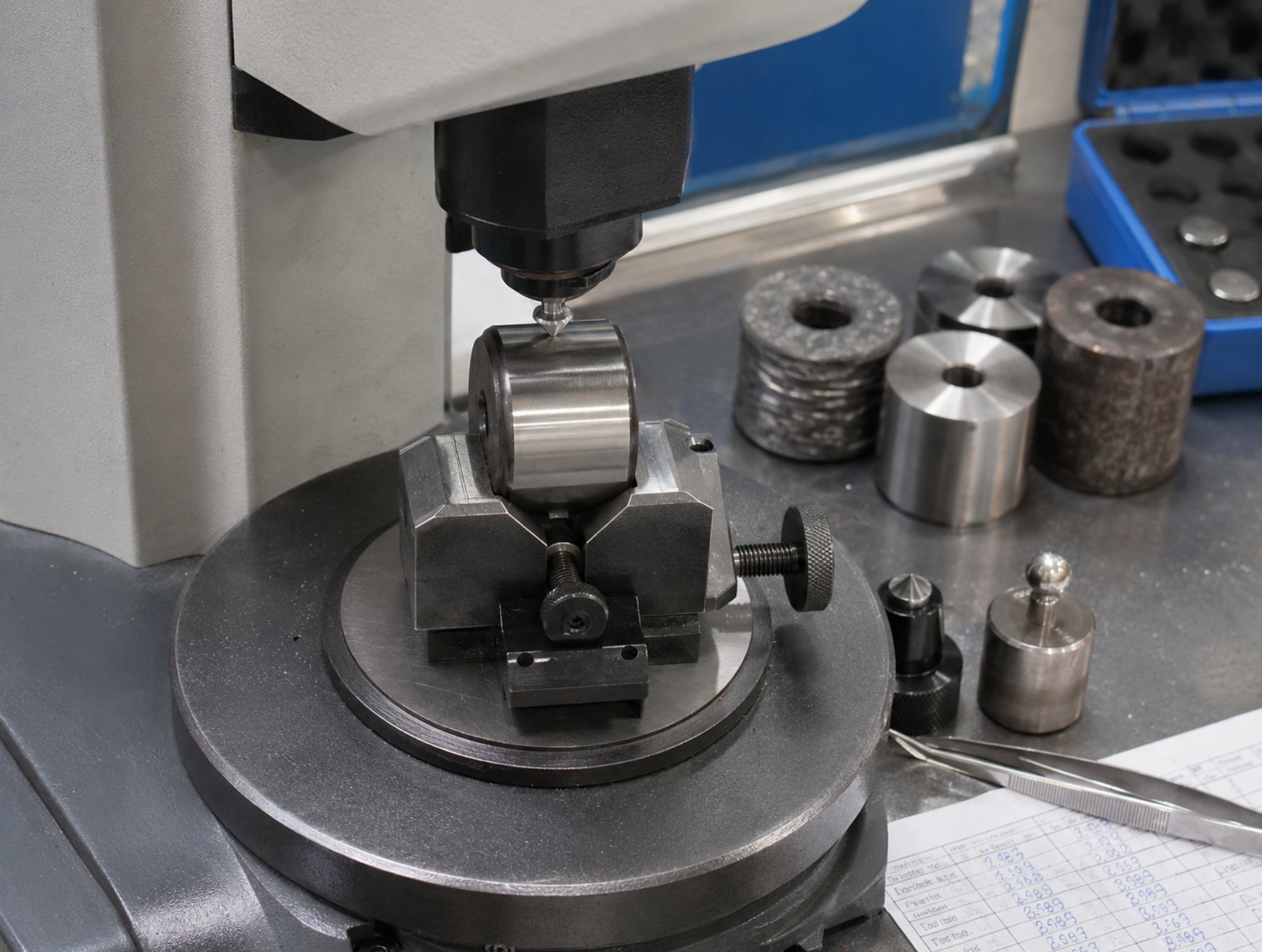
Before testing production parts, the hardness tester should be verified with suitable calibration blocks. The block must match the testing method, scale, and hardness range. For example, HRC testing should use HRC calibration blocks close to the working range. Brinell testing should use proper HBW blocks. Vickers and Micro Vickers testing should use HV or Micro HV reference blocks.
If the calibration block value is far away from the production part hardness range, the verification may not reveal the actual problem. If the block is damaged, rusted, heavily indented, or uncertified, it may create false confidence. Proper block storage and verification records are also important.
When verifying the tester, check:
Whether the calibration block matches the method and scale.
Whether the hardness value is close to the real working range.
Whether the block surface is clean and not overused.
Whether the certificate and serial number are traceable.
Whether the verification result is recorded before batch testing.
Whether abnormal verification results appear after indenter replacement or machine maintenance.
3. Inspect The Indenter, Anvil And Fixture
A worn or damaged indenter can cause unstable results even when the machine display looks normal. Rockwell diamond cone indenters, ball indenters, Brinell balls, and Vickers diamond indenters should be inspected and replaced when necessary. Small damage or wear on the indenter tip can change the indentation shape and final hardness value.
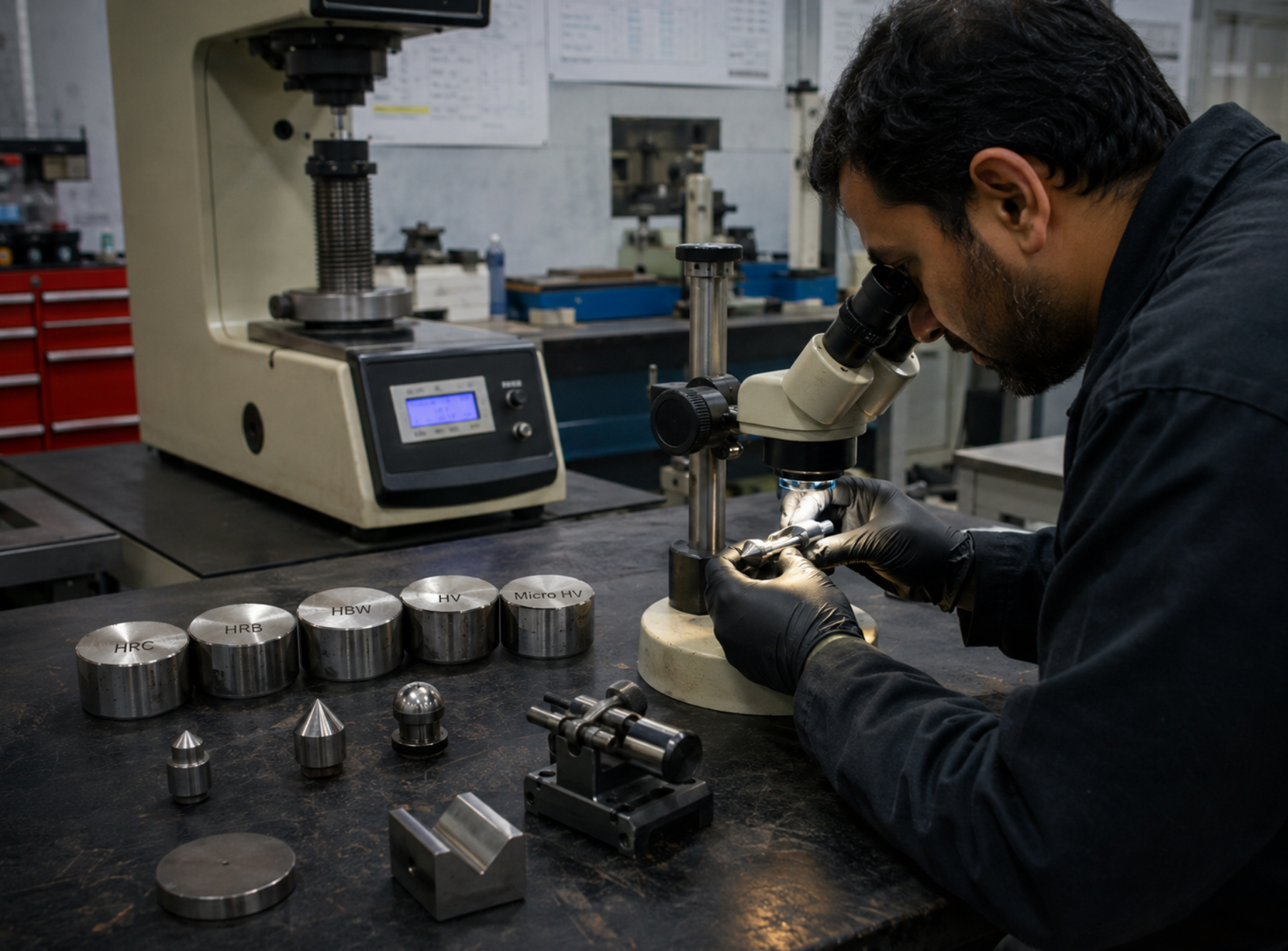
Anvils and fixtures also affect stability. If a part is not supported correctly, it may tilt, slide, bend, or vibrate during testing. This is common when testing shafts, gears, bearing rings, small parts, curved surfaces, or irregular components.
| Component | Common Problem | Recommended Action |
|---|---|---|
| Rockwell indenter | Worn diamond cone or wrong ball indenter | Inspect, verify, and replace when readings drift |
| Brinell ball indenter | Flattened, worn, or contaminated ball | Check ball condition and force combination |
| Vickers diamond indenter | Damaged tip or unclear indentation shape | Inspect indentation quality and replace if needed |
| Anvil or fixture | Sample moves or tilts during loading | Use correct support, V anvil, ring fixture, or custom fixture |
4. Review The Testing Method, Scale And Load
Unstable results can also happen when the selected method or scale does not match the material. A Rockwell scale that works for hardened steel may not be suitable for softer metals or thin parts. A Brinell force that is too high or too low can create unreliable diameter measurement. A Micro Vickers load that is too low may produce an indentation too small to measure consistently.
Buyers and QC engineers should confirm the required standard, hardness scale, test force, dwell time, and acceptable range before batch testing. If the material, surface treatment, or part design changes, the testing method may also need adjustment.
Method selection should consider:
Material type and expected hardness range.
Sample thickness and available test area.
Surface hardness, core hardness, or case depth requirement.
Rockwell scale, Brinell force, or Vickers test load.
Customer standard, drawing requirement, or internal QC procedure.
Whether manual, digital, or automatic vision measurement is needed.
5. Reduce Operator Variation With Standard Procedures
When different operators get different results, the issue may be operation consistency. Manual focusing, test point selection, indentation spacing, surface cleaning, sample support, reading method, and data recording can all create variation.
A standard operating procedure should define how to prepare the sample, select the method, verify the tester, position the part, perform the test, record the result, and respond to abnormal data. For Vickers, Micro Vickers, and Brinell testing, automatic vision measurement can reduce manual reading differences and improve report traceability.
| Process Step | Unstable Result Risk | Control Method |
|---|---|---|
| Test point selection | Different locations produce different values | Define test location by drawing, standard, or inspection plan |
| Manual optical reading | Different operators judge indentation edges differently | Use digital or automatic vision measurement when needed |
| Data recording | Manual records may be incomplete or incorrect | Use software storage, PDF reports, and batch data export |
| Abnormal result handling | Operators may ignore early warning signs | Create a retest and verification procedure |
6. Improve Sample Preparation For Vickers And Micro Vickers Testing
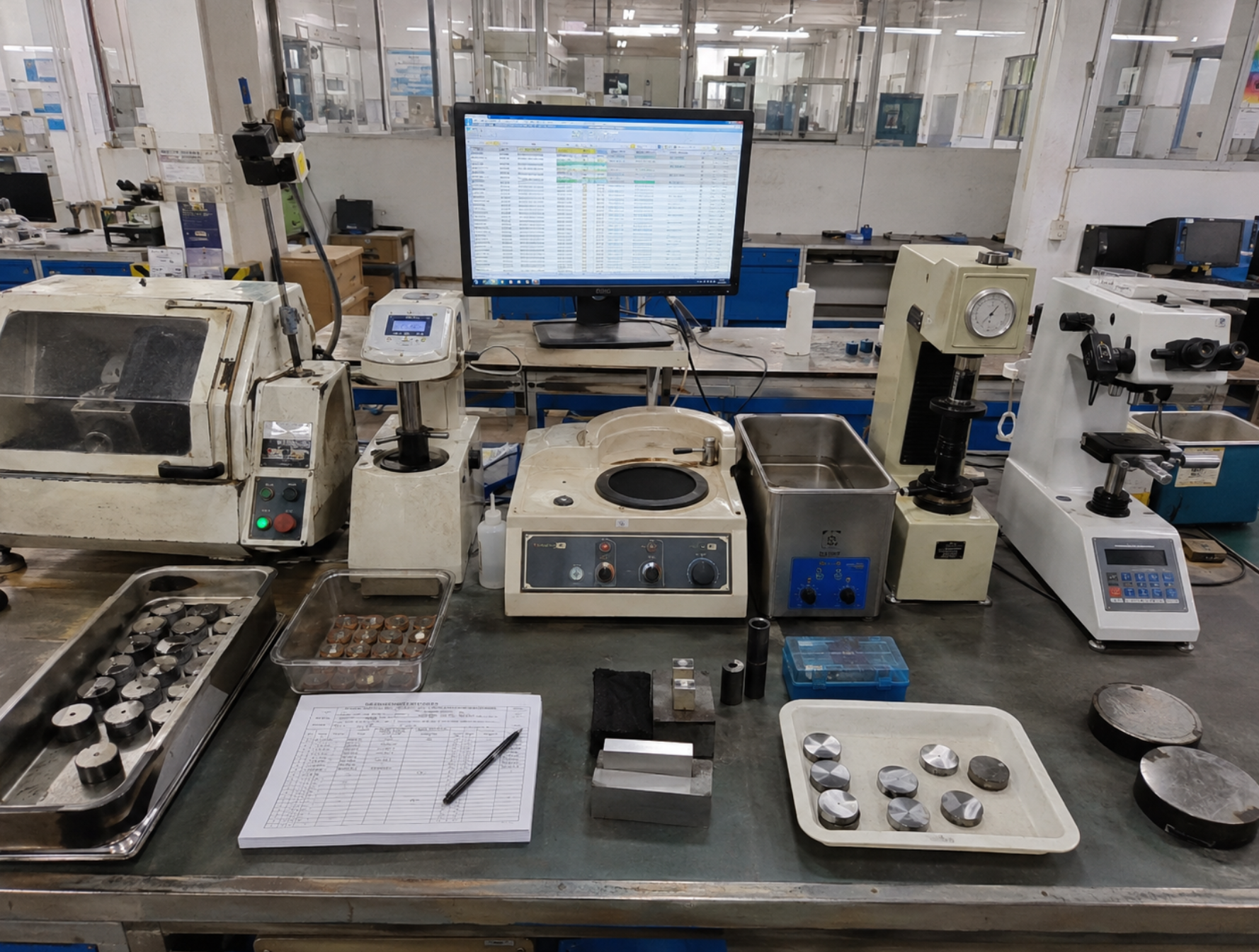
Vickers and Micro Vickers results are especially sensitive to sample preparation because the indentation must be measured optically. Scratches, deformation, polishing residue, edge rounding, poor flatness, and unclear layer boundaries can all cause unstable readings.
For case depth, coatings, weld sections, carburized layers, nitrided layers, and small parts, proper metallographic cutting, mounting, grinding, polishing, cleaning, and microscope inspection are essential. If the preparation process is not controlled, upgrading the hardness tester alone may not solve the problem.
Key Questions Before Fixing Unstable Hardness Test Results
If your factory is experiencing unstable hardness readings, prepare clear information before requesting technical support or equipment recommendations. This helps identify whether the issue comes from the tester, the sample, the method, the fixture, the operator, or the preparation workflow.
Which hardness method is used: Rockwell, Brinell, Vickers, Micro Vickers, Barcol, Shore, or Leeb?
What material and hardness range are being tested?
What sample size, shape, thickness, and surface condition are involved?
Are results unstable on calibration blocks, real parts, or both?
Which calibration blocks are used, and are they close to the working range?
Has the indenter been inspected or replaced recently?
Is the sample supported by a proper anvil, fixture, or holder?
Do different operators get different results?
Is the sample preparation process controlled before Vickers or Micro Vickers testing?
Do you need digital measurement, automatic vision, software reports, or a complete process upgrade?
Conclusion: Fix The Process, Not Only The Machine
Unstable hardness test results should be handled as a process problem. The cause may be the sample surface, sample support, selected method, test scale, force, indenter, calibration block, operator procedure, sample preparation, software measurement, or machine condition.
A reliable hardness testing workflow should include correct method selection, proper sample preparation, suitable fixtures, certified calibration blocks, inspected indenters, standard operating procedures, and traceable report records. For Vickers, Micro Vickers, and Brinell testing, digital or automatic vision measurement can further reduce human variation.
If your QC lab is facing unstable readings, repeated retesting, customer disputes, or unclear hardness reports, a complete process review can help identify the real cause and build a more stable hardness testing system.
FAQ
Why do hardness test results vary on the same part?
Possible causes include uneven material hardness, different test locations, unstable sample support, rough surface, wrong scale, worn indenter, or operator variation.
How can I check whether the tester is accurate?
Use certified calibration blocks that match the testing method, scale, and working hardness range. Record verification results before batch testing.
Can a worn indenter cause unstable hardness results?
Yes. A worn or damaged indenter can change indentation shape and cause unstable or incorrect hardness values.
When should a factory consider automatic vision measurement?
Automatic vision measurement is useful when manual reading variation affects Vickers, Micro Vickers, or Brinell results, especially in high-volume QC labs.
Need Help Fixing Unstable Hardness Test Results?
Share your hardness testing method, material, sample shape, test scale, current result variation, calibration block details, indenter condition, and testing workflow. We can help recommend suitable hardness testers, calibration blocks, fixtures, sample preparation equipment, automatic vision systems, and complete QC process solutions.