
Complete QC Lab Equipment List For Heat-Treated Metal Parts Inspection
Complete QC Lab Equipment List For Heat-Treated Metal Parts Inspection
Heat-treated metal parts require reliable inspection for surface hardness, core hardness, case depth, microstructure, deformation, and batch consistency. A complete QC lab should include hardness testers, metallographic sample preparation equipment, microscopes, calibration blocks, fixtures, software, consumables, and traceable report tools.
Hardness Testing
Rockwell, Brinell, Vickers, and Micro Vickers testers verify heat treatment results.
Sample Preparation
Cutting, mounting, grinding, and polishing prepare accurate cross-section samples.
Microstructure Check
Metallurgical microscopes help inspect hardened layers, grain structure, weld zones, and defects.
Report Traceability
Software, calibration records, sample IDs, and exported reports support customer approval.
Why Heat-Treated Parts Need A Complete QC Lab
Heat treatment is used to improve hardness, strength, wear resistance, fatigue performance, and service life of metal parts. Processes such as quenching, tempering, carburizing, nitriding, carbonitriding, and induction hardening can greatly change the final material performance. If the inspection process is incomplete, defective parts may pass production or qualified parts may be rejected by mistake.
For heat-treated gears, shafts, bearings, molds, tools, fasteners, springs, automotive parts, and machinery components, quality control should not depend on one single hardness value. A complete QC lab should be able to check surface hardness, core hardness, effective case depth, microstructure, hardened layer condition, sample preparation quality, and final inspection records.
The right equipment list depends on your parts, material grades, heat treatment process, daily testing volume, customer standards, and report requirements. For many factories, a practical lab setup is built in stages: first routine hardness testing, then sample preparation, then Micro Vickers case depth analysis, and finally full digital reporting.
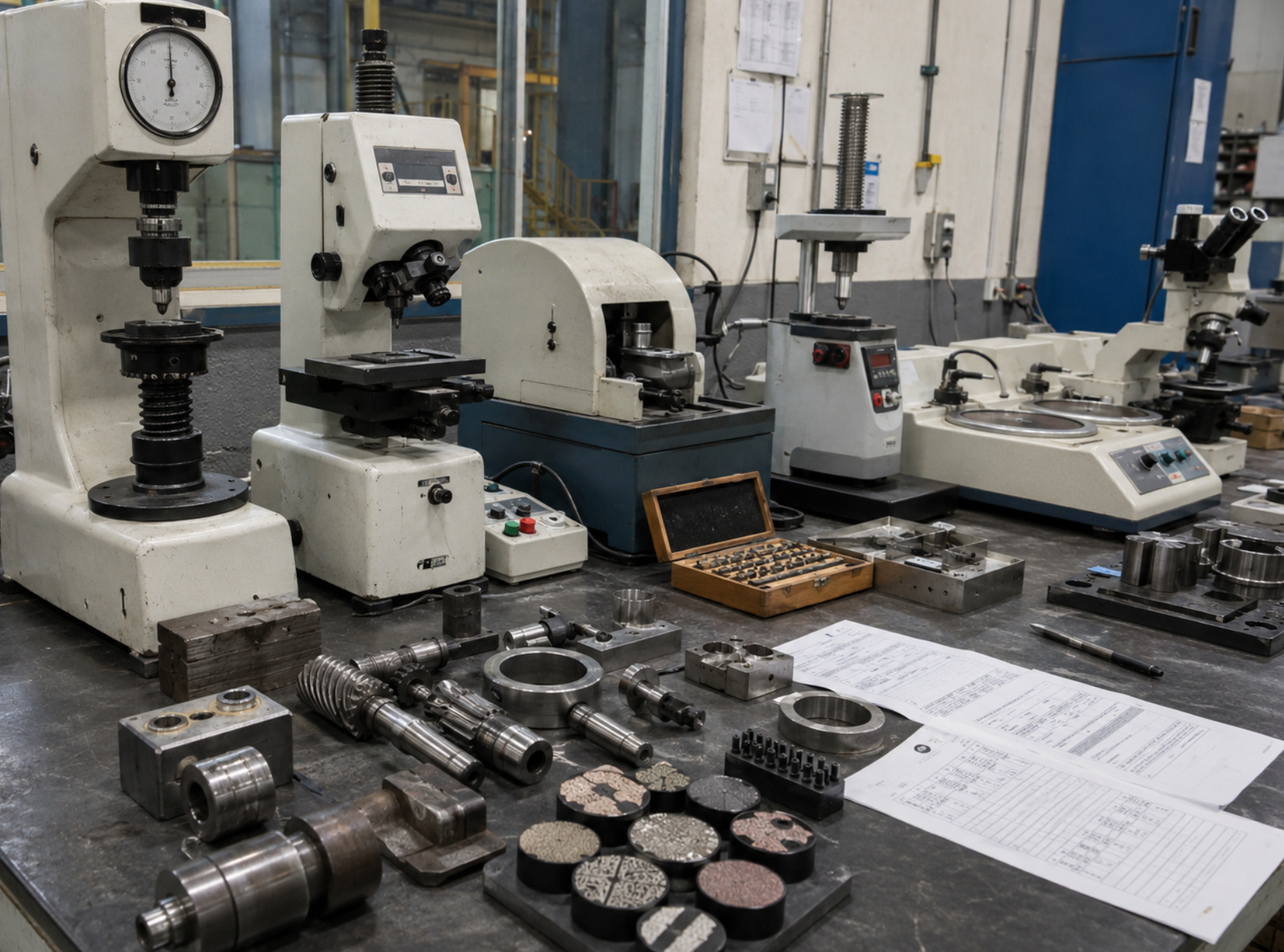
1. Hardness Testing Equipment
Hardness testing is the core of heat-treated parts inspection. Rockwell hardness testers are commonly used for fast HRC checks after quenching and tempering. Brinell testers are useful for larger forgings, castings, and parts with coarse structures. Vickers and Micro Vickers testers are used for precision testing, case depth, carburized layers, nitrided layers, and small test areas.
A small QC lab may start with one digital Rockwell hardness tester. A more complete heat treatment inspection lab may need Rockwell plus Micro Vickers equipment. If the factory handles large castings or forgings, Brinell testing may also be required.
| Equipment | Main Use | Best For |
|---|---|---|
| Rockwell hardness tester | Fast HRC / HRB / HRA inspection | Quenched and tempered steel parts, tools, shafts, gears, bearings |
| Brinell hardness tester | Large indentation hardness testing | Castings, forgings, large heat-treated components |
| Vickers hardness tester | Precision hardness measurement | Polished samples, welds, thin sections, precision metal parts |
| Micro Vickers hardness tester | Low-load case depth and hardness profile testing | Carburized layers, nitrided layers, induction-hardened zones |
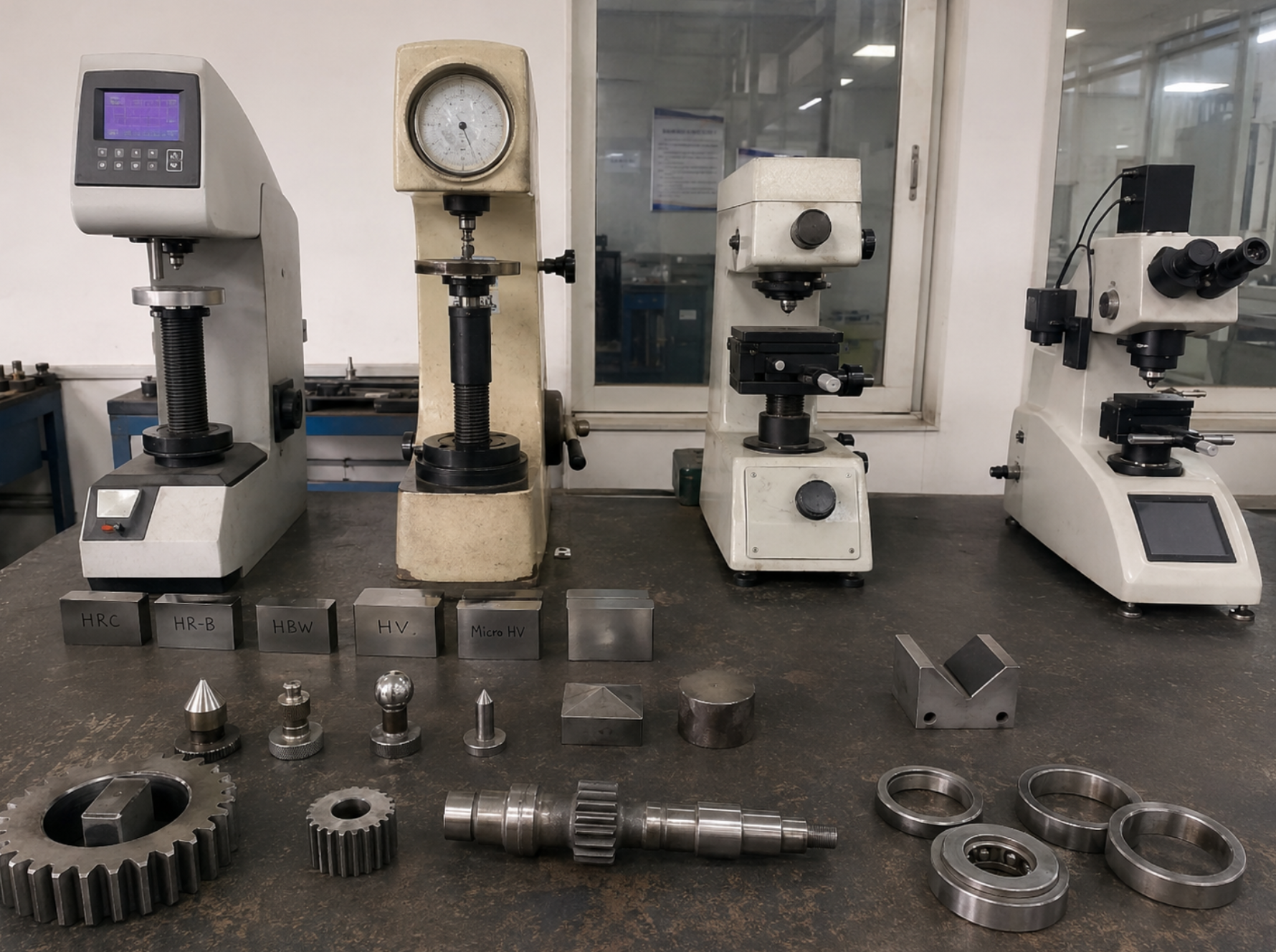
2. Metallographic Sample Preparation Equipment
Many heat-treated parts require cross-section inspection. For case depth testing, weld zone analysis, carburized layer inspection, nitrided surface analysis, and microstructure observation, the sample must be cut, mounted, ground, polished, cleaned, and inspected before final testing.
Poor sample preparation can cause false hardness readings. Cutting heat may damage the hardened layer. Poor mounting may create edge rounding. Rough grinding or polishing scratches may make Micro Vickers indentations difficult to measure. This is why sample preparation equipment should be included in a serious heat treatment QC lab.
| Preparation Equipment | Function | Buyer Checkpoint |
|---|---|---|
| Metallographic cutting machine | Cuts heat-treated parts with controlled damage | Check cutting capacity, coolant, clamping, and wheel type |
| Mounting press or cold mounting system | Supports small or irregular cross-section samples | Choose hot or cold mounting based on material sensitivity |
| Grinding and polishing machine | Creates flat polished surface for hardness and microscope inspection | Check disc size, speed control, pressure control, and automatic options |
| Ultrasonic cleaner | Removes polishing residue and particles | Useful before microscope and Micro Vickers testing |
3. Metallurgical Microscope And Image Analysis
A metallurgical microscope helps the QC team inspect microstructure, hardened layer boundaries, case depth, coating condition, weld zones, cracks, inclusions, and sample preparation quality. For heat-treated metal parts, microscope inspection is often used together with Micro Vickers testing.
If the lab needs customer-ready reports, a microscope camera and image analysis software are recommended. The system can capture images, measure layer depth, save sample records, and support technical documentation.
Microscope inspection is useful for:
Checking carburized and nitrided layer structure.
Confirming polished sample surface quality.
Observing weld zones and heat-affected zones.
Inspecting cracks, inclusions, pores, and microstructure defects.
Measuring layer thickness or supporting case depth analysis.
Capturing images for inspection reports.
4. Calibration Blocks, Indenters, Fixtures And Accessories
A QC lab is incomplete without the correct accessories. Calibration blocks are required to verify hardness tester accuracy. Indenters must match the testing method and scale. Fixtures and anvils are needed to support real heat-treated parts such as shafts, gears, rings, tools, fasteners, and irregular components.
Many factories underestimate accessories during the first purchase. Later they find that the hardness tester cannot test certain parts because the sample support, calibration block, or indenter is missing. To avoid this problem, buyers should request a complete configuration list before ordering.
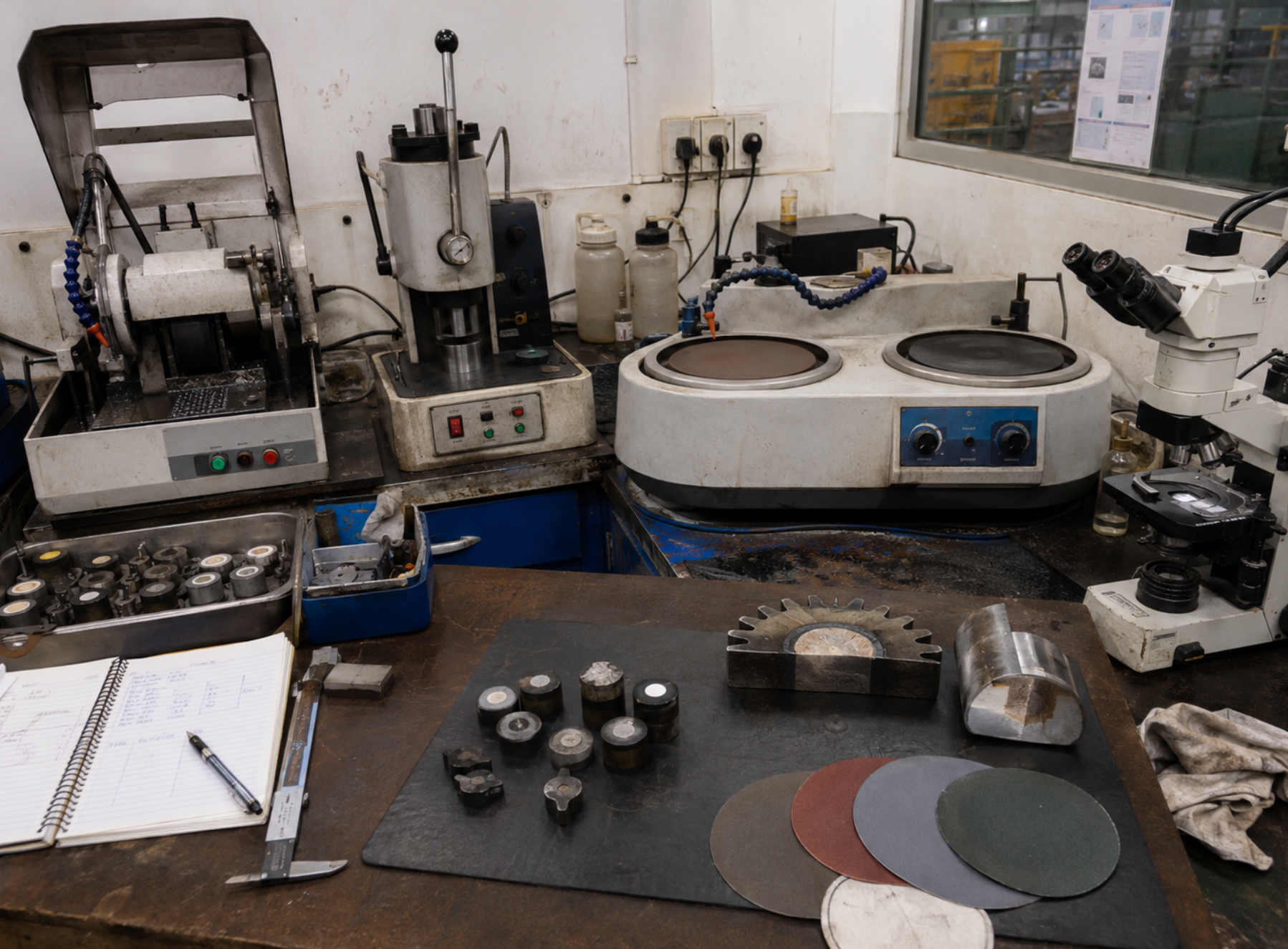
| Accessory | Why It Matters | Typical Items |
|---|---|---|
| Calibration blocks | Verify machine accuracy before batch testing | HRC, HRB, HBW, HV, Micro HV blocks |
| Indenters | Determine valid indentation geometry | Rockwell diamond cone, ball indenter, Vickers diamond indenter |
| Anvils and fixtures | Keep parts stable during testing | Flat anvil, V anvil, ring support, small-part fixture, custom holder |
| Consumables | Maintain sample preparation quality | Cutting wheels, mounting resin, grinding paper, polishing cloth, diamond suspension |
5. Software, Data Storage And QC Reports
Heat-treated parts are often supplied to customers who require inspection records. A complete QC lab should be able to store hardness values, sample IDs, test point positions, indentation images, calibration records, operator information, and final inspection reports.
For Micro Vickers case depth testing, software is especially important. It can generate hardness profile curves, calculate effective case depth, save indentation images, and export reports in PDF or Excel format. For production inspection, digital data management reduces manual recording errors and improves traceability.
Useful report functions include:
Sample ID and batch number records.
Hardness value storage and statistics.
Calibration verification records.
Indentation image capture and storage.
Hardness profile curve for case depth testing.
Excel and PDF report export.
Operator name, test date, and inspection note fields.
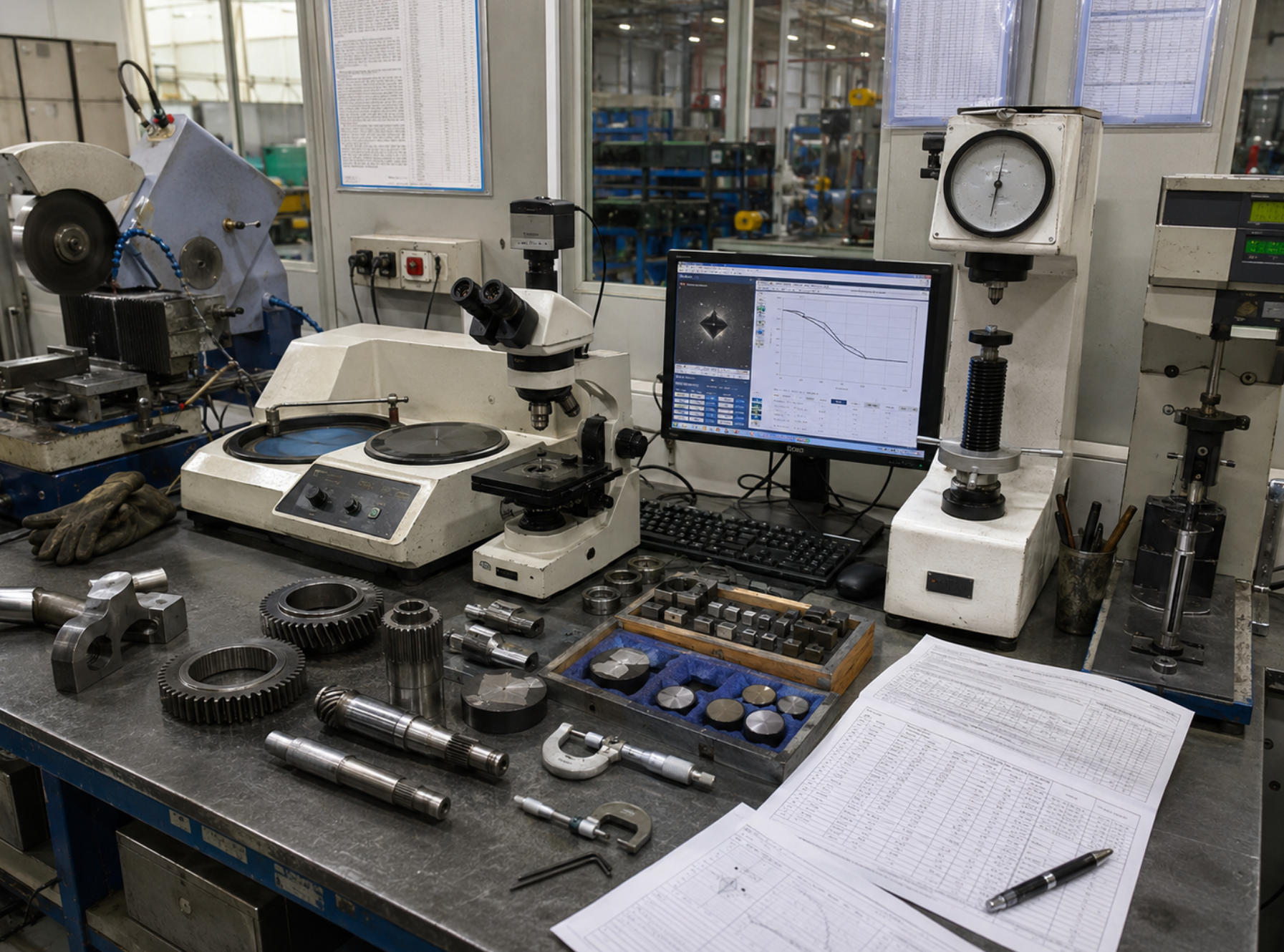
Recommended Equipment List By Lab Level
Not every factory needs the same QC lab configuration. A small heat treatment shop may begin with Rockwell hardness testing and basic calibration blocks. A more advanced manufacturer may need complete metallographic preparation and Micro Vickers case depth analysis. A full industrial QC lab may need several hardness methods and digital reporting software.
| Lab Level | Recommended Equipment | Suitable For |
|---|---|---|
| Basic QC Lab | Digital Rockwell tester, HRC blocks, indenters, anvils, record sheets | Routine HRC checks after quenching and tempering |
| Heat Treatment Lab | Rockwell tester, cutting machine, mounting press, grinding polishing machine, microscope | Surface hardness and basic cross-section inspection |
| Case Depth Lab | Micro Vickers tester, XY stage, software, sample preparation line, microscope | Carburized, nitrided, and induction-hardened parts |
| Complete Industrial QC Lab | Rockwell, Brinell, Vickers/Micro Vickers, full sample preparation, microscope, software, consumables | Factories with multiple materials, parts, standards, and customer report needs |
Key Questions Before Requesting A QC Lab Equipment Proposal
To build a practical QC lab for heat-treated metal parts, buyers should provide clear information about parts, materials, processes, testing standards, and report needs. This allows the supplier to recommend an equipment list that fits the real workflow.
What parts will be inspected: gears, shafts, bearings, molds, tools, fasteners, springs, or automotive parts?
What heat treatment process is used: quenching, tempering, carburizing, nitriding, carbonitriding, or induction hardening?
Which hardness scale is required: HRC, HRB, HRA, HBW, HV, Micro HV, or others?
Do you need only surface hardness, or also core hardness and case depth?
What sample sizes, shapes, and test locations are involved?
How many samples and test points are measured per day?
Do you need metallographic sample preparation equipment?
Do you need microscope image capture and analysis software?
Do customers require PDF reports, hardness curves, images, and calibration records?
What lab space, power supply, water supply, drainage, and installation conditions are available?
Conclusion: A Complete QC Lab Should Match The Inspection Workflow
A complete QC lab for heat-treated metal parts should not be planned as a random equipment purchase. It should be built around the real inspection workflow: sample receiving, hardness testing, sample cutting, mounting, grinding, polishing, microscope analysis, case depth testing, calibration verification, and final report export.
For basic heat treatment inspection, a Rockwell hardness tester and calibration blocks may be enough. For carburized, nitrided, and induction-hardened parts, Micro Vickers testing and sample preparation equipment are often necessary. For customer audits and export orders, digital reports and traceable records become even more important.
If your factory is planning to build or upgrade a heat-treated parts QC lab, share your parts, material grades, heat treatment process, testing standards, and report requirements before ordering. A complete equipment list can help reduce missing configurations and improve long-term inspection reliability.
FAQ
What is the most basic equipment for heat-treated parts inspection?
A basic setup usually includes a Rockwell hardness tester, suitable calibration blocks, indenters, anvils, and inspection record tools.
When does a factory need Micro Vickers testing?
Micro Vickers testing is needed for case depth, carburized layers, nitrided layers, induction-hardened zones, thin sections, and small precision test areas.
Is sample preparation equipment necessary?
It is necessary when the lab needs cross-section inspection, Micro Vickers testing, microscope analysis, case depth reports, or coating and layer inspection.
Why are calibration blocks important?
Calibration blocks help verify hardness tester accuracy before production inspection and support traceable quality control records.
Need A Complete QC Lab Equipment List For Heat-Treated Parts?
Share your heat-treated parts, material grades, hardness standards, case depth requirements, daily testing volume, and report needs. We can help recommend a suitable QC lab equipment list, including hardness testers, sample preparation machines, microscopes, calibration blocks, fixtures, consumables, and software.