


How To Set Up Incoming Material Hardness Inspection For Metal Processing Factories
How To Set Up Incoming Material Hardness Inspection For Metal Processing Factories
Incoming material hardness inspection helps metal processing factories verify raw material quality before machining, forming, welding, heat treatment, or shipment. A practical inspection process should include material identification, sampling rules, hardness method selection, calibration blocks, test location control, surface preparation, batch records, and clear acceptance criteria.
Material Verification
Check whether steel, aluminum, copper alloy, castings, forgings, and bars match the required grade.
Sampling Control
Define how many pieces, coils, bars, plates, or batches should be checked before release.
Correct Method
Rockwell, Brinell, Vickers, or portable testing should match material and sample condition.
Traceable Records
Keep material batch, supplier, hardness value, calibration status, operator, and release decision.
Why Incoming Material Hardness Inspection Matters
Metal processing factories often receive steel bars, plates, tubes, forgings, castings, aluminum alloy parts, copper alloy parts, and semi-finished components from different suppliers. If incoming material hardness is not checked, problems may not appear until machining, forming, heat treatment, assembly, or final customer inspection.
Material that is too hard may cause tool wear, machining difficulty, cracking, poor forming, or unexpected process failure. Material that is too soft may not meet strength, wear resistance, or final product performance requirements. For heat-treated or pre-hardened materials, incoming hardness also helps confirm whether the supplier delivered the correct condition.
A good incoming hardness inspection process allows factories to identify abnormal batches before they enter production. This reduces rework, rejects, supplier disputes, and shipment delays. It also creates a stronger quality record when customers ask how raw material quality is controlled.
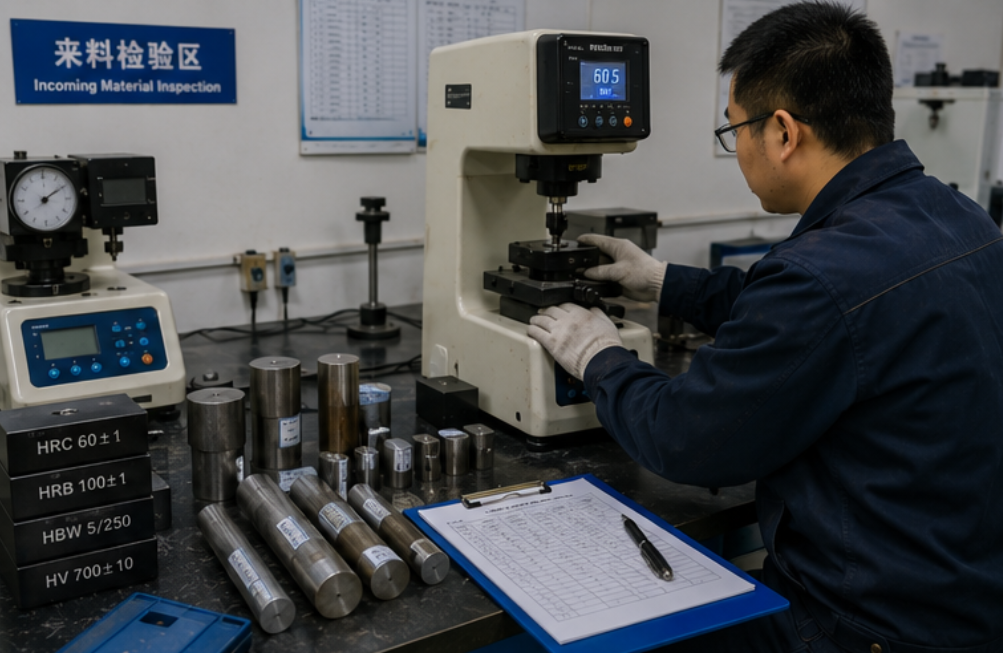
1. Define Which Materials Need Hardness Inspection
Not every incoming material requires the same inspection level. Factories should first classify materials by risk and usage. Critical materials used for gears, shafts, bearings, molds, fasteners, tools, pressure parts, welded structures, and precision components usually need stricter hardness checks.
For general low-risk materials, certificate review and occasional hardness verification may be enough. For high-risk materials, every batch should be checked according to an internal control plan. The inspection standard should be clearly linked to material grade, supplier history, part function, and customer requirement.
| Incoming Material | Inspection Purpose | Recommended Method |
|---|---|---|
| Steel bars and plates | Verify material condition before machining or heat treatment | Rockwell / Brinell / portable testing |
| Forgings and castings | Check representative hardness of large or coarse structures | Brinell hardness testing |
| Pre-hardened mold steel | Confirm supplier delivered the correct hardness condition | Rockwell HRC / Vickers |
| Aluminum and copper alloys | Verify temper or material consistency | Brinell / Rockwell / Vickers based on standard |
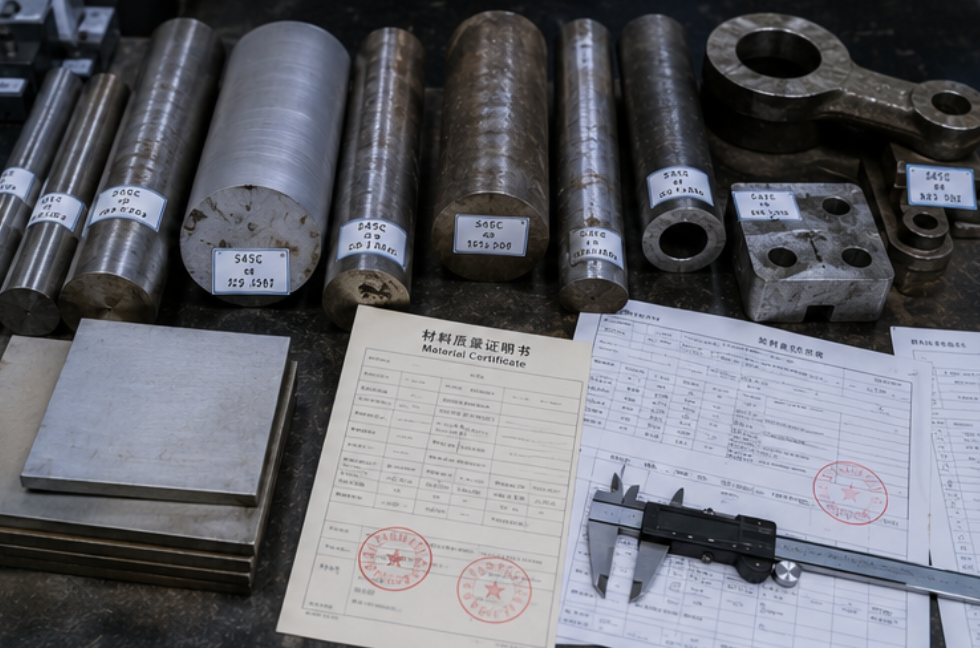
2. Set Clear Sampling Rules Before Production Release
Incoming inspection should not depend on random operator judgment. The factory should define how many samples are tested from each batch, where they are taken from, and what happens if one result is outside the allowed range.
For bars, tubes, plates, castings, forgings, and semi-finished parts, sampling can be based on batch number, supplier lot, heat number, material certificate, quantity, or customer requirement. Higher-risk materials may need more test points or more frequent verification.
Sampling rules should define:
How many samples are tested per batch or supplier lot.
Which material locations should be tested.
Whether surface preparation is required before testing.
How to handle values close to the acceptance limit.
When to increase sampling quantity.
When to hold the batch, retest, or reject the material.
3. Choose The Right Hardness Testing Method
The best method depends on material type, sample size, surface condition, expected hardness range, and customer standard. Rockwell testing is fast and practical for many steel materials and heat-treated components. Brinell testing is useful for castings, forgings, large parts, and non-uniform structures. Vickers testing is useful for smaller test areas or more precise measurement.
Portable hardness testers can be useful when large raw materials cannot be moved to a bench tester. However, for formal customer reports or tighter quality control, bench-type Rockwell, Brinell, or Vickers equipment may be preferred. The method should be defined before production release, not after a dispute happens.
| Method | Best For Incoming Inspection | Buyer Checkpoint |
|---|---|---|
| Rockwell | Steel bars, pre-hardened materials, machined surfaces, heat-treated parts | Confirm scale, thickness, surface condition, and stable support |
| Brinell | Castings, forgings, aluminum alloys, copper alloys, large materials | Confirm ball diameter, force, sample size, and measurement method |
| Vickers | Small samples, polished test areas, precision hardness confirmation | Confirm optical measurement and sample preparation quality |
| Portable hardness testing | Large raw materials or parts difficult to move | Confirm standard acceptance and correlation with required method |
4. Verify The Tester Before Incoming Material Inspection
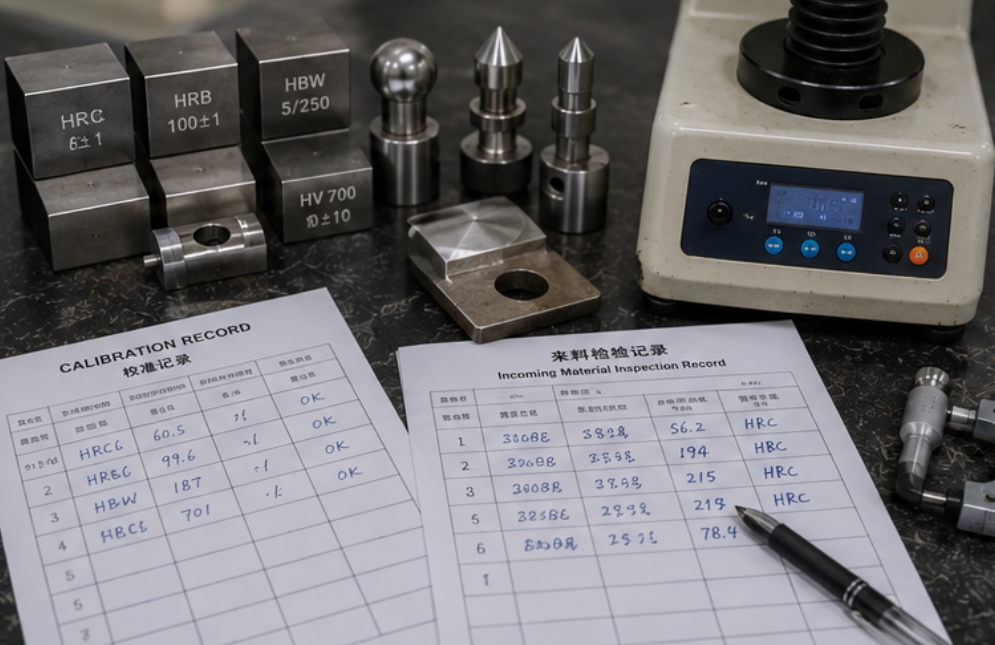
Before checking incoming materials, the hardness tester should be verified with suitable calibration blocks. The block should match the method, scale, and working hardness range. If the factory checks steel around HRC 40, the calibration block should be close to that range rather than far away from the real inspection value.
Calibration records help prove that the inspection result is trustworthy. They are especially important when suppliers dispute rejection results or customers ask for incoming quality control evidence.
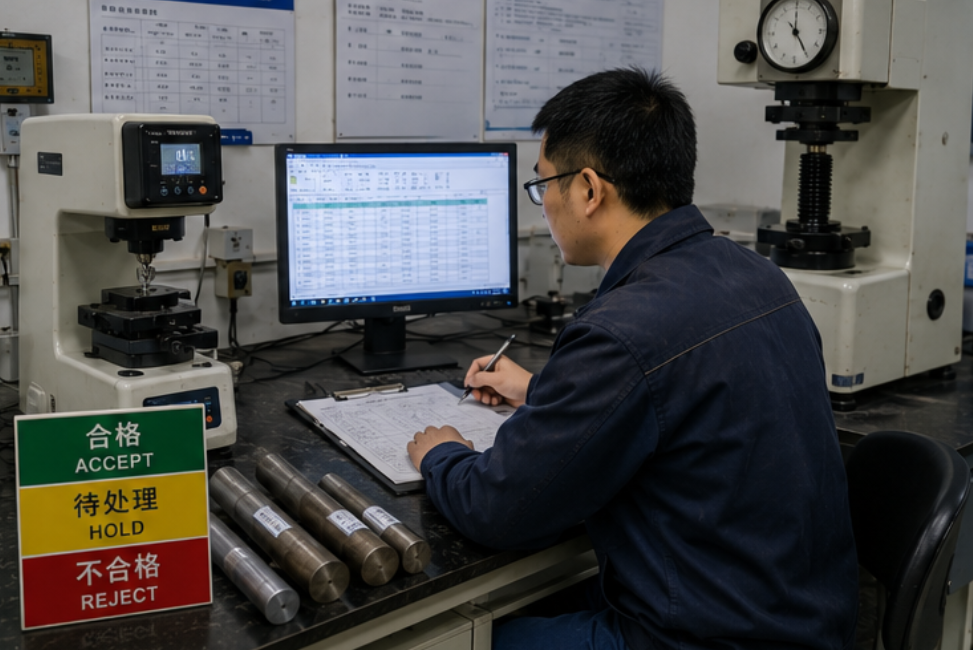
Before testing incoming materials, check:
Calibration block scale and hardness value.
Block certificate, serial number, and usable surface condition.
Indenter condition and correct indenter installation.
Anvil or fixture condition.
Tester verification result before batch inspection.
Operator, date, machine ID, and verification record.
5. Prepare The Test Surface Correctly
Incoming materials may have oxide scale, rust, oil, rough machining marks, coating, or uneven surfaces. These conditions can affect hardness readings. For Rockwell and Brinell testing, the test area should be clean and stable. For Vickers testing, a better surface finish may be required.
Surface preparation should be controlled and documented. Excessive grinding may remove a treated surface layer, while insufficient preparation may create unstable indentation. The goal is to prepare the test area enough for reliable measurement without changing the material condition being inspected.
| Surface Condition | Possible Problem | Recommended Action |
|---|---|---|
| Oxide scale or rust | Indentation may be unstable or inaccurate | Clean or grind the test area before testing |
| Rough casting or forging surface | Indentation edge may be unclear | Prepare a representative flat test area |
| Thin coated surface | Result may mix coating and base material hardness | Use suitable low-load or cross-section method if required |
| Curved bar or tube | Sample may move or contact poorly | Use V anvil, support fixture, or appropriate test method |
6. Record Results And Link Them To Material Batches
Incoming material inspection should create traceable records. Each result should be connected to supplier name, purchase order, material grade, heat number, batch number, certificate, test method, hardness value, calibration status, operator, and release decision.
If a batch is accepted, the record supports internal production release. If a batch is rejected or held, the record supports supplier communication. If a customer later questions material quality, the factory can show that incoming hardness was checked before production.
Incoming hardness records should include:
Supplier name and purchase order number.
Material grade, heat number, and batch number.
Material certificate review result.
Hardness method, scale, and test location.
Hardness values and acceptance range.
Calibration block record and machine ID.
Operator, inspection date, and release status.
Hold, retest, or rejection decision if abnormal.
Recommended Incoming Inspection Setup By Factory Type
Different metal processing factories need different incoming hardness inspection setups. A small machining workshop may start with a Rockwell hardness tester. A foundry or forging buyer may need Brinell testing. A factory handling critical heat-treated or surface-treated materials may require Vickers or Micro Vickers testing.
| Factory Type | Recommended Equipment | Typical Inspection Use |
|---|---|---|
| Machining factory | Digital Rockwell hardness tester, HRC/HRB blocks, anvils, records | Steel bars, plates, machined blanks, heat-treated parts |
| Casting and forging buyer | Brinell hardness tester, HBW blocks, digital indentation measurement | Castings, forgings, large rough metal materials |
| Tool and mold factory | Rockwell or Vickers hardness tester, calibration blocks, stable supports | Pre-hardened mold steel, tool steel, precision blanks |
| Advanced QC lab | Rockwell, Brinell, Vickers/Micro Vickers, sample preparation, software reports | Multiple materials, customer reports, dispute analysis, process control |
Key Questions Before Setting Up Incoming Hardness Inspection
Before buying equipment or writing an inspection procedure, factories should prepare clear information about materials, suppliers, standards, and production risks. This helps build a practical inspection process instead of a generic checklist.
What incoming materials need hardness inspection?
What material grades, heat numbers, and supplier lots are involved?
What hardness method and scale are required by the drawing or standard?
What acceptance range should be used for each material?
How many samples should be tested per batch?
Where should the test be performed on bars, plates, castings, forgings, or tubes?
Does the surface need cleaning, grinding, polishing, or sectioning?
What calibration blocks and indenters are required?
How should abnormal results be handled?
Do you need digital records, Excel export, PDF reports, or supplier quality documentation?
Conclusion: Incoming Hardness Inspection Prevents Problems Before Production
Incoming material hardness inspection is an important control point for metal processing factories. It helps verify whether raw materials, semi-finished parts, castings, forgings, bars, plates, and pre-hardened materials are suitable before they enter production.
A practical setup should include the right hardness tester, suitable calibration blocks, correct indenters, stable sample support, defined sampling rules, surface preparation control, and clear batch records. The process should connect inspection results with supplier lots and production release decisions.
If your factory wants to reduce material disputes, machining problems, heat treatment failures, and customer rejection, improving incoming hardness inspection is a practical first step. Share your materials, sample sizes, testing standards, and daily workload before selecting equipment.
FAQ
Why should factories test incoming material hardness?
It helps identify incorrect material condition before machining, heat treatment, assembly, or shipment, reducing production and customer risks.
Which hardness tester is suitable for incoming inspection?
Rockwell is common for steel materials and fast checks, Brinell for castings and forgings, and Vickers for smaller or more precise test areas.
Do incoming materials need surface preparation?
Often yes. Scale, rust, oil, or rough surfaces should be cleaned or prepared so the indentation is reliable.
What should be recorded during incoming hardness inspection?
Supplier name, material grade, heat number, batch number, method, scale, hardness value, calibration record, operator, date, and release decision should be recorded.
Need An Incoming Material Hardness Inspection Setup?
Share your material types, sample sizes, supplier batch control needs, hardness standards, testing volume, and report requirements. We can help recommend suitable hardness testers, calibration blocks, fixtures, sample preparation tools, and complete incoming inspection solutions.