-
06-15 2026
When Should Factories Upgrade From Manual Hardness Testing To Automatic Vision Systems
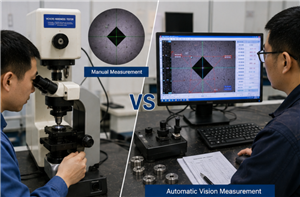
Factories should consider upgrading from manual hardness testing to automatic vision systems when manual reading causes unstable results, testing volume increases, Vickers or Brinell indentation measurement becomes time-consuming, case depth testing requires many points, customers require image-based reports, or QC labs need better traceability and repeatability.
-
06-14 2026
Hardness Testing For Welded Parts: What QC Labs Should Check Before Delivery
Welded parts require hardness testing before delivery to verify weld metal, heat-affected zone, base metal, post-weld heat treatment results, and potential brittle or softened areas. A reliable QC process should include correct test method selection, sample preparation, Vickers or Micro Vickers test path planning, calibration verification, and clear inspection reports.
-
06-07 2026
Micro Vickers vs Rockwell Hardness Testing Which Fits Your QC Lab
Micro Vickers vs Rockwell Hardness Testing: Which Fits Your QC Lab?: a practical SEO/GEO buyer guide with application selection points, RFQ checklist, FAQ and internal product links for XINHE.
-
06-07 2026
Micro Vickers Hardness Tester RFQ Checklist for QC Labs
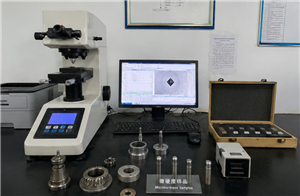
A practical RFQ checklist for QC labs sourcing Micro Vickers hardness testers, automatic hardness testing systems, metallographic preparation equipment and calibration accessories.
-
06-06 2026
Microhardness Testing For Coatings, Thin Layers And Surface Treatment Parts
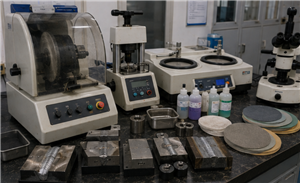
Microhardness testing for coatings, thin layers, and surface treatment parts is not only about buying a Micro Vickers tester. Reliable results depend on correct test load, sample preparation, edge retention, optical clarity, calibration blocks, test point control, and report software. For coating suppliers, heat treatment shops, plating companies, surface engineering labs, and industrial QC departments, a complete solution may include Micro Vickers hardness tester, metallographic cutting machine, mounting system, grinding and polishing machine, microscope, calibration blocks, XY stage, and automatic vision software. If your factory needs to inspect coatings, thin layers, carburized layers, nitrided layers, weld sections, or surface-treated components, share your sample details before ordering. A complete recommendation can help avoid wrong load selection, poor sample preparation, and unreliable microhardness results.
-
06-01 2026
How To Test Case Depth In Carburized And Nitrided Metal Parts
Testing case depth in carburized and nitrided metal parts requires more than surface hardness measurement. It needs a prepared cross-section, controlled test point spacing, Micro Vickers hardness values from surface to core, and a clear hardness profile report. For heat treatment shops, the most practical solution usually includes metallographic cutting, mounting, grinding and polishing, microscope inspection, Micro Vickers hardness testing, calibration blocks, and software for profile analysis and report export. If your factory needs to verify carburized layers, nitrided layers, or induction-hardened zones, share your sample details and reporting requirements before ordering. A complete recommendation can help you build a reliable case depth testing workflow and avoid incomplete equipment configuration.
-
05-31 2026
Hardness Testing Equipment For Heat Treatment Shops: What Should Be Included
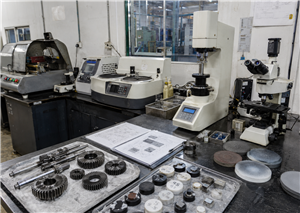
Hardness testing equipment for heat treatment shops should be selected according to real production needs. A Rockwell hardness tester is useful for fast HRC checks after quenching and tempering. A Micro Vickers hardness tester is important for case depth, carburized layers, nitrided layers, and induction-hardened zones. For shops that need customer-ready reports, the setup should also include calibration blocks, correct indenters, fixtures, sample preparation equipment, microscope inspection, and software export functions. This makes the testing process more stable, traceable, and professional. If you are planning to build or upgrade a heat treatment QC lab, share your parts, materials, processes, hardness standards, and reporting requirements before ordering. A complete recommendation can help you avoid missing key equipment and improve long-term inspection reliability.
-
05-30 2026
Which Hardness Testing Method Is Best For Your Materials: Rockwell, Brinell, Or Vickers
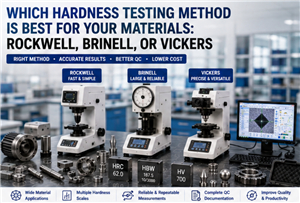
Rockwell, Brinell, and Vickers hardness testing methods each have clear advantages. Rockwell is best for fast production inspection, Brinell is best for large or coarse materials, and Vickers is best for precision testing, thin layers, coatings, welds, and small samples. The right choice depends on material type, sample size, surface condition, required scale, testing speed, accuracy needs, and report requirements. In many industrial QC labs, more than one method may be needed to cover different materials and parts. If you are not sure which method is suitable, share your sample details before ordering. A complete recommendation can help you choose the right hardness tester, accessories, calibration blocks, and sample preparation equipment.
-
05-26 2026
Automatic Vision Hardness Testers: Improve Accuracy & Lab Efficiency
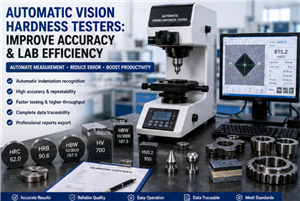
Automatic vision hardness testers help laboratories improve measurement accuracy, reduce operator variation, speed up routine testing, and generate more professional quality reports. They are especially valuable for Vickers, Micro Vickers, Brinell, coating inspection, case depth analysis, weld testing, and high-volume industrial QC. Buyers should compare more than the machine price. Camera quality, optics, software, stage control, report functions, calibration accessories, and sample preparation workflow all affect the final testing performance. If your laboratory needs stable results, saved images, batch data, and customer-ready reports, an automatic vision hardness testing solution can provide stronger long-term value than a basic manual system.
-
05-24 2026
Micro Vickers Hardness Testers: Which One Fits Thin Layers & Small Parts
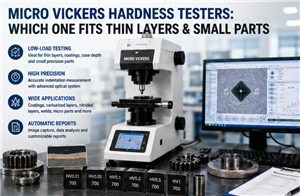
Micro Vickers hardness testers are ideal for thin layers, coatings, small parts, case depth analysis, weld sections, and precision hardness measurement. The right model should be selected according to test force range, layer thickness, sample size, optical clarity, stage control, automation level, and reporting requirements. Buyers should not choose only by price. A low-cost manual model may be enough for occasional testing, while an automatic Micro Vickers tester with motorized stage and software is better for high-volume labs, hardness profiles, traceable reports, and customer documentation. If your factory is testing coatings, carburized layers, nitrided layers, induction-hardened zones, or small precision components, provide your sample details before quotation. A complete recommendation can help you avoid wrong model selection and improve long-term QC reliability.