
How To Test Case Depth In Carburized And Nitrided Metal Parts
How To Test Case Depth In Carburized And Nitrided Metal Parts
Case depth testing is critical for carburized, nitrided, carbonitrided, and induction-hardened metal parts. To obtain reliable results, factories need proper sample cutting, mounting, grinding, polishing, Micro Vickers hardness testing, test point spacing, hardness profile analysis, calibration blocks, and traceable QC reports.
Carburized Parts
Commonly used for gears, shafts, transmission parts, and wear-resistant components
Nitrided Parts
Used for molds, tools, dies, precision shafts, and parts needing hard surfaces with low distortion.
Micro Vickers
Measures hardness changes from surface to core with low loads and small indentations.
Hardness Profile
Software can generate case depth curves, test point records, and customer-ready reports.
Why Case Depth Testing Matters
Carburizing and nitriding are widely used to improve surface hardness, wear resistance, fatigue strength, and service life of metal parts. However, the final quality cannot be judged only by surface hardness. Buyers and QC engineers also need to know how deep the hardened layer extends into the part.
If the hardened layer is too shallow, the part may wear quickly or fail under load. If the layer is too deep, the part may become brittle, distorted, or outside the required specification. For gears, shafts, bearings, molds, tools, and automotive components, case depth is often a key acceptance item.
Reliable case depth testing requires more than one hardness value. It usually requires a prepared cross-section, multiple Micro Vickers test points from the surface to the core, and a hardness profile that shows how hardness changes with distance.
1. Understand The Difference Between Surface Hardness And Case Depth
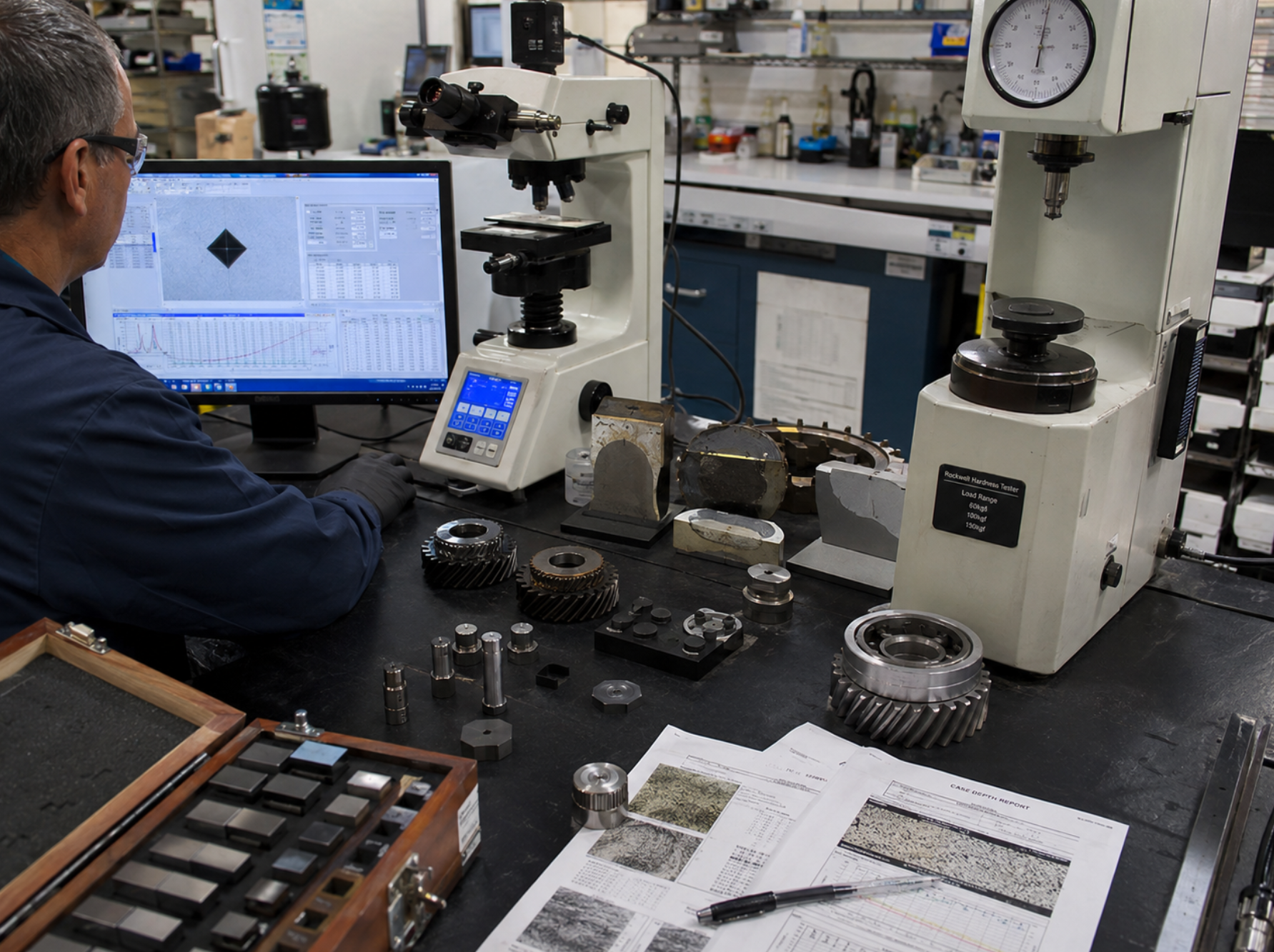
Surface hardness tells you how hard the outer layer is. Case depth tells you how far the hardening effect extends below the surface. These two values are related, but they are not the same. A part may have high surface hardness but insufficient effective hardened depth. Another part may meet depth requirements but have poor surface hardness due to incorrect heat treatment control.
For routine production checks, Rockwell hardness testing may be enough to confirm surface hardness. For case depth verification, especially on carburized and nitrided parts, Micro Vickers testing is commonly used because it can measure small points along the cross-section.
| Inspection Item | What It Measures | Typical Equipment |
|---|---|---|
| Surface hardness | Hardness value on the outer surface | Rockwell hardness tester or Vickers tester |
| Effective case depth | Depth where hardness remains above the specified limit | Micro Vickers hardness tester with hardness profile software |
| Total case depth | Full depth of visible or measurable hardened layer | Metallographic microscope and prepared cross-section |
| Hardness gradient | Hardness change from surface toward core | Micro Vickers tester with XY stage and report software |
2. Prepare The Cross-Section Correctly
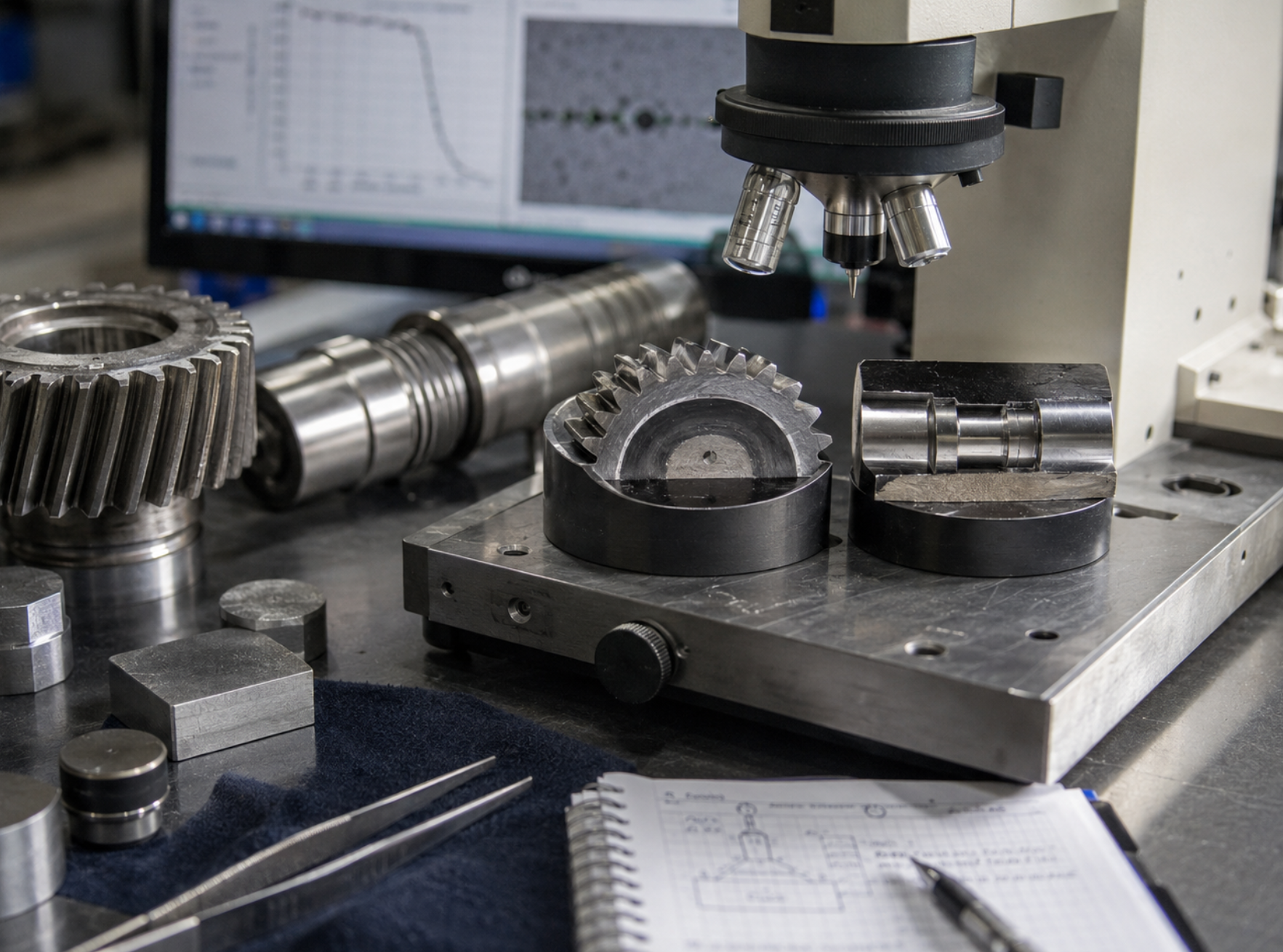
Case depth testing starts with sample preparation. The part must usually be cut through the area that needs inspection. The cutting process should avoid heat damage, deformation, and edge rounding. If the surface layer is damaged during cutting or polishing, the hardness profile may no longer represent the real part condition.
After cutting, the sample is usually mounted, ground, polished, cleaned, and inspected before Micro Vickers testing. For nitrided layers and thin hardened zones, edge retention is especially important. Poor polishing can make small indentations hard to measure, while poor mounting can affect sample flatness and support.
| Preparation Step | Purpose | Buyer Checkpoint |
|---|---|---|
| Metallographic cutting | Obtains the required cross-section | Use low-damage cutting and coolant control |
| Mounting | Supports the sample and protects the edge | Choose mounting method based on material and layer sensitivity |
| Grinding and polishing | Creates a flat and clear surface for indentation measurement | Avoid scratches, deformation, and rounded edges |
| Microscope inspection | Confirms surface quality and layer condition | Check whether the surface is ready for Micro Vickers testing |
3. Use Micro Vickers Testing To Build A Hardness Profile
Micro Vickers testing is one of the most practical methods for case depth measurement because it uses low test forces and small diamond-shaped indentations. The operator places test points at controlled distances from the surface toward the core and records the hardness value at each point.
The result is a hardness profile curve. The effective case depth is usually determined by the point where hardness drops to a specified limit according to the customer standard or internal process requirement. For example, a carburized gear may need a defined effective case depth before shipment approval.
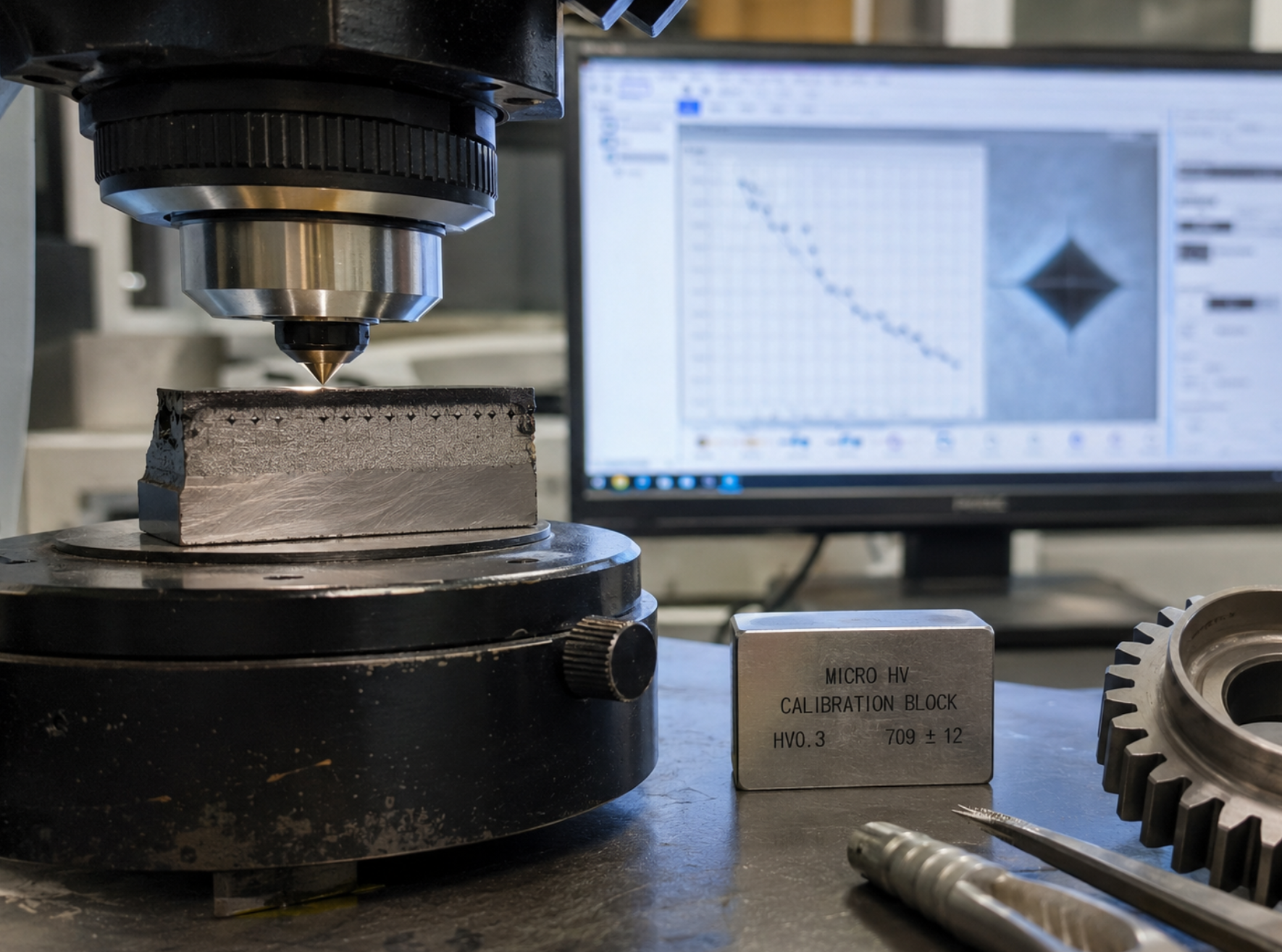
A Micro Vickers case depth setup should include:
Stable low-load Micro Vickers hardness tester.
Clear optical system or automatic vision measurement.
Manual or motorized XY stage for test point positioning.
Micro HV calibration blocks for verification.
Software for hardness profile and case depth report export.
Prepared cross-section with flat and polished surface.
4. Control Test Point Spacing And Measurement Location
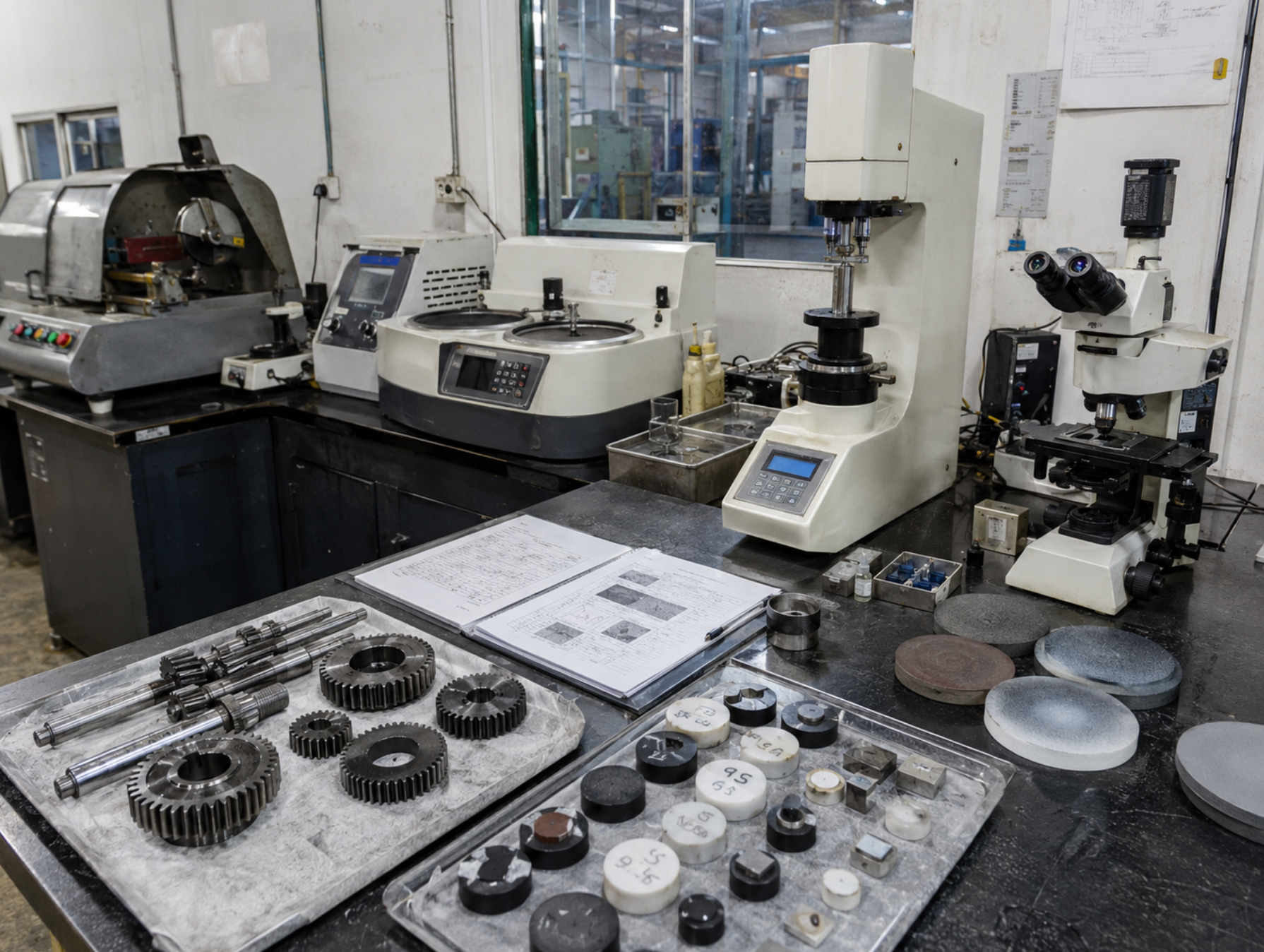
Test point spacing is a major factor in case depth reliability. If the points are too far apart, the hardness curve may miss important changes in the hardened layer. If the points are too close, indentations may influence each other or become difficult to measure. The spacing should follow the relevant standard, drawing requirement, or customer specification.
Test location also matters. On gears, shafts, and complex parts, the selected cross-section must represent the critical area. For induction-hardened tracks or nitrided surfaces, the test path should be planned carefully from the surface to the core.
| Control Item | Why It Matters | Recommended Practice |
|---|---|---|
| First test point | Captures near-surface hardness condition | Place according to layer thickness and standard requirement |
| Point spacing | Affects hardness curve resolution | Use consistent spacing and avoid indentation interference |
| Test direction | Determines surface-to-core profile accuracy | Measure perpendicular to the hardened surface when applicable |
| Critical area selection | Ensures result represents the actual working surface | Confirm location from drawing, process, or customer requirement |
5. Generate A Traceable Case Depth Report
For heat treatment shops and metal parts suppliers, case depth testing is often used for customer approval. A professional report should show sample information, material, heat treatment process, test method, test force, test point distance, hardness values, curve data, calibration status, and final case depth result.
Automatic vision Micro Vickers systems can improve report quality by saving indentation images, test coordinates, hardness values, and profile curves. This reduces manual recording mistakes and helps customers review the result more clearly.
A useful case depth report should include:
Sample ID, material, part type, and heat treatment process.
Test method, test force, and hardness scale.
Distance from surface for each test point.
Hardness value at each depth.
Hardness profile curve.
Effective case depth result according to the required limit.
Calibration block record and operator information.
Exportable PDF or Excel report for customer review.
Key Questions Before Requesting A Case Depth Testing Solution
Before buying equipment for case depth testing, factories should provide detailed sample and process information. This helps the supplier recommend the right Micro Vickers tester, sample preparation machines, software, calibration blocks, and fixtures.
What process is used: carburizing, nitriding, carbonitriding, or induction hardening?
What parts are tested: gears, shafts, bearings, molds, tools, fasteners, or automotive parts?
What is the expected surface hardness and core hardness?
What effective case depth range is required?
Which hardness scale and test force are required?
How many test points are needed for each profile?
Do you need manual or automatic vision measurement?
Do you need a manual or motorized XY stage?
Do you already have cutting, mounting, grinding, and polishing equipment?
Do customers require PDF reports, curve data, images, or calibration records?
Conclusion: Case Depth Testing Requires A Complete Workflow
Testing case depth in carburized and nitrided metal parts requires more than surface hardness measurement. It needs a prepared cross-section, controlled test point spacing, Micro Vickers hardness values from surface to core, and a clear hardness profile report.
For heat treatment shops, the most practical solution usually includes metallographic cutting, mounting, grinding and polishing, microscope inspection, Micro Vickers hardness testing, calibration blocks, and software for profile analysis and report export.
If your factory needs to verify carburized layers, nitrided layers, or induction-hardened zones, share your sample details and reporting requirements before ordering. A complete recommendation can help you build a reliable case depth testing workflow and avoid incomplete equipment configuration.
FAQ
What is case depth in heat-treated metal parts?
Case depth is the depth of the hardened layer below the surface after processes such as carburizing, nitriding, carbonitriding, or induction hardening.
Which hardness tester is used for case depth testing?
Micro Vickers hardness testers are commonly used because they can measure small indentations at controlled distances from the surface to the core.
Do carburized and nitrided samples need polishing?
Yes. A flat, polished cross-section is usually required so the Micro Vickers indentation can be measured clearly and the layer edge is not damaged.
Why is hardness profile software useful?
Software can record test point distance, hardness values, indentation images, and profile curves, making the case depth report easier to review and trace.
Need A Case Depth Testing Solution For Carburized Or Nitrided Parts?
Share your part type, material, heat treatment process, expected case depth, test force, reporting requirements, and current lab equipment. We can help recommend Micro Vickers testers, sample preparation equipment, calibration blocks, and complete case depth testing solutions.