-
06-05 2026
How To Choose Hardness Testing Equipment For Casting And Forging Factories
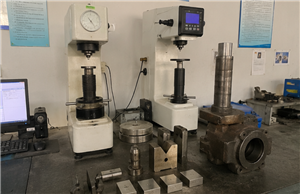
Hardness testing equipment for casting and forging factories should be selected according to real production conditions. Brinell testing is often the first choice for large, coarse, or uneven metal structures because its larger indentation provides more representative results. Rockwell testing can be useful for faster checks on machined or prepared surfaces. The correct setup should include proper test force, ball diameter, machine capacity, sample support, calibration blocks, indenters, digital measurement options, and traceable reporting tools. For large or irregular parts, fixture and support design can be just as important as the machine itself. If your factory produces castings, forgings, heavy metal parts, or heat-treated components, share your sample size, material, hardness range, and report requirements before ordering. A complete recommendation can help prevent wrong model selection and improve long-term QC stability.
-
05-30 2026
Which Hardness Testing Method Is Best For Your Materials: Rockwell, Brinell, Or Vickers
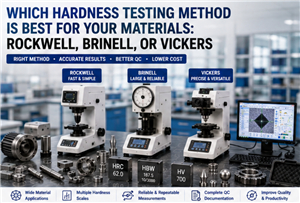
Rockwell, Brinell, and Vickers hardness testing methods each have clear advantages. Rockwell is best for fast production inspection, Brinell is best for large or coarse materials, and Vickers is best for precision testing, thin layers, coatings, welds, and small samples. The right choice depends on material type, sample size, surface condition, required scale, testing speed, accuracy needs, and report requirements. In many industrial QC labs, more than one method may be needed to cover different materials and parts. If you are not sure which method is suitable, share your sample details before ordering. A complete recommendation can help you choose the right hardness tester, accessories, calibration blocks, and sample preparation equipment.
-
05-27 2026
Top Mistakes To Avoid When Choosing Hardness Testing Equipment
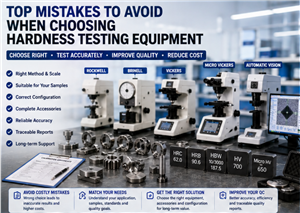
The biggest mistake when choosing hardness testing equipment is treating the purchase as a simple machine comparison. In reality, reliable hardness testing depends on method selection, sample compatibility, test force, calibration blocks, indenters, fixtures, sample preparation, automation, software, and operator workflow. Buyers should avoid choosing only by price or catalogue appearance. A suitable solution should match the factory’s real materials, samples, standards, testing volume, reporting needs, and long-term quality control process. If you are not sure which hardness tester is right for your application, share your sample details and testing requirements before ordering. A complete technical recommendation can help you avoid wrong equipment selection and improve testing reliability from the beginning.
-
05-23 2026
Reduce Measurement Errors: Tips For Accurate Brinell Hardness Testing
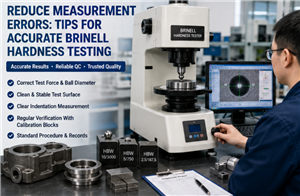
Reducing measurement errors in Brinell hardness testing requires more than selecting a high-force machine. Buyers and QC teams should control the complete process, including test force, ball diameter, indenter condition, sample surface, support stability, indentation spacing, diameter measurement, calibration blocks, and operator procedure. For castings, forgings, large metal parts, aluminum alloys, copper alloys, and steel components, Brinell testing can provide reliable hardness data when the process is properly controlled. Digital diameter measurement and traceable reporting can further improve repeatability and customer confidence. If your factory wants more stable Brinell hardness results, start by reviewing the full workflow instead of only checking the final number. A complete testing solution can reduce rework, avoid quality disputes, and support stronger industrial QC documentation.
-
05-11 2026
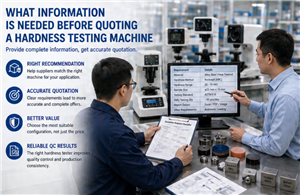
What Information Is Needed Before Quoting A Hardness Testing Machine
A good hardness testing machine quotation should be based on the buyer’s real material, sample condition, testing method, workflow, and documentation needs. Without this information, the quotation may be too vague or the recommended machine may not fit the application. Before requesting a quote, buyers should prepare details about material type, hardness range, sample size, test standard, load range, automation level, accessories, and report requirements. If sample preparation is needed, that should also be included in the discussion. With clear technical information, suppliers can recommend a more suitable machine configuration, reduce unnecessary cost, and help the buyer build a more reliable quality control process.
-
05-07 2026
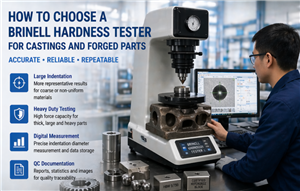
How To Choose A Brinell Hardness Tester For Castings And Forged Parts
Brinell hardness testing is a strong choice for castings, forged parts, large metal blanks, and materials with coarse or uneven structures. The larger indentation can provide a more representative hardness value than smaller indentation methods when testing heavy industrial parts. To choose the right Brinell hardness tester, buyers should compare test force range, ball indenter size, frame rigidity, sample capacity, throat depth, measurement method, digital reporting functions, and accessory support. For large or immovable parts, portable Brinell testing may also be considered. The best tester is not only the one with the highest force. It is the machine that matches your material, sample size, testing standard, quality control workflow, and documentation requirements. Providing detailed sample information before quotation will help ensure a more accurate equipment recommendation.
-
05-04 2026
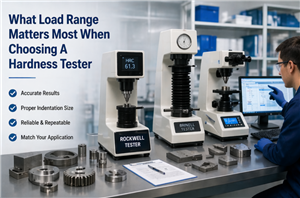
What Load Range Matters Most When Choosing A Hardness Tester
Load range matters because it directly affects indentation size, measurement accuracy, sample damage, and result repeatability. A suitable hardness tester should not be selected only by maximum force. It should be selected according to the material, thickness, surface condition, test method, accuracy requirement, and quality control workflow. For thin coatings and small parts, low-load Micro Vickers or Vickers testing is often more suitable. For routine production inspection, Rockwell testing may provide faster results. For large castings and forgings, Brinell testing can provide a more representative value. For laboratories with multiple testing needs, a wider load range or multi-method configuration may be more practical. Before purchasing, provide detailed sample information and testing requirements. This will help identify the correct load range and avoid choosing a hardness tester that is either under-configured, over-configured, or unsuitable for the real application.
-
04-23 2026
Why Brinell Hardness Testers Are Still Preferred For Large Metal Parts And Castings
Brinell hardness testers are still preferred for large metal parts and castings because the method matches the material reality, supports practical interpretation, and remains highly useful in heavy-industry workflows. Buyers who understand this can make better procurement decisions by choosing Brinell equipment where it truly adds value instead of treating all hardness methods as interchangeable.
-
01-28 2026
In-Lab vs. Portable Leeb Hardness Testers: Pros and Cons
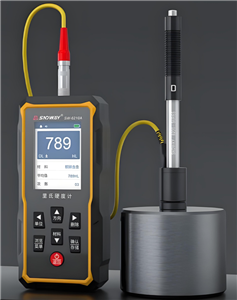
In summary, both laboratory and portable Leeb hardness testers offer distinct advantages tailored to different testing environments. The laboratory version excels in providing unparalleled precision and stability for critical, controlled applications, while the portable version offers unmatched flexibility for on-site, immediate assessments. Understanding their respective strengths and limitations allows manufacturers to make an informed choice. Suzhou Xinhe Measurement Instrument Co., Ltd. and Skyline International provide both solutions, offering the technical guidance needed to implement an effective hardness testing strategy that leverages the best of both worlds for optimal quality control.
-
01-27 2026
Essential Instruments for a Mechanical Testing Laboratory
In summary, a well-equipped mechanical testing laboratory is a strategic asset, integral to product development, quality assurance, and compliance. The synergy between core instruments like Universal Testing Machines, specialized equipment for impact and metallographic analysis, and the foundational support of calibration tools creates a robust framework for material evaluation. Suzhou Xinhe Measurement Instrument Co., Ltd. and Skyline International provide the essential instruments and technical expertise necessary to establish and maintain such a laboratory, empowering manufacturers to make data-driven decisions, enhance product quality, and build a reputation for reliability in the global marketplace.