


Why Brinell Hardness Testers Are Still Preferred For Large Metal Parts And Castings
In a market full of portable testers, digital screens, and multi-scale automatic systems, some buyers assume that Brinell hardness testing is old-fashioned. Yet in many foundries, forging plants, heavy-equipment workshops, and steel-processing operations, Brinell testers remain a preferred choice. The reason is not tradition alone. It is practical performance. Large metal parts and castings often require a method that can average local material variation, tolerate rougher surfaces, and provide meaningful results on heavy sections. In these situations, Brinell testing still offers advantages that lighter and faster methods do not always match.
Brinell Testing Fits The Nature Of Large And Heavy Parts
Large castings and forged components do not behave like small precision parts. Their surfaces may be rougher, their internal structures less uniform, and their mass much greater. A Brinell indentation covers a relatively larger area than many other hardness methods, which helps reduce the influence of small local variations and produces a result that better represents the overall material condition. This is especially useful for cast iron housings, large steel blocks, forged shafts, rollers, molds, and other heavy industrial parts where buyers care about broad material performance rather than micro-scale hardness alone.
This is also why Brinell testers are often preferred in incoming inspection and heavy-industry quality control. When the tested part is large and difficult to move, the method’s strong practical relevance matters more than flashy software features. Buyers choosing equipment for such work should first ask whether the method matches the part family, the surface condition, and the mechanical behavior of the material. In many cases, Brinell remains the right answer because it fits the workpiece reality better than more modern-looking alternatives.
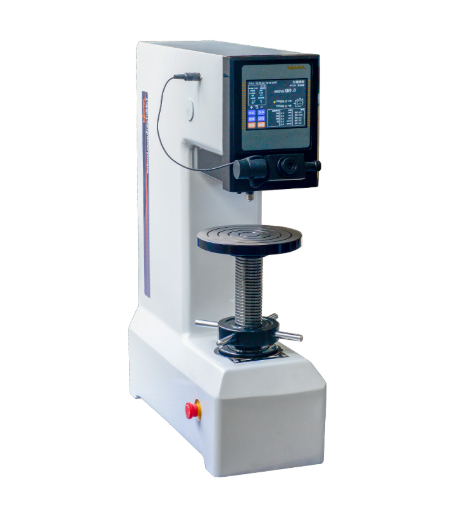
Brinell Results Often Offer Better Practical Interpretation
For castings and heavy metal parts, hardness is often used as a process-control and material-verification indicator rather than a laboratory research number. Buyers want results that help them judge whether the foundry process, heat treatment, or forging condition is broadly under control. Because Brinell testing uses a larger indentation, many quality teams find the results easier to interpret in these environments. They can compare batches more confidently and make decisions that reflect the real condition of the part instead of overreacting to small local differences.
That does not mean Brinell is always superior. It means it is often superior for the right application. Buyers should compare load capacity, frame rigidity, support fixtures, test area access, and reading method to ensure the chosen Brinell tester can handle their part sizes and workflow. The best purchasing decision comes from understanding why the method is still preferred in heavy industry, and then matching the machine configuration to that same operational logic.
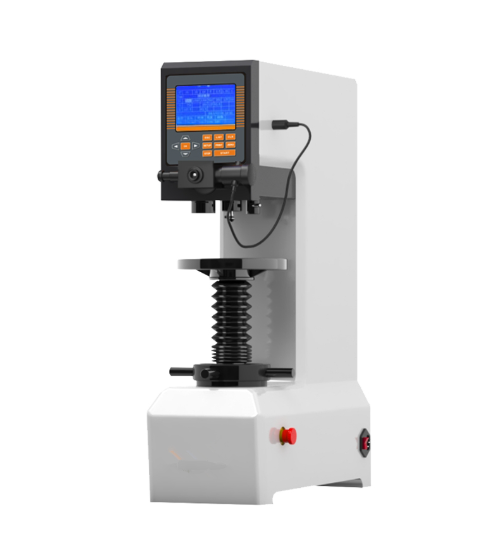
Equipment Selection Should Focus On Capacity, Stability, And Workflow
When buying a Brinell hardness tester, buyers should not stop at the test principle. They should check whether the machine has enough physical capacity for the largest parts, whether loading is stable, whether the support table and fixtures are practical, and whether the reading system is suitable for the team’s skill level. In high-volume use, even the convenience of moving large parts into position can affect efficiency and consistency. A well-matched Brinell system reduces both handling difficulty and interpretation error.
Long-term support also matters. Buyers should ask about calibration blocks, ball indenters, optical reading support, maintenance response, and whether the supplier understands castings and heavy-industry applications. A strong supplier will not only sell a Brinell tester. They will explain how to use it on the buyer’s real materials and real parts. That is one of the main reasons Brinell systems still hold value in modern procurement: they are not outdated tools, but still-relevant solutions for the right jobs.
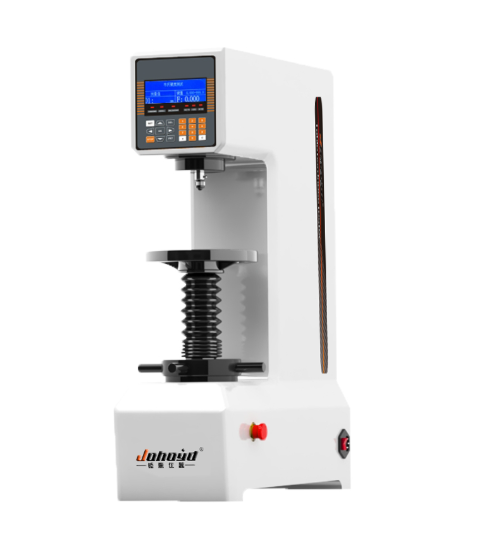
Brinell hardness testers are still preferred for large metal parts and castings because the method matches the material reality, supports practical interpretation, and remains highly useful in heavy-industry workflows. Buyers who understand this can make better procurement decisions by choosing Brinell equipment where it truly adds value instead of treating all hardness methods as interchangeable.