


How Reliable Is A Leeb Hardness Tester For On-Site Testing Of Heavy Components
Leeb hardness testers are popular because they are portable, fast, and practical for large components that cannot easily be moved to a bench machine. For buyers in shipbuilding, steel structures, energy equipment, heavy machinery, and maintenance service, this makes the Leeb method highly attractive. But portability alone does not guarantee reliability. The key procurement question is not whether a Leeb tester can be taken to the job site. It is whether it can deliver stable, interpretable data on heavy components under real surface and operator conditions.
Reliability Depends Strongly On The Test Surface And Part Mass
The Leeb method works by impact and rebound, so the condition of the part has a direct effect on the result. Heavy components are often suitable because their mass helps absorb the test energy properly, but the surface still matters. Rough scale, coatings, curvature, oil, loose support, or poor preparation can all reduce data quality. Buyers should therefore avoid evaluating a Leeb tester only on polished demo blocks. They should ask how the instrument performs on the actual kinds of parts they inspect, such as shafts, weld zones, cast housings, steel plates, rollers, or machined assemblies.
Buyers should also check whether minimum mass and thickness conditions are relevant for their parts, and whether special support blocks or coupling methods are needed. A Leeb tester can be highly practical, but only when the workpiece condition is understood and controlled. Reliability begins with application suitability. If the part does not support the method well, no display upgrade or software menu will solve that problem.
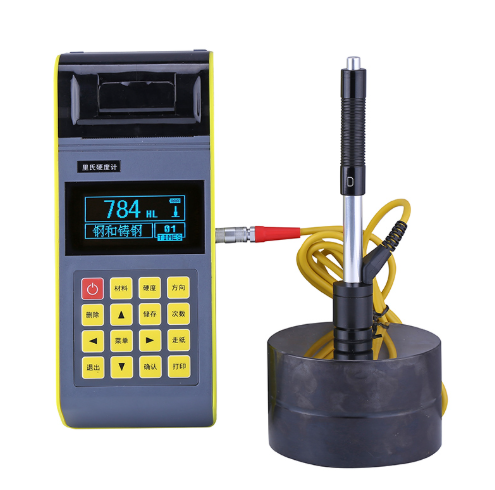
Operator Technique And Test Direction Influence Field Results
On-site testing is rarely performed in perfect laboratory conditions. Components may be vertical, overhead, confined, or only partly accessible. Different operators may hold the probe differently, choose slightly different locations, or apply different preparation effort. These factors can influence results more than buyers expect. That is why procurement decisions should include more than a basic accuracy claim. Buyers should ask whether the tester offers direction compensation, whether the probe design supports stable contact, and how easy it is to standardize the testing routine across multiple users.
A strong evaluation method is to perform repeated tests on the same heavy part under site-like conditions, ideally with more than one operator. Buyers should observe both the average value and the spread of results. If the instrument performs only when used by one skilled technician on one ideal surface, field reliability is limited. If it remains consistent across realistic use conditions, the equipment is much more valuable for maintenance and heavy-component inspection work.
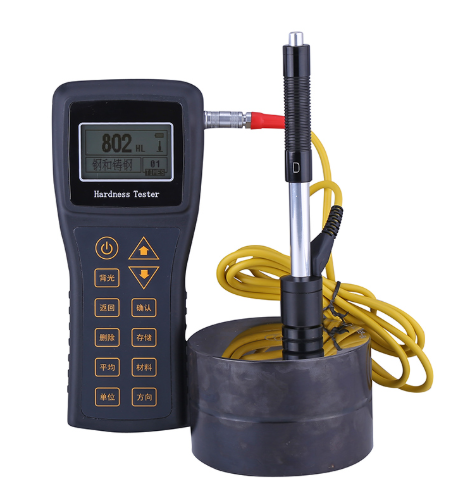
Procurement Should Include Verification, Conversion Logic, And Support
Leeb testers are often appreciated for convenience, but buyers should also ask how the data will be verified and interpreted. In many cases, results are converted to other hardness scales, and those conversions must be used carefully depending on material type. Buyers should understand what scale conversions are relevant, how verification is done, and whether reference blocks and calibration support are easy to obtain. Practical reliability comes from a controlled measurement routine, not from convenience alone.
A supplier that understands heavy-component inspection should be able to discuss material category, surface preparation, probe selection, direction, data variation, and reporting practice in one complete workflow. That kind of support is a better indicator of field reliability than a simple promise that the tester is 'accurate'. In on-site work, reliable equipment is equipment that still gives useful answers when the environment is not ideal.
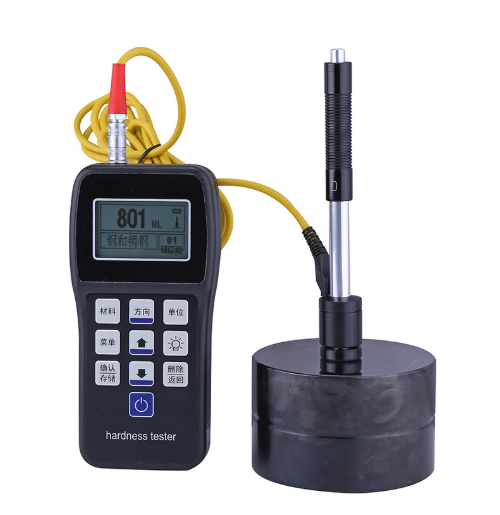
A Leeb hardness tester can be highly reliable for on-site testing of heavy components, but only when the method is matched to the part, operator practice is controlled, and verification support is in place. Buyers should treat portability as an advantage, not as proof of suitability. Real reliability comes from fit, discipline, and support.