


What Should Buyers Check Before Purchasing A Rockwell Hardness Tester For Production Lines
Rockwell hardness testers are widely used in production environments because they offer direct readings, efficient workflow, and strong suitability for repetitive inspection. That makes them especially attractive for heat-treated parts, fasteners, shafts, tools, and other components that need frequent batch checks. However, buying a Rockwell tester for a production line is not simply about choosing a test scale. Buyers need to know whether the machine can keep pace with inspection volume, maintain consistent loading and reading, fit the part geometry, and support operators who may use it repeatedly under time pressure.
Check Whether The Tester Matches Part Geometry And Test Scale Requirements
The first thing buyers should check is whether the selected Rockwell method matches the parts being produced. Material type, hardness range, thickness, surface condition, and part geometry all influence whether a given scale and indenter setup is suitable. Small parts, curved parts, thin sections, and awkwardly shaped components can create support and positioning issues if the machine is chosen only from a catalog. Buyers should confirm the practical fit of the anvils, support fixtures, test head access, and usable scales before making a final decision.
This matters especially on a production line, where parts arrive continuously and the inspection station cannot afford frequent setup adjustments. A tester that is theoretically compatible but inconvenient in real handling can slow down the whole quality process. The best machine for production is often the one that supports the target parts with the least repositioning effort and the lowest risk of operator misalignment.
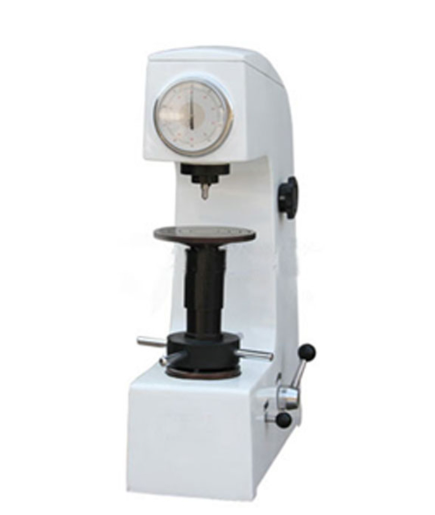
Evaluate Repeatability, Speed, And Ease Of Use Under Batch Conditions
Production-line inspection is different from occasional laboratory testing. The machine must maintain consistency over many cycles, often with different operators and repeated loading of similar parts. Buyers should therefore pay close attention to frame rigidity, load application stability, dwell control, reading clarity, and user workflow. A Rockwell tester may have good nominal specifications but still become troublesome if the operator interface is unclear, the setup is awkward, or the readings vary under fast repetitive use.
A useful purchasing check is to simulate batch testing rather than single-sample testing. Buyers should ask how many parts can be tested per hour, how quickly the operator can stabilize the part, whether data can be recorded easily, and what common sources of error appear during repetitive use. In production, workflow efficiency and consistency are often more valuable than rare advanced features. The machine should help standardize the inspection routine instead of depending on individual operator experience to achieve acceptable results.
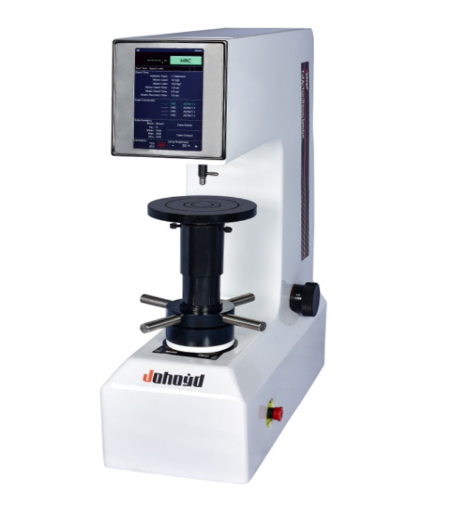
Review Maintenance, Calibration, And Integration Into Quality Workflow
For a Rockwell hardness tester used on a production line, support after installation matters almost as much as the machine itself. Buyers should confirm calibration support, certified hardness blocks, indenter replacement, preventive maintenance, and the supplier’s response capability. A machine that works well on day one but is difficult to verify or maintain later will create hidden cost and quality risk. Repeatable production inspection depends on controlled equipment condition, not only on good initial performance.
Buyers should also check how the instrument fits into the wider quality workflow. Can results be recorded simply? Can operators be trained quickly? Can the machine support traceable reporting if the customer asks for it? The strongest production-line purchase is not the one with the most impressive specification sheet. It is the one that can be used correctly every day, by real operators, at production speed, with stable and defendable results.
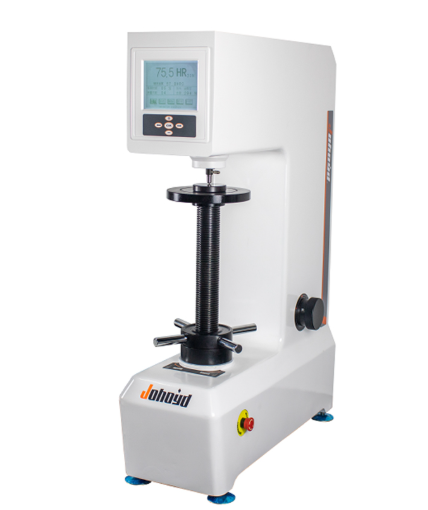
Before purchasing a Rockwell hardness tester for a production line, buyers should verify part fit, batch-use stability, and long-term support. When those three areas are aligned, Rockwell testing becomes one of the most efficient and dependable tools in routine quality control.