


How To Compare Vickers Hardness Testers Beyond Magnification And Basic Specs
When buyers compare Vickers hardness testers, magnification, camera resolution, and screen design are often the first features that attract attention. Those points matter, but they do not tell the whole story. In real industrial procurement, the value of a Vickers tester depends on how well it controls load, reveals the indentation clearly, supports repeatable reading, and fits the buyer’s actual materials and test purpose. A machine with impressive optics but weak loading stability or awkward workflow can still become a poor investment. That is why serious buyers compare Vickers systems beyond magnification and basic specifications.
Focus On Load Control And Indentation Quality First
The core of Vickers testing is not the screen image but the quality of the indentation itself. Buyers should therefore start by checking load accuracy, dwell-time stability, frame rigidity, vibration control, and the machine’s ability to create clean and repeatable impressions. If the indentation is inconsistent, poorly formed, or hard to identify, even the best optical system cannot fully recover the reliability of the result. Good Vickers performance begins with stable mechanical execution and only then benefits from strong imaging.
This is especially important when the buyer is testing small parts, heat-treated zones, weld transitions, thin sections, or materials with subtle hardness differences. In such applications, a slight problem in load control can have more influence than a higher magnification lens. Buyers should ask for demonstration results on representative samples and compare whether the impressions are both visually clear and dimensionally repeatable. That gives far more procurement value than comparing brochure numbers in isolation.
Compare Reading Method, Automation Level, And Operator Dependence
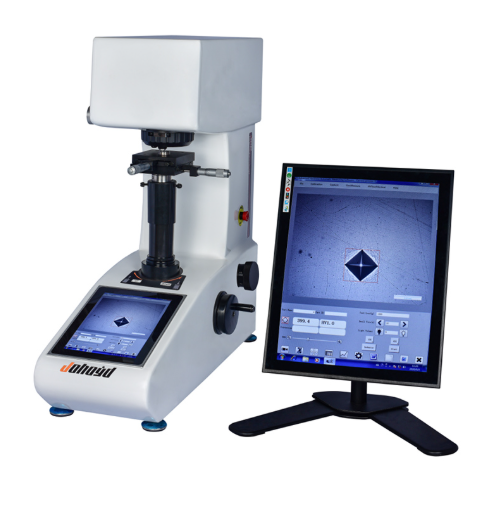
The second step is to compare how the indentation will actually be read and recorded. Some Vickers testers rely heavily on operator judgment, while others offer digital image analysis, semi-automatic reading, or more guided workflows. Buyers should decide how much manual interpretation is acceptable in their own quality system. In a skilled laboratory, a manual method may work well. In a production support lab with several users, a more automated reading process may reduce variation and training burden.
This is where workflow matters more than surface-level specifications. Buyers should observe how quickly the operator can locate the indentation, whether the software is intuitive, how measurement results are stored, and whether repeat testing becomes tiring or error-prone. A Vickers machine that saves a few seconds and removes a few judgment errors from every test can create significant long-term value. Ease of correct use is often a stronger purchasing advantage than extra display features that look good but do little in daily operation.
Match The Machine To The Real Application And Support System
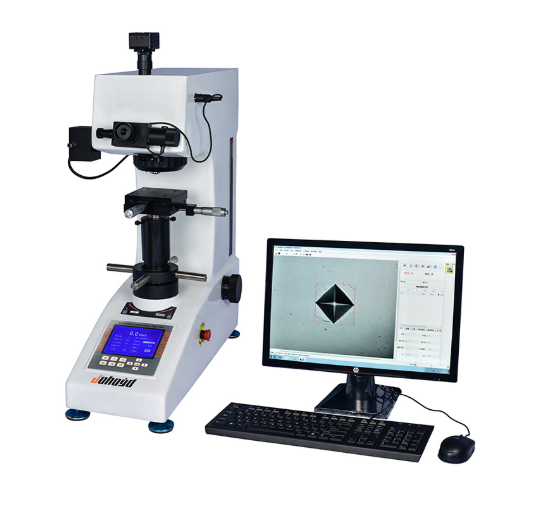
A Vickers hardness tester should always be chosen in relation to the buyer’s test purpose. Is it for metallographic analysis, case-depth checks, precision parts, micro-zones, failure investigation, or routine batch verification? The answer affects load range, optics, stage configuration, data recording, and the level of automation that makes sense. Buyers should resist buying more machine than their task requires, but they should also avoid buying an underpowered system that cannot handle future customer requirements.
Long-term support is part of this comparison. Buyers should ask about calibration blocks, service response, lens and indenter maintenance, software support, and operator training. A Vickers tester is valuable only when the full system remains stable and usable over time. When buyers compare machines this way, they move from comparing isolated optical numbers to comparing actual testing capability and long-term ownership confidence.
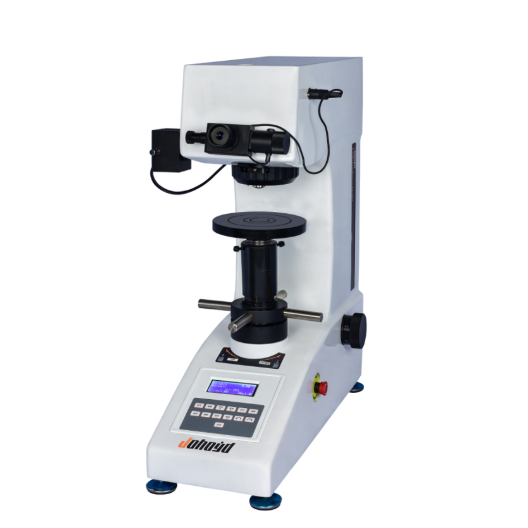
The smartest way to compare Vickers hardness testers is to focus on indentation quality, reading repeatability, workflow, and application fit before being impressed by magnification alone. In procurement, the best machine is the one that produces stable and defendable hardness results on the buyer’s actual materials every day.