-
05-06 2026
How To Choose A Rockwell Hardness Tester For Metal And Plastic Materials
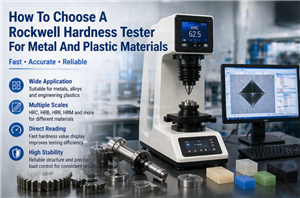
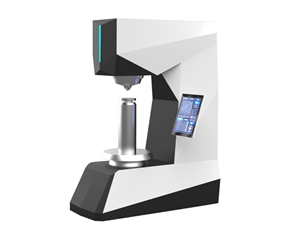
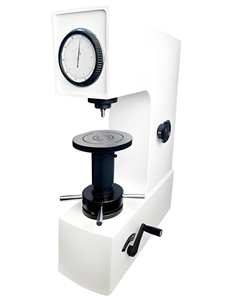
Choosing a Rockwell hardness tester for metal and plastic materials requires more than comparing price. Buyers should first confirm the material type, required Rockwell scale, indenter, test force, sample thickness, and testing purpose. Hardened metals, softer metals, engineering plastics, and thin samples may all require different configurations. For routine metal quality control, a digital Rockwell tester is often a practical choice. For higher-volume production inspection, an automatic Rockwell tester can improve repeatability and efficiency. For laboratories testing both metals and plastics, scale flexibility and accessory support become especially important. The best Rockwell hardness tester is the one that matches your real samples, testing standard, daily workload, and documentation needs. Before purchasing, provide detailed material and sample information so the tester configuration can be recommended correctly.
-
05-04 2026
What Load Range Matters Most When Choosing A Hardness Tester
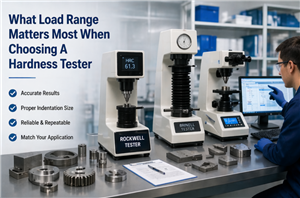
Load range matters because it directly affects indentation size, measurement accuracy, sample damage, and result repeatability. A suitable hardness tester should not be selected only by maximum force. It should be selected according to the material, thickness, surface condition, test method, accuracy requirement, and quality control workflow. For thin coatings and small parts, low-load Micro Vickers or Vickers testing is often more suitable. For routine production inspection, Rockwell testing may provide faster results. For large castings and forgings, Brinell testing can provide a more representative value. For laboratories with multiple testing needs, a wider load range or multi-method configuration may be more practical. Before purchasing, provide detailed sample information and testing requirements. This will help identify the correct load range and avoid choosing a hardness tester that is either under-configured, over-configured, or unsuitable for the real application.
-
04-25 2026
What Should Buyers Check Before Purchasing A Rockwell Hardness Tester For Production Lines
Before purchasing a Rockwell hardness tester for a production line, buyers should verify part fit, batch-use stability, and long-term support. When those three areas are aligned, Rockwell testing becomes one of the most efficient and dependable tools in routine quality control.
-
03-15 2026
How the ValuePro Hardness Tester Provides Reliable Measurements for Routine QC
The ValuePro Hardness Tester delivers reliable measurements for routine QC through a practical trifecta: a rugged and user-centric design built for shop-floor endurance, a foundation of accuracy rooted in regular calibration against traceable standards, and seamless integration into fast-paced, data-driven quality workflows. It proves that reliability in quality control is not the exclusive domain of high-end laboratory instruments but can be robustly achieved with purpose-built, straightforward tools that empower technicians to make confident, consistent, and correct decisions every day, safeguarding product quality and manufacturing efficiency.
-
01-27 2026
Essential Instruments for a Mechanical Testing Laboratory
In summary, a well-equipped mechanical testing laboratory is a strategic asset, integral to product development, quality assurance, and compliance. The synergy between core instruments like Universal Testing Machines, specialized equipment for impact and metallographic analysis, and the foundational support of calibration tools creates a robust framework for material evaluation. Suzhou Xinhe Measurement Instrument Co., Ltd. and Skyline International provide the essential instruments and technical expertise necessary to establish and maintain such a laboratory, empowering manufacturers to make data-driven decisions, enhance product quality, and build a reputation for reliability in the global marketplace.
-
01-21 2026
10 Steps to Perform an Accurate Rockwell Hardness Test
Performing an accurate Rockwell test is a systematic process where each step, from method selection and calibration to precise execution and verification, is critical. Neglecting any single step can compromise the entire result. By rigorously following this 10-step procedure, operators can generate reliable, repeatable, and defensible hardness data that forms the bedrock of effective quality control and material certification.
-
01-16 2026
Advanced Features of Modern Rockwell Hardness Testers
In summary, the advanced features of modern Rockwell hardness testers—encompassing automation, intelligent software, and enhanced versatility—have transformed them into sophisticated quality control hubs. They are no longer simple gauges but intelligent systems that deliver superior accuracy, ensure data integrity, and seamlessly integrate into modern digital manufacturing environments. For companies like Skyline International that supply these advanced instruments, these features are critical for helping manufacturers achieve unparalleled levels of quality control and operational efficiency.
-
01-15 2026
How does ValuePro hardness tester ensure manufacturing quality?
The ValuePro hardness tester is far more than a simple measurement device; it is a pivotal quality assurance asset embedded within the manufacturing workflow. It ensures manufacturing quality by providing the objective data backbone for material verification, enabling real-time process control to prevent defects, and delivering the documented proof necessary for building trust in a competitive global marketplace. By hardening the certainty of product specifications, it softens the risks associated with product failure, making it an indispensable tool for any manufacturer committed to excellence.