-
06-15 2026
When Should Factories Upgrade From Manual Hardness Testing To Automatic Vision Systems
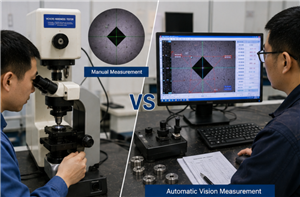
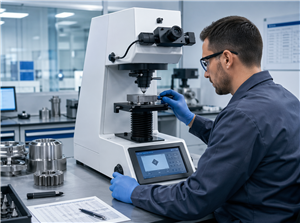
Factories should consider upgrading from manual hardness testing to automatic vision systems when manual reading causes unstable results, testing volume increases, Vickers or Brinell indentation measurement becomes time-consuming, case depth testing requires many points, customers require image-based reports, or QC labs need better traceability and repeatability.
-
05-26 2026
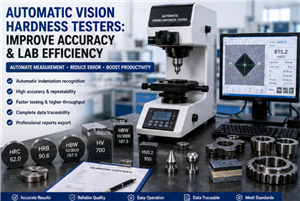
Automatic Vision Hardness Testers: Improve Accuracy & Lab Efficiency
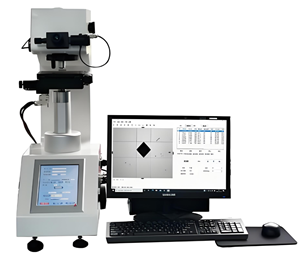
Automatic vision hardness testers help laboratories improve measurement accuracy, reduce operator variation, speed up routine testing, and generate more professional quality reports. They are especially valuable for Vickers, Micro Vickers, Brinell, coating inspection, case depth analysis, weld testing, and high-volume industrial QC. Buyers should compare more than the machine price. Camera quality, optics, software, stage control, report functions, calibration accessories, and sample preparation workflow all affect the final testing performance. If your laboratory needs stable results, saved images, batch data, and customer-ready reports, an automatic vision hardness testing solution can provide stronger long-term value than a basic manual system.
-
05-21 2026
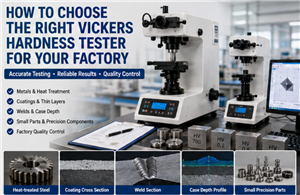
How To Choose The Right Vickers Hardness Tester For Your Factory
The right Vickers hardness tester should match your material, sample size, test force range, surface preparation condition, daily testing volume, and report requirements. A basic model may be enough for occasional inspection, while an automatic vision system is more suitable for high-volume factory QC, thin layers, coatings, weld sections, case depth testing, and traceable reports. Buyers should avoid choosing only by machine price. Instead, compare the complete testing workflow, including sample preparation, optical measurement, test force, stage control, software, calibration blocks, and after-sales support. If your factory needs reliable hardness inspection for production quality control, share your sample details and testing purpose before requesting a quote. This will help suppliers recommend a more accurate and cost-effective Vickers hardness testing solution.
-
05-05 2026
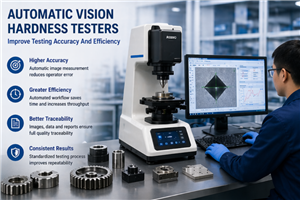
How Automatic Vision Hardness Testers Improve Testing Accuracy And Efficiency
Automatic vision hardness testers help quality control laboratories improve accuracy, repeatability, efficiency, and traceability. By using image recognition, software measurement, digital records, and report export, they reduce manual reading differences and make hardness testing easier to manage. For thin layers, coatings, case depth analysis, welded sections, small precision parts, and high-volume batch inspection, automatic vision measurement can provide strong long-term value. It is especially useful when test results must be consistent, reviewable, and suitable for customer or internal quality documentation. The best system should match your hardness method, sample type, load range, measurement accuracy, daily testing volume, and reporting needs. Before purchasing, prepare your sample details and quality control requirements so the machine configuration can be selected correctly.
-
05-01 2026
How To Choose A Vickers Hardness Tester For Industrial Quality Control
Choosing a Vickers hardness tester for industrial quality control should be based on the material, test load, sample condition, measurement accuracy, automation level, and reporting needs. A suitable tester helps improve inspection consistency, reduce operator error, and create reliable quality records for production and customer approval. For factories, laboratories, and testing centers, the best choice is not always the most expensive model. The right choice is the machine that matches your testing purpose, sample preparation process, daily workload, and documentation requirements. If you are not sure which configuration is suitable, providing sample details and testing requirements before quotation is the most efficient way to get a practical recommendation.
-
02-13 2026
Automated vs. Manual Hardness Testing: Efficiency Comparison
In conclusion, the efficiency comparison between manual and automated hardness testing reveals a clear evolutionary path for quality control. Manual testing remains a vital, cost-effective tool for low-volume applications, research, and scenarios requiring maximum flexibility. However, the drive towards Industry 4.0 and data-driven manufacturing makes automated testing the clear choice for high-volume production, stringent traceability requirements, and maximizing laboratory throughput. It transforms hardness testing from a skilled manual task into a seamless, integrated part of the digital manufacturing workflow. Suppliers like Skyline International, offering solutions across this spectrum, empower manufacturers to choose the optimal balance of precision, speed, and cost for their specific operational needs, ensuring that quality assurance evolves in lockstep with production efficiency.