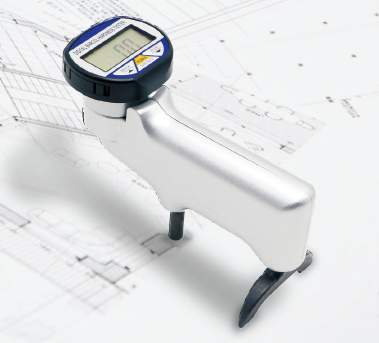


Model 934 1 Barcol Hardness Tester for Material Hardness Testing
Brand JUHUI
Product origin Shanghai
Delivery time In Stock
Supply capacity Unlimited Supply
Portable Barcol hardness testing supports aluminum fiberglass and soft metals. Simple operation makes it practical for workshop and on site inspection. Used for quick hardness checks material sorting and production quality control.
Model 934 1 Barcol Hardness Tester Applications and Related Testing Solutions
Model 934 1 Barcol Hardness Tester supports hardness testing and material verification workflows that require stable measurement, practical operation, and reliable quality control data.
Related Products: HBE 3000AS Digital Electronic Brinell Hardness Tester | HBE 3000A Electronic Brinell Hardness Tester | Precision Granite Surface Plate
Product Description
The 934-1 Barcol Hardness Tester (Barcol Impressor) is an indentation-type hardness tester. It provides quick and simple testing with just one press, allowing fast measurement of aluminum and aluminum alloy hardness. The instrument complies with the ASTM B648 standard for aluminum and alloy hardness testing.
It is mainly used for aluminum and aluminum alloy materials, as well as other soft metals and fiberglass products. It can test large, wide, and thick workpieces and assemblies such as plates, strips, profiles, forgings, and castings. In the aluminum processing industry, the W-20 Webster Hardness Tester is widely used for most aluminum alloys, while for high-strength alloys such as 2024 and 7075, the W-B75 Webster Hardness Tester or Barcol Hardness Tester is recommended.
For pure aluminum, low-hardness alloys, or large and thick materials that are inconvenient to test with Webster hardness testers, the Barcol hardness tester is an ideal supplementary instrument.
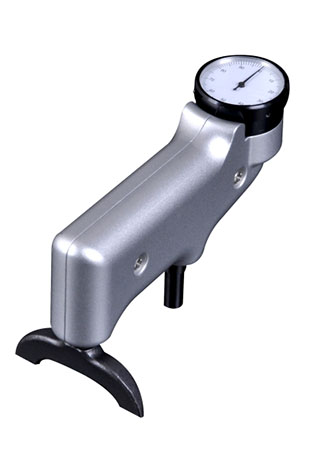
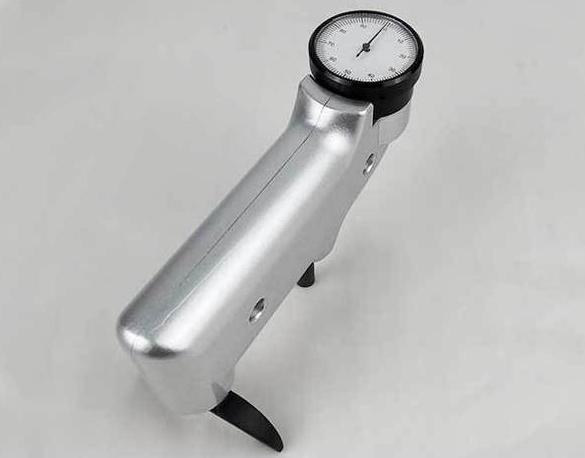
Product Advantages
Small size and light weight (510 g), easy to carry.
Single-hand operation, no experience required; test anywhere within reach.
Wide testing range—from very soft pure aluminum to extra-hard aluminum alloys (equivalent to Brinell 25–135 HB).
High sensitivity—Webster has only 20 scales, while Barcol has 100 scales for finer resolution.
Single-side testing without support, ideal for large and thick workpieces.
Convenient conversion—readings can be easily converted to Brinell, Rockwell, Vickers, or Webster hardness values using the conversion table.
Application Range
The 934-1 Barcol Hardness Tester is widely used for hardness testing of aluminum and aluminum alloys, and also for soft metals and fiberglass. It is ideal for large, wide, and thick workpieces including sheets, profiles, forgings, and castings. In aluminum manufacturing, it serves as a complementary tool to Webster hardness testers—especially for testing pure aluminum, low-hardness alloys, and thick aluminum assemblies.
Technical Parameters
| Parameter | Specification |
|---|---|
| Measuring Range | 0–100 HBa |
| Equivalent Brinell Range | 25–135 HBW |
| Resolution | 0.5 HBa |
| Indication Error | 42–52 HBa: ±2.0 HBa 84–88 HBa: ±1.0 HBa |
| Repeatability Error | 42–52 HBa: ±2.5 HBa 84–88 HBa: ±1.5 HBa |
| Weight | 510 g |
Standard Configuration
| Item | Quantity |
|---|---|
| Main Unit | 1 |
| Calibration Blocks | 2 |
| Adjustment Wrench | 1 |
| Spare Indenters | 2 |