


Rockwell Hardness Tester For Heat Treatment Shops Model Selection HRC Range And Fixtures
Rockwell Hardness Tester For Heat Treatment Shops: Model Selection, HRC Range And Fixtures
Heat treatment shops need reliable Rockwell hardness testers to check HRC values after quenching, tempering, carburizing, induction hardening, nitriding, and batch heat treatment. Before ordering, buyers should confirm hardness scale, HRC range, sample size, part shape, fixture type, calibration blocks, daily testing volume, report needs, and whether a manual, digital, or automatic model is more suitable.
HRC Testing
Suitable for quenched, tempered, and heat-treated steel parts requiring fast hardness checks.
Fixture Selection
Flat anvils, V anvils, ring supports, and custom fixtures help stabilize real production parts.
Calibration Blocks
HRC blocks close to the working hardness range are essential for daily verification.
Batch QC Reports
Digital models can record values, reduce reading errors, and support shipment inspection reports.
Why Heat Treatment Shops Need The Right Rockwell Hardness Tester
Heat treatment shops often process gears, shafts, bearings, fasteners, molds, tools, pins, rollers, steel plates, forged parts, and precision metal components. After quenching, tempering, carburizing, carbonitriding, nitriding, or induction hardening, hardness testing is one of the most important quality control steps before delivery.
Rockwell hardness testers are widely used in heat treatment QC because they are fast, direct-reading, and practical for production inspection. For many hardened steel parts, HRC is the most common scale. A good Rockwell tester helps factories check whether the heat-treated batch reaches the required hardness range and whether the result is stable enough for customer acceptance.
However, not every Rockwell hardness tester configuration is suitable for every heat treatment shop. Buyers should check the model type, HRC range, sample size, throat depth, test height, fixture options, calibration blocks, digital output, and reporting needs before ordering.
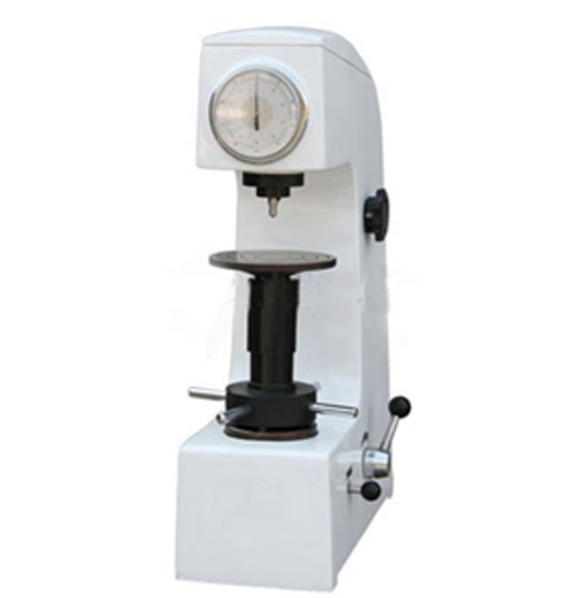
1. Confirm The Main Hardness Scale And HRC Range
The first thing buyers should confirm is the required hardness scale. For heat-treated steel parts, HRC is commonly used, especially for quenched and tempered steel, tool steel, bearing steel, gears, shafts, molds, and hardened components. Some softer materials or pre-treatment checks may require HRB or other Rockwell scales.
Buyers should also confirm the expected hardness range. For example, a heat treatment shop may test parts around HRC 20–30, HRC 45–55, or HRC 58–62. Calibration blocks should be selected close to the real working range, not only one general-purpose block.
| Heat Treatment Application | Common Hardness Scale | Buyer Checkpoint |
|---|---|---|
| Quenched and tempered steel parts | HRC | Confirm expected HRC range and acceptance tolerance |
| Tool steel and mold components | HRC / HV | Check whether Rockwell indentation is allowed on the test area |
| Bearing rings and rollers | HRC | Confirm fixture support for round or ring-shaped parts |
| Softer steel or non-hardened checks | HRB / HRC depending on material | Confirm correct scale before issuing customer report |
2. Choose Manual, Digital Or Automatic Rockwell Model
Rockwell hardness testers are available in different configurations. A manual model may be enough for low-volume internal checks. A digital model is more suitable when operators need direct display, easier reading, and better repeatability. An automatic or motorized model can improve loading control and reduce operator influence in busy heat treatment QC labs.
Heat treatment shops should not choose only based on the lowest price. The right model depends on daily testing volume, operator skill level, reporting requirements, and whether customers require traceable inspection records.
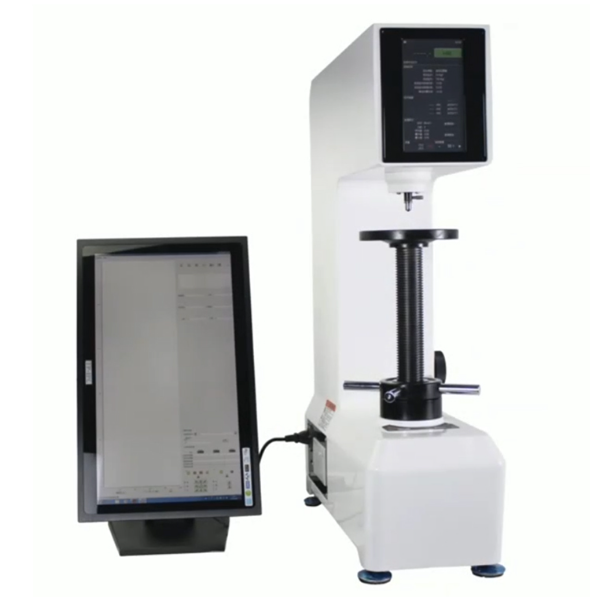
| Model Type | Suitable For | Main Advantage |
|---|---|---|
| Manual Rockwell hardness tester | Basic internal QC and low-volume testing | Lower cost and simple structure |
| Digital Rockwell hardness tester | Daily heat treatment batch inspection | Clear reading, easier operation, better record handling |
| Motorized / automatic Rockwell tester | Higher-volume QC labs and multi-operator use | More stable loading and reduced operator variation |
| Rockwell tester with data output | Customer reports and batch traceability | Supports report export and production quality records |
3. Check Sample Size, Test Height And Throat Depth
Heat-treated parts can be small, large, round, flat, thin, heavy, or irregular. Before ordering a Rockwell hardness tester, buyers should confirm the maximum sample height, throat depth, worktable size, and whether the real parts can be placed under the indenter safely and stably.
A common mistake is buying a tester that can measure the required scale but cannot fit the real part. Large shafts, bearing rings, molds, steel blocks, and forged parts may require more space or special support. Small pins, screws, and thin parts may require different fixtures or even Vickers/Micro Vickers testing instead of Rockwell.
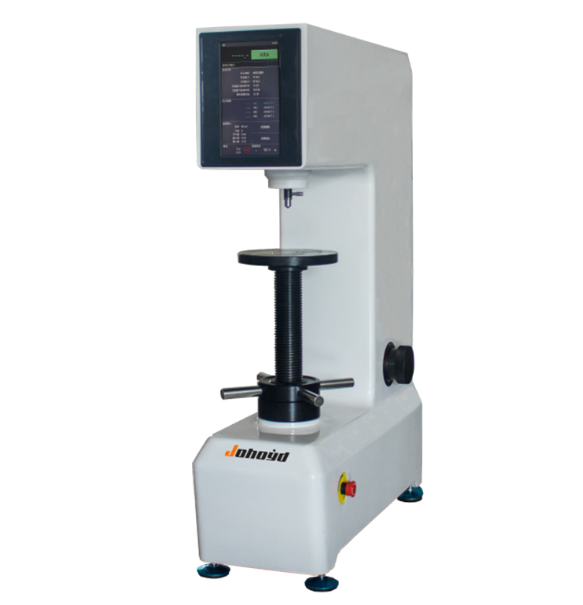
Before choosing the model, confirm:
Maximum part height and diameter.
Part weight and whether the worktable can support it.
Whether the test area can reach the indenter.
Whether the surface is flat, round, curved, threaded, or irregular.
Whether the part needs V anvil, flat anvil, ring support, or custom fixture.
Whether Rockwell indentation size is acceptable on the part surface.
4. Select The Right Fixtures, Anvils And Supports
Fixtures and anvils are critical for stable Rockwell hardness testing. Even if the tester is accurate, the result may become unreliable if the part moves, tilts, bends, or contacts the anvil poorly during loading.
Heat treatment shops often test round shafts, bearing rings, gears, pins, fasteners, plates, mold blocks, and irregular parts. Each shape may need a different support. Buyers should include fixture requirements in the quotation, instead of buying the tester first and discovering later that real samples cannot be held properly.
| Part Type | Recommended Support | Reason |
|---|---|---|
| Flat steel blocks and plates | Flat anvil | Provides stable contact for flat test surfaces |
| Round shafts, pins, rollers | V anvil | Prevents the sample from rolling or shifting |
| Bearing rings and circular parts | Ring support or custom fixture | Keeps ring-shaped parts stable during loading |
| Small fasteners and precision parts | Small-part holder or custom fixture | Improves positioning and reduces unstable readings |
5. Prepare HRC Calibration Blocks And Daily Verification Records
A heat treatment shop should verify the Rockwell hardness tester before important batch inspection. Calibration blocks should match the testing scale and working hardness range. If the shop usually tests parts around HRC 58–62, it should prepare a suitable high-HRC block. If it also tests medium-hardness parts, more than one block may be needed.
Calibration records are important for customer audits and quality disputes. The record should include block value, measured value, acceptable tolerance, machine ID, operator, and date. If the verification result is abnormal, testing should stop until the cause is corrected.
Recommended daily verification items:
HRC calibration block close to the working range.
HRB calibration block if softer materials are tested.
Rockwell diamond cone indenter condition.
Ball indenter condition if HRB or other ball scales are used.
Anvil and fixture surface condition.
Machine ID, operator, date, and verification result record.
6. Decide Whether You Need Data Output Or Report Functions
Some heat treatment shops only need internal hardness values. Others need customer-facing inspection reports before shipment. If buyers serve automotive, machinery, bearing, tool steel, mold, aerospace-related, or export customers, digital records and report functions may be important.
A digital Rockwell tester can help reduce handwritten mistakes and make batch inspection easier. If the customer requires complete documentation, the report should include part name, material, heat treatment process, hardness scale, test location, calibration record, hardness values, acceptance range, operator, and inspection date.
Recommended Rockwell Tester Configuration For Heat Treatment Shops
A practical Rockwell hardness testing solution should include more than the main tester. Buyers should confirm the full package before comparing prices.
| Configuration Item | Recommended For Heat Treatment Shops | Why It Matters |
|---|---|---|
| Digital Rockwell hardness tester | Daily HRC batch inspection | Fast reading and easier operation |
| HRC calibration blocks | HRC 30, HRC 45, HRC 60 or close working range | Verifies machine accuracy before inspection |
| Diamond cone indenter | HRC testing | Creates correct indentation geometry |
| Flat and V anvils | Blocks, plates, shafts, pins, rollers | Improves sample stability |
| Ring support or custom fixture | Bearing rings, gears, irregular parts | Reduces movement and testing error |
| Data output or report software | Customer-facing QC reports | Supports traceability and audit review |
Key Questions Before Requesting A Quotation
To get a suitable Rockwell hardness tester quotation, heat treatment shops should send real production and QC information before ordering.
What parts will be tested: gears, shafts, bearings, fasteners, molds, tools, pins, or plates?
What material grades and heat treatment processes are used?
Which scale is required: HRC, HRB, HRA, or other Rockwell scales?
What is the expected HRC range?
What are the maximum sample size, weight, and shape?
Is the test surface flat, round, curved, threaded, or irregular?
Do you need flat anvil, V anvil, ring support, or custom fixture?
How many samples are tested per day?
Do customers require printed or digital hardness reports?
Do you need installation, training, calibration blocks, and spare indenters?
Conclusion: Choose The Tester Around Real Heat Treatment Parts
A Rockwell hardness tester for heat treatment shops should be selected according to real parts, not only a catalog model. Buyers should confirm HRC range, sample size, part shape, fixture needs, calibration blocks, daily workload, and report requirements before ordering.
For basic inspection, a manual Rockwell tester may be enough. For daily production QC, a digital Rockwell tester is usually more practical. For high-volume heat treatment shops or multi-operator labs, motorized loading, data output, and report functions can improve consistency and traceability.
If your shop processes heat-treated gears, shafts, fasteners, bearing parts, mold steel, tool steel, or precision components, send your sample photos, hardness scale, HRC range, and fixture requirements before requesting a quotation. A complete configuration can help avoid unstable results and missing accessories.
FAQ
Which Rockwell scale is commonly used for heat-treated steel?
HRC is commonly used for hardened and heat-treated steel parts, including gears, shafts, tools, molds, bearing parts, and quenched components.
Is a manual Rockwell hardness tester enough for a heat treatment shop?
It may be enough for low-volume internal checks. For daily batch QC and customer reports, a digital or motorized model is usually more practical.
What fixtures are needed for Rockwell hardness testing?
Flat anvils are used for flat samples, V anvils for shafts and pins, and ring supports or custom fixtures for bearing rings, gears, and irregular parts.
Why are HRC calibration blocks important?
HRC calibration blocks verify that the Rockwell tester is working correctly before batch inspection and help support traceable QC records.
Need A Rockwell Hardness Tester For Heat Treatment QC?
Send your part type, material grade, heat treatment process, required HRC range, sample size, fixture needs, daily testing volume, and report requirements. We can help recommend suitable Rockwell hardness testers, HRC calibration blocks, indenters, anvils, fixtures, and complete heat treatment QC solutions.
Rockwell Hardness Tester For Heat Treatment Shops Model Selection HRC Range And Fixtures Procurement Notes
For a quality control laboratory, choosing a hardness tester or metallographic instrument is not only a model comparison. Buyers need to confirm sample material, hardness scale, test load, indentation reading method, software report format, calibration requirement, fixture configuration and after sales support. A clear specification helps the supplier recommend a practical system instead of only quoting a low price.
The related product route should start from Rockwell hardness testers, testing instrument product range, ValuePro hardness tester, precision quality inspection solutions, factory capability, testing instrument cases. These pages help visitors move from the article to real hardness tester, metallographic preparation and precision inspection product categories. This also strengthens internal linking around the same measurement and quality control topic.
Information Buyers Should Prepare Before Quotation
- List the main materials, such as steel, aluminum, copper alloy, casting, forging, coating or heat treated parts.
- Confirm the required scale, including Rockwell, Brinell, Vickers, Micro Vickers, Leeb, Barcol, Shore or other testing method.
- Prepare sample size, surface condition, expected hardness range, batch quantity and whether automated report export is needed.
- Ask for fixture options, calibration blocks, indentation images, software language, report format and training support.
- Confirm spare parts, installation conditions, warranty process and future calibration service before placing an order.
Product And Service Pages For Further Review
Visitors comparing a full laboratory setup can continue with contact the measurement team, Brinell hardness testers, Vickers hardness testers, microhardness testers, Barcol hardness testers, surface roughness measurement solutions. These links cover equipment selection, sample preparation, calibration and factory capability. For buyers who need project support, metallographic products, metallographic grinder polisher series, metallographic cutting machine series provide the next step for cases and inquiry communication.
Quality Checks Before Acceptance
Before accepting a hardness testing system, the buyer should verify load accuracy, optical reading, software report output, sample fixture fit, repeatability, calibration block value and operator workflow. For metallographic preparation equipment, the checklist should include cutting stability, grinding and polishing consistency, mounting quality, consumable availability and safety protection.
| Review Item | Why It Matters |
|---|---|
| Testing scale and load | Ensures the machine matches the material and standard method. |
| Software and report | Improves traceability and helps the lab share results with customers. |
| Calibration and fixtures | Reduces measurement error and improves repeatability. |
Search And Inquiry Value
This article now connects buyer questions with real product pages, technical terms and purchasing steps. It is designed to attract visitors who search for hardness tester selection, metallographic equipment, calibration instruments and industrial QC laboratory setup, then guide them to the correct inquiry path.