


Micro Vickers Hardness Tester For Case Depth Testing Complete Equipment Configuration
Micro Vickers Hardness Tester For Case Depth Testing: Complete Equipment Configuration
A Micro Vickers hardness tester for case depth testing is used to measure hardness changes from the surface to the core of carburized, nitrided, induction-hardened, carbonitrided, coated, and surface-treated metal parts. A complete configuration should include low-load testing capability, optical measurement, XY stage, profile software, sample preparation equipment, calibration blocks, fixtures, and report export functions.
Low-Load Testing
Micro HV loads help measure thin hardened layers and small surface-to-core profiles.
XY Stage
Precise point spacing is important for case depth curves and repeatable profile testing.
Sample Preparation
Cutting, mounting, grinding, and polishing directly affect indentation clarity.
Profile Report
Software can export hardness profile curves, images, values, and case depth results.
Why Case Depth Testing Needs A Micro Vickers Solution
Case depth testing is used to verify whether the hardened layer of a metal part reaches the required depth and hardness gradient. It is commonly required for carburized gears, nitrided shafts, induction-hardened tracks, carbonitrided fasteners, tool steel parts, bearing components, molds, pins, rollers, and surface-treated precision parts.
Surface hardness alone cannot prove that a heat treatment process is correct. A part may show a good surface HRC value but still fail if the hardened layer is too shallow, too deep, uneven, or not properly connected to the core hardness. This is why Micro Vickers hardness testing is widely used for surface-to-core hardness profile measurement.
A complete Micro Vickers case depth testing solution is not only one machine. Buyers should also confirm sample preparation equipment, low-load range, microscope quality, XY stage, software curve function, calibration blocks, fixtures, and report export before ordering.
1. Micro Vickers Tester With Suitable Load Range
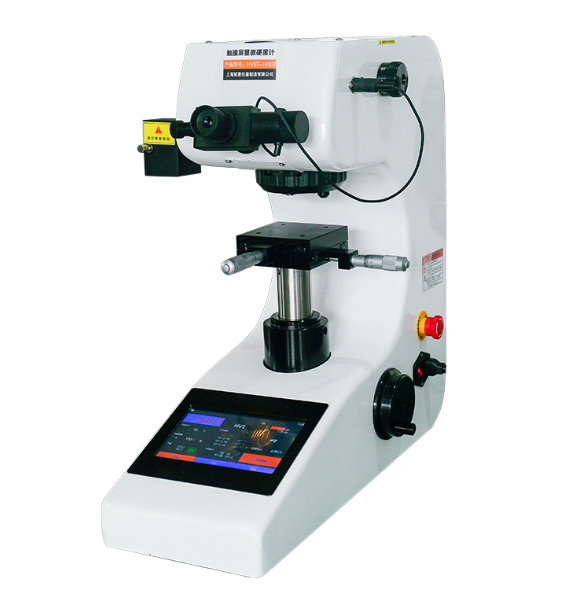
The core equipment is the Micro Vickers hardness tester. For case depth testing, the tester must support suitable low-load Micro HV testing. The required load depends on the layer thickness, material hardness, test standard, indentation size, and distance between test points.
If the load is too high, the indentation may be too large and may not reflect the thin hardened layer accurately. If the load is too low, the indentation may become difficult to measure, especially if the sample surface is not polished well. Buyers should confirm the required Micro HV load range before quotation.
| Application | Testing Purpose | Configuration Checkpoint |
|---|---|---|
| Carburized gears | Measure effective case depth from tooth surface to core | Micro HV load range, profile software, precise XY stage |
| Nitrided shafts | Inspect thin nitrided layer and hardness gradient | Low-load capability and clear optical measurement |
| Induction-hardened parts | Check hardened zone depth and transition to core | Cross-section preparation and test path control |
| Coated or surface-treated parts | Measure thin layer hardness with reduced substrate influence | Low load, edge retention, polishing quality, image measurement |
2. Optical System And Vision Measurement Software
Micro Vickers case depth testing depends on measuring small diamond-shaped indentations. The optical system and vision software must be able to capture clear indentation images and calculate hardness values consistently. Poor image quality can cause unstable results even when the mechanical loading system is correct.
For factories that need customer reports, automatic or semi-automatic vision measurement software is strongly recommended. It can save indentation images, calculate values, record test points, generate hardness profile curves, and export PDF or Excel reports.
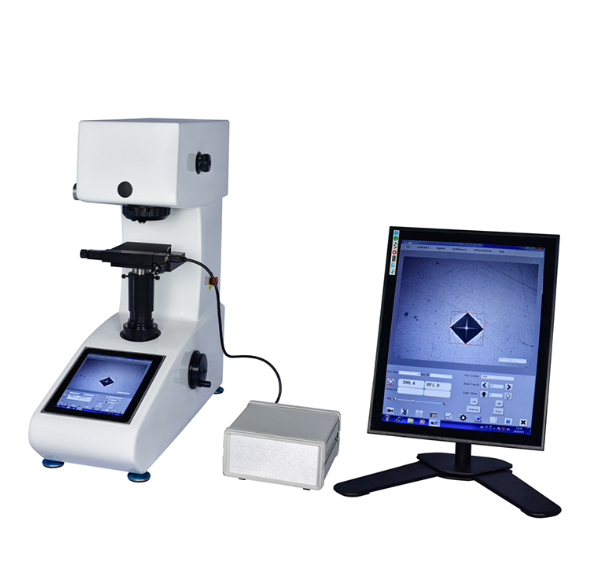
Vision software should support:
Indentation image capture.
Automatic or assisted diagonal measurement.
Micro HV value calculation.
Test point coordinate recording.
Surface-to-core hardness profile curve.
Effective case depth calculation when required.
Image storage for customer review.
PDF and Excel report export.
Sample ID, batch number, operator, and inspection date records.
3. Manual Or Motorized XY Stage For Test Point Control
Case depth testing requires multiple indentation points from the surface toward the core. The distance between points should be controlled carefully. A high-quality XY stage helps the operator position test points accurately and repeat the same test path across multiple samples.
For basic labs, a manual XY stage may be enough. For higher-volume testing, automated profile testing, or strict customer reports, a motorized XY stage can improve efficiency and reduce positioning variation.
| Stage Type | Suitable For | Main Benefit |
|---|---|---|
| Manual XY stage | Low-volume case depth testing and basic QC labs | Lower cost and flexible manual operation |
| Precision manual stage | Labs needing better point spacing control | Improves repeatability of surface-to-core test paths |
| Motorized XY stage | High-volume labs and repeated hardness profile testing | Reduces manual positioning time and operator variation |
| Software-controlled stage | Advanced case depth and automated profile reports | Records coordinates and supports automated testing workflow |
4. Sample Preparation Equipment Is Not Optional
Case depth testing usually requires a prepared cross-section. The sample must be cut through the required area, mounted, ground, polished, cleaned, and checked before Micro Vickers testing. If the sample surface is scratched, rounded, overheated, or poorly polished, the indentation may be unclear and the hardness profile may be unreliable.
Many buyers only ask for the Micro Vickers tester price, but later discover that they also need sample preparation equipment. For a complete case depth testing lab, cutting, mounting, grinding, polishing, and microscope inspection should be considered together.
| Equipment | Purpose | Why It Matters For Case Depth |
|---|---|---|
| Metallographic cutting machine | Cuts through gear teeth, shafts, fasteners, or treated layers | Avoids heat damage and deformation before testing |
| Mounting press or cold mounting tools | Supports small or irregular cross-section samples | Improves edge retention and protects thin hardened layers |
| Grinding and polishing machine | Creates flat, scratch-controlled sample surface | Makes indentation edges clear for reliable measurement |
| Metallurgical microscope | Checks layer, structure, and surface preparation quality | Helps confirm correct test path and prepared area |
5. Calibration Blocks, Indenter And Accessories
A Micro Vickers hardness tester must be verified with suitable Micro HV calibration blocks. The block should match the load and hardness range used in daily testing. Buyers should also confirm the Vickers diamond indenter, objective lenses, sample holders, XY stage accessories, software license, computer, and report export tools.
For case depth testing, the quotation should not only list the tester. It should clearly include all required accessories and consumables, especially if the buyer is building a new QC lab.
Recommended accessories include:
Micro HV calibration blocks.
Vickers diamond indenter.
Objective lenses for indentation measurement.
Manual or motorized XY stage.
Mounted sample holders.
Camera and vision software.
Computer and monitor if required.
Grinding paper, polishing cloth, and diamond suspension.
Operation manual, training, warranty, and technical support.
Complete Equipment Configuration For Case Depth Testing
A complete Micro Vickers case depth testing solution should be configured according to the buyer’s samples, test standards, daily workload, and report requirements. The table below shows a practical configuration for industrial QC labs.
| Configuration Item | Recommended Setup | Main Function |
|---|---|---|
| Micro Vickers hardness tester | Low-load Micro HV testing capability | Measures small indentations from surface to core |
| Optical system and camera | Clear image capture and indentation measurement | Improves measurement repeatability and image traceability |
| Vision software | Diagonal measurement, hardness calculation, curve generation | Creates case depth profile and customer reports |
| XY stage | Manual, precision manual, or motorized | Controls test point spacing and path position |
| Sample preparation equipment | Cutting, mounting, grinding, polishing, microscope | Prepares reliable cross-section samples |
| Calibration and accessories | Micro HV blocks, indenter, holders, consumables | Supports daily verification and stable testing |
Key Questions Before Requesting A Quotation
Buyers should send clear sample and testing information before asking for a Micro Vickers hardness tester price. This helps the supplier recommend the correct equipment configuration instead of only quoting a basic machine.
What parts need case depth testing: gears, shafts, fasteners, bearings, molds, tools, or treated samples?
What process is used: carburizing, nitriding, carbonitriding, induction hardening, coating, or surface treatment?
What material grade and expected hardness range are involved?
What Micro HV load or test standard is required?
What effective case depth range needs to be measured?
How many test points are required from surface to core?
Do you need manual or motorized XY stage?
Do you need automatic vision measurement and image storage?
Do you already have cutting, mounting, grinding, polishing, and microscope equipment?
Do customers require PDF reports, Excel data, indentation images, or hardness profile curves?
Conclusion: Case Depth Testing Requires A Complete Lab Workflow
A Micro Vickers hardness tester is the key equipment for case depth testing, but reliable results depend on the complete workflow. Buyers should confirm low-load testing capability, optical measurement, XY stage, vision software, sample preparation, calibration blocks, indenter, fixtures, and report export functions before ordering.
For carburized gears, nitrided shafts, induction-hardened parts, coated samples, weld sections, and surface-treated components, the best solution is usually a complete package: Micro Vickers tester, case depth software, XY stage, metallographic cutting machine, mounting system, grinding and polishing machine, microscope, calibration blocks, and report tools.
If your factory needs case depth testing for heat-treated or surface-treated metal parts, send your sample photos, process type, expected layer depth, Micro HV requirement, and report format before requesting a quotation. A complete configuration can help avoid missing equipment and unreliable results.
FAQ
Why is Micro Vickers used for case depth testing?
Micro Vickers testing uses small indentations and low loads, making it suitable for measuring hardness changes from a hardened surface layer toward the core.
Can surface hardness testing replace case depth testing?
No. Surface hardness only shows the outer hardness value. Case depth testing shows whether the hardened layer reaches the required depth and hardness gradient.
Does case depth testing require sample preparation?
Yes. Most case depth testing requires cutting, mounting, grinding, polishing, and cross-section preparation before Micro Vickers testing.
What should be included in a Micro Vickers case depth report?
The report should include sample information, test load, test point distances, hardness values, profile curve, effective case depth result, calibration record, and indentation images when required.
Need A Micro Vickers Case Depth Testing Solution?
Send your part type, material grade, heat treatment process, expected case depth, Micro HV load, sample size, testing volume, and report requirements. We can help recommend Micro Vickers testers, XY stages, vision software, sample preparation equipment, calibration blocks, and complete case depth testing lab configurations.
Micro Vickers Hardness Tester For Case Depth Testing Complete Equipment Configuration Procurement Notes
For a quality control laboratory, choosing a hardness tester or metallographic instrument is not only a model comparison. Buyers need to confirm sample material, hardness scale, test load, indentation reading method, software report format, calibration requirement, fixture configuration and after sales support. A clear specification helps the supplier recommend a practical system instead of only quoting a low price.
The related product route should start from microhardness testers, Vickers hardness testers, testing instrument product range, ValuePro hardness tester, precision quality inspection solutions, factory capability. These pages help visitors move from the article to real hardness tester, metallographic preparation and precision inspection product categories. This also strengthens internal linking around the same measurement and quality control topic.
Information Buyers Should Prepare Before Quotation
- List the main materials, such as steel, aluminum, copper alloy, casting, forging, coating or heat treated parts.
- Confirm the required scale, including Rockwell, Brinell, Vickers, Micro Vickers, Leeb, Barcol, Shore or other testing method.
- Prepare sample size, surface condition, expected hardness range, batch quantity and whether automated report export is needed.
- Ask for fixture options, calibration blocks, indentation images, software language, report format and training support.
- Confirm spare parts, installation conditions, warranty process and future calibration service before placing an order.
Product And Service Pages For Further Review
Visitors comparing a full laboratory setup can continue with testing instrument cases, contact the measurement team, Rockwell hardness testers, Brinell hardness testers, Barcol hardness testers, surface roughness measurement solutions. These links cover equipment selection, sample preparation, calibration and factory capability. For buyers who need project support, metallographic products, metallographic grinder polisher series, metallographic cutting machine series provide the next step for cases and inquiry communication.
Quality Checks Before Acceptance
Before accepting a hardness testing system, the buyer should verify load accuracy, optical reading, software report output, sample fixture fit, repeatability, calibration block value and operator workflow. For metallographic preparation equipment, the checklist should include cutting stability, grinding and polishing consistency, mounting quality, consumable availability and safety protection.
| Review Item | Why It Matters |
|---|---|
| Testing scale and load | Ensures the machine matches the material and standard method. |
| Software and report | Improves traceability and helps the lab share results with customers. |
| Calibration and fixtures | Reduces measurement error and improves repeatability. |
Search And Inquiry Value
This article now connects buyer questions with real product pages, technical terms and purchasing steps. It is designed to attract visitors who search for hardness tester selection, metallographic equipment, calibration instruments and industrial QC laboratory setup, then guide them to the correct inquiry path.