


How To Evaluate Repeatability And Consistency When Purchasing Hardness Testing Equipment
When buyers compare hardness testing equipment, many focus first on test method, load range, price, or brand. However, for real production use, repeatability and consistency are often more important than a long feature list. A hardness tester that gives unstable readings can create inspection disputes, false acceptance, unnecessary rejection, and long-term quality risk. This is especially critical in metal processing, heat treatment, automotive parts, fasteners, castings, tooling, and precision manufacturing, where hardness data often affects process control and customer approval. That is why professional buyers should evaluate not only what a hardness tester can measure, but also how reliably it can produce the same result over time.
For international procurement, repeatability and consistency are not abstract laboratory terms. They are practical indicators of whether the instrument can support daily inspection, multi-operator use, batch comparison, audit preparation, and customer-facing reports. A machine may perform well in a short showroom demonstration, but buyers should confirm whether the same level of reliability can be maintained in their own factory, with their own operators, materials, and production rhythm.
Understand What Repeatability And Consistency Really Mean
The first step is to define what should be evaluated. Repeatability usually refers to whether the hardness tester can produce very similar results when the same sample is tested repeatedly under the same conditions. Consistency is broader. It includes whether the instrument remains stable across different operators, different shifts, different batches, and longer periods of use. Buyers should not treat these as the same thing. A hardness tester may show acceptable repeatability in a controlled test, but still show poor day-to-day consistency once it is moved into actual production.
Buyers should therefore ask suppliers for more than a single accuracy statement. They should ask how repeatability is verified, what the typical result variation is, what reference blocks are used, and whether the same performance can be maintained on the actual material types to be tested. This matters because hardness results are influenced not only by the machine, but also by the test method, load selection, indenter condition, sample surface, part geometry, and operator procedure.
A practical evaluation should include repeated tests on representative samples, not only on standard blocks. Standard blocks are necessary for baseline verification, but buyers should also confirm how the tester behaves on hardened steel parts, cast surfaces, thin sections, curved workpieces, coated materials, or heat-treated components if those are part of the real application. The closer the test scenario is to daily production, the more meaningful the repeatability assessment becomes.
Check The Factors That Most Commonly Affect Hardness Test Consistency
The second step is to identify where inconsistency usually comes from. In hardness testing, unstable data is often caused by more than machine quality alone. Surface finish, sample flatness, sample thickness, support rigidity, indentation spacing, vibration, and operator handling can all influence the result. That is why buyers should not only compare test ranges and screen functions, but also evaluate how well the equipment controls these real-world variables.
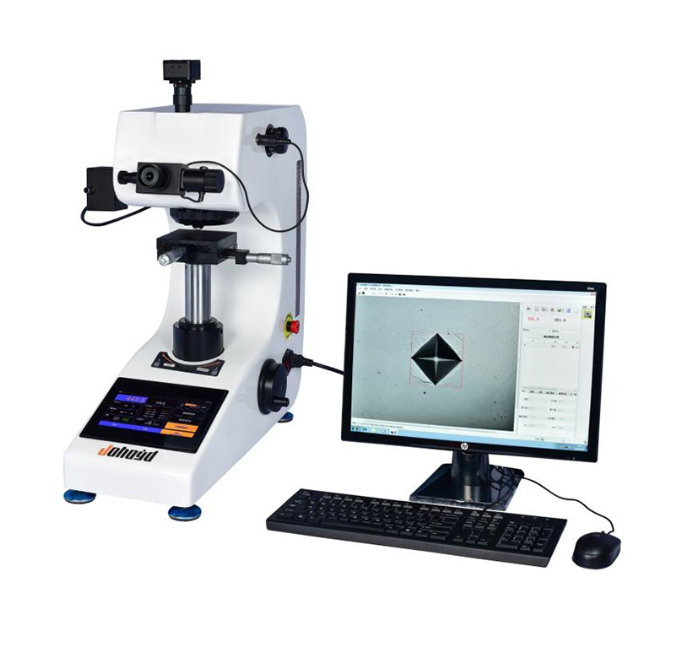
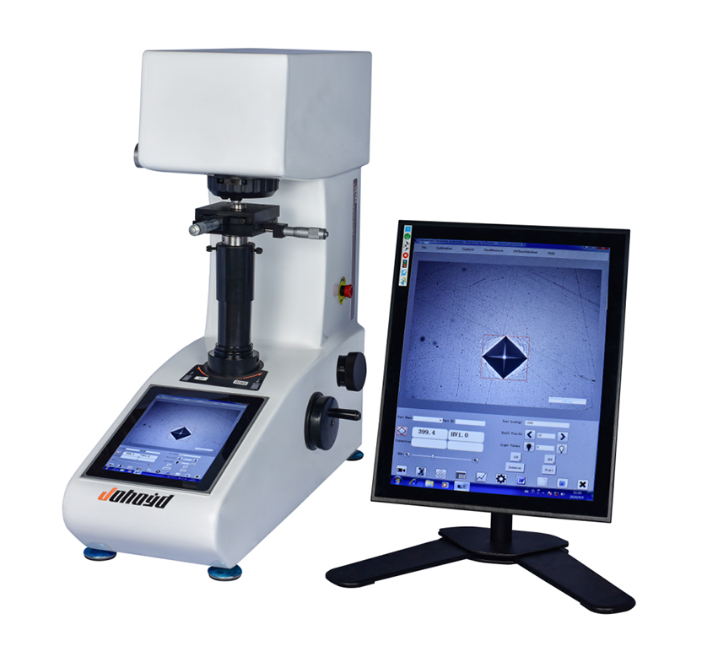
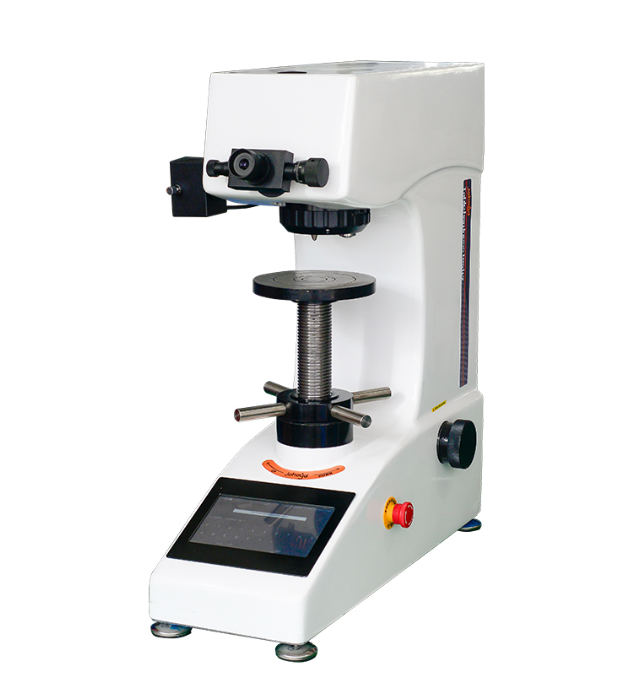
For bench-top Rockwell, Brinell, or Vickers testers, buyers should check frame rigidity, load application stability, dwell time control, focusing clarity, indentation reading method, and whether the system reduces operator subjectivity. For portable hardness testers, they should examine probe positioning, impact direction compensation, surface preparation requirement, and how easily the device maintains stable readings on large or irregular workpieces. If the test method is highly sensitive to operator technique, then training and fixture support become part of consistency evaluation as well.
Buyers should also compare automation level and workflow design. Equipment with automatic loading, auto-focus, digital indentation analysis, or guided test steps often produces more consistent results than equipment that relies heavily on manual judgment. This does not mean manual systems are unusable, but it does mean buyers should match the machine to operator skill level and inspection frequency. A tester that performs well only when used by an expert may not be the best choice for routine production inspection.
Verify Calibration, MSA Thinking, And Long-Term Service Support
The third step is to confirm how long-term stability will be maintained after the machine is delivered. Buyers should ask whether the supplier can provide calibration support, certified hardness test blocks, recommended verification intervals, maintenance instructions, and clear troubleshooting guidance. A hardness tester may look stable when new, but without regular verification and proper support, its consistency can decline over time.
Professional buyers should also think in terms of measurement system analysis, even if they do not conduct a full formal MSA at the quotation stage. They should ask whether the instrument is suitable for repeatability and reproducibility evaluation, whether multiple operators can be trained to obtain similar results, and whether the supplier has evidence from internal validation or customer cases. These questions help reveal whether the equipment is robust enough for real quality systems rather than only for occasional testing.
Finally, buyers should compare after-sales capability as part of consistency evaluation. Can the supplier provide re-calibration, spare indenters, software updates, remote support, and fast technical response? Can they help diagnose abnormal result drift? Long-term repeatability is not protected by the machine alone. It is protected by the full system of equipment design, calibration control, operator guidance, and supplier support. That is why the best purchasing decision is usually not the lowest-priced hardness tester, but the one that delivers dependable hardness data with fewer surprises over time.
When evaluating hardness testing equipment, repeatability and consistency should be treated as core purchasing criteria, not secondary technical details. Buyers should verify performance on representative samples, identify sources of result variation, compare operator dependence, and confirm calibration and service support for long-term use. In real industrial procurement, a reliable hardness tester is not simply the one that can generate a hardness value. It is the one that can generate the right value again and again, under real working conditions, with confidence that the data will stand up in quality control and customer review.