-
05-28 2026
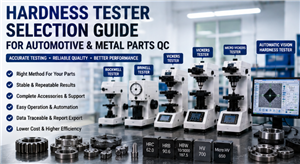
Hardness Tester Selection Guide For Automotive & Metal Parts QC
Selecting a hardness tester for automotive and metal parts QC should start from real samples, not only machine specifications. The part type, material, heat treatment process, sample geometry, hardness scale, test location, and reporting requirements all affect the best equipment choice. Rockwell testers are practical for fast production inspection. Brinell testers are useful for castings, forgings, and large metal parts. Vickers and Micro Vickers testers are better for coatings, case depth, weld sections, thin layers, and small precision parts. Automatic vision systems can further improve repeatability and documentation. If your factory needs stable hardness inspection for automotive or metal parts, share your sample information before ordering. A complete recommendation can help avoid wrong model selection and improve long-term quality control reliability.
-
05-15 2026
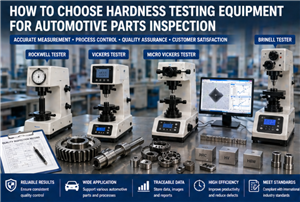
How To Choose Hardness Testing Equipment For Automotive Parts Inspection
Choosing hardness testing equipment for automotive parts inspection should start from the part type, material, heat treatment process, hardness scale, and testing location. Rockwell testers are suitable for fast production checks. Brinell testers are useful for larger castings and forgings. Vickers and Micro Vickers testers are important for precision testing, case depth analysis, coatings, and small samples. Buyers should also consider sample fixtures, calibration blocks, indenters, sample preparation equipment, automation level, and report functions. For automotive quality control, repeatability and traceability are just as important as the hardness value itself. A well-selected hardness testing solution helps improve process control, reduce rejected parts, support customer audits, and provide reliable documentation for production and quality teams.