-
05-24 2026
Micro Vickers Hardness Testers: Which One Fits Thin Layers & Small Parts
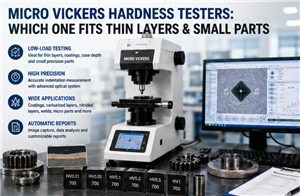
Micro Vickers hardness testers are ideal for thin layers, coatings, small parts, case depth analysis, weld sections, and precision hardness measurement. The right model should be selected according to test force range, layer thickness, sample size, optical clarity, stage control, automation level, and reporting requirements. Buyers should not choose only by price. A low-cost manual model may be enough for occasional testing, while an automatic Micro Vickers tester with motorized stage and software is better for high-volume labs, hardness profiles, traceable reports, and customer documentation. If your factory is testing coatings, carburized layers, nitrided layers, induction-hardened zones, or small precision components, provide your sample details before quotation. A complete recommendation can help you avoid wrong model selection and improve long-term QC reliability.
-
05-03 2026
How To Select A Micro Vickers Hardness Tester For Thin Layers And Small Parts
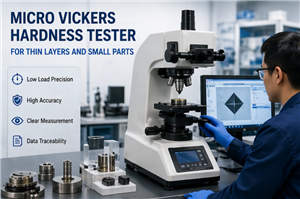
Selecting a Micro Vickers hardness tester for thin layers and small parts requires more than comparing basic specifications. Buyers should evaluate the material, layer thickness, low-load range, optical quality, measurement software, automation level, sample preparation process, and reporting requirements. For occasional laboratory testing, a digital Micro Vickers tester may be sufficient. For case depth analysis, coatings, batch inspection, or high-repeatability QC, an automatic vision Micro Vickers system can provide better consistency, faster operation, and stronger data traceability. The best tester is the one that fits your sample condition, testing standard, daily workload, and quality documentation requirements. Before requesting a quote, prepare your material details and testing purpose so the equipment configuration can be matched accurately.