-
05-18 2026
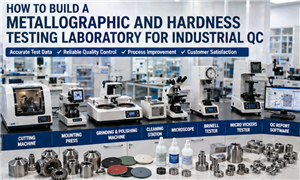
How To Build A Metallographic And Hardness Testing Laboratory For Industrial QC
A metallographic and hardness testing laboratory should be planned as one connected quality control workflow. The goal is not just to buy several machines, but to create a reliable process from sample cutting to final report. When sample preparation, hardness testing, microscopy, calibration, data management, and operator training are planned together, the lab can deliver more stable and trustworthy results. For industrial buyers, the best lab setup depends on material type, testing purpose, daily workload, required standards, report needs, and future expansion plans. A simple lab may only need basic cutting, polishing, and hardness testing. A more advanced lab may need automatic sample preparation, Micro Vickers case depth analysis, metallurgical microscopy, image software, and full report traceability. Before building or upgrading a QC lab, provide your material details, sample information, testing standards, and workflow requirements. This allows the supplier to recommend a practical, scalable, and cost-effective laboratory solution.
-
05-12 2026
How To Choose A Complete Hardness Testing Solution For A Quality Control Lab
A complete hardness testing solution should be designed around the real quality control workflow. The right solution may include hardness testers, sample preparation equipment, calibration blocks, indenters, fixtures, software, and reporting tools. When these elements work together, the lab can achieve better accuracy, repeatability, efficiency, and traceability. Buyers should avoid choosing equipment only by price or single-machine specifications. Instead, they should define the material types, testing methods, sample preparation needs, testing volume, and reporting requirements first. This makes it easier to select a solution that is practical, scalable, and suitable for long-term industrial quality control. If you are building a new QC lab or upgrading an existing one, provide your sample information and testing goals before quotation. A complete technical recommendation can help reduce equipment mismatch and improve laboratory performance from the beginning.