-
05-22 2026
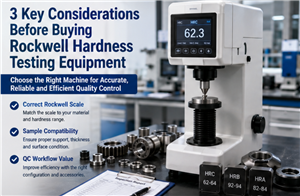
3 Key Considerations Before Buying Rockwell Hardness Testing Equipment
Before buying Rockwell hardness testing equipment, buyers should focus on three key points: the required Rockwell scale, the real sample condition, and the machine configuration needed for daily quality control. These factors affect not only the machine price, but also testing accuracy, operator efficiency, and long-term reliability. A suitable Rockwell hardness tester should support your material range, sample geometry, required scale, calibration process, and reporting workflow. For a factory that tests heat-treated parts, automotive components, bearings, tools, or metal products every day, choosing the correct configuration can reduce testing errors and improve production control. If you are unsure which Rockwell tester is suitable, provide your sample details and testing requirements before requesting a quote. A technical recommendation can help avoid wrong model selection and unnecessary cost.
-
05-06 2026
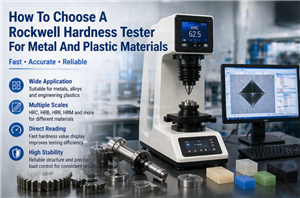
How To Choose A Rockwell Hardness Tester For Metal And Plastic Materials
Choosing a Rockwell hardness tester for metal and plastic materials requires more than comparing price. Buyers should first confirm the material type, required Rockwell scale, indenter, test force, sample thickness, and testing purpose. Hardened metals, softer metals, engineering plastics, and thin samples may all require different configurations. For routine metal quality control, a digital Rockwell tester is often a practical choice. For higher-volume production inspection, an automatic Rockwell tester can improve repeatability and efficiency. For laboratories testing both metals and plastics, scale flexibility and accessory support become especially important. The best Rockwell hardness tester is the one that matches your real samples, testing standard, daily workload, and documentation needs. Before purchasing, provide detailed material and sample information so the tester configuration can be recommended correctly.
-
01-16 2026
Advanced Features of Modern Rockwell Hardness Testers
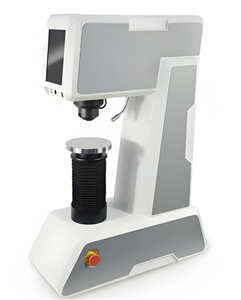
In summary, the advanced features of modern Rockwell hardness testers—encompassing automation, intelligent software, and enhanced versatility—have transformed them into sophisticated quality control hubs. They are no longer simple gauges but intelligent systems that deliver superior accuracy, ensure data integrity, and seamlessly integrate into modern digital manufacturing environments. For companies like Skyline International that supply these advanced instruments, these features are critical for helping manufacturers achieve unparalleled levels of quality control and operational efficiency.