-
05-26 2026
Automatic Vision Hardness Testers: Improve Accuracy & Lab Efficiency
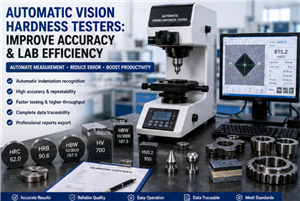
Automatic vision hardness testers help laboratories improve measurement accuracy, reduce operator variation, speed up routine testing, and generate more professional quality reports. They are especially valuable for Vickers, Micro Vickers, Brinell, coating inspection, case depth analysis, weld testing, and high-volume industrial QC. Buyers should compare more than the machine price. Camera quality, optics, software, stage control, report functions, calibration accessories, and sample preparation workflow all affect the final testing performance. If your laboratory needs stable results, saved images, batch data, and customer-ready reports, an automatic vision hardness testing solution can provide stronger long-term value than a basic manual system.
-
05-13 2026
Manual vs Digital vs Automatic Hardness Testers: Which One Should Buyers Choose
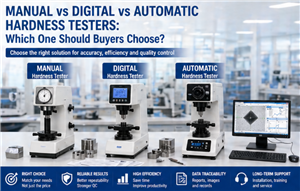
Manual, digital, and automatic hardness testers all have suitable applications. Manual models are cost-effective for basic and low-volume testing. Digital models are practical for routine industrial quality control. Automatic models are better for high-volume testing, automatic indentation measurement, repeatability, data management, and formal reporting. Buyers should choose the automation level according to real testing needs, not only purchase budget. If the lab only performs occasional testing, a manual or digital model may be enough. If the lab needs to test many samples, reduce operator variation, or provide traceable reports, an automatic hardness tester may provide stronger long-term value. Before ordering, prepare your material type, testing method, sample size, daily workload, reporting needs, and future expansion plan. This allows the supplier to recommend a hardness testing solution that fits both current QC tasks and long-term laboratory development.