


Brinell Hardness Tester For Casting And Forging Factories Price Load And Sample Size Guide
Brinell Hardness Tester For Casting And Forging Factories: Price, Load And Sample Size Guide
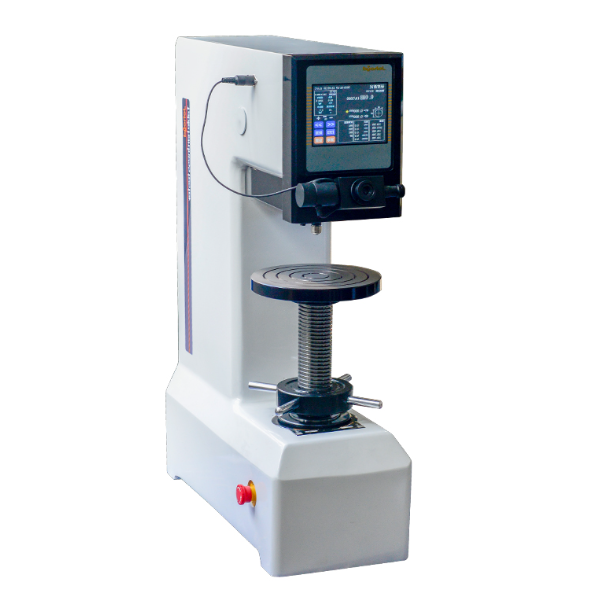
Casting and forging factories often use Brinell hardness testers to inspect cast iron, steel castings, aluminum castings, bronze parts, forged blanks, large shafts, valve bodies, pump housings, and heavy metal components. Before ordering, buyers should confirm test load, ball diameter, sample size, surface condition, indentation measurement method, HBW calibration blocks, digital report needs, and complete quotation configuration.
Large Indentation
Brinell testing gives a more representative result for castings, forgings, and coarse structures.
Load Selection
Buyers should confirm test force, ball diameter, material type, and expected HBW range.
Sample Capacity
Large castings and forged parts require enough test height, throat depth, and worktable support.
Digital Measurement
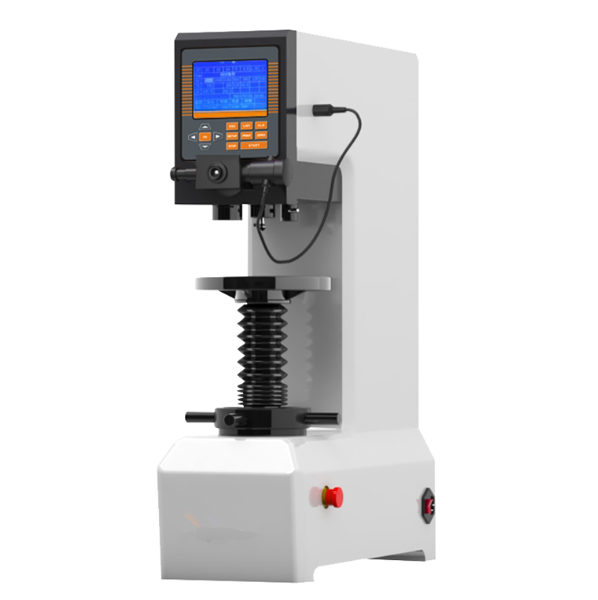
Digital indentation measurement can improve repeatability and report traceability.
Why Casting And Forging Factories Need Brinell Hardness Testing
Castings and forgings often have larger grain structures, less uniform surfaces, and heavier sample sizes than precision machined parts. For these materials, a small indentation method may not always represent the average hardness of the part. Brinell hardness testing uses a larger ball indentation, making it suitable for cast iron, steel castings, aluminum castings, copper alloys, bronze bushings, forged shafts, forged blocks, and heavy industrial components.
In casting and forging factories, Brinell hardness testing is commonly used for incoming material inspection, heat treatment verification, batch release, supplier quality control, and customer delivery reports. A correct HBW value helps confirm whether the casting or forging meets mechanical property expectations before machining, assembly, or shipment.
However, buyers should not choose a Brinell hardness tester only by price. The right configuration depends on material type, expected HBW range, test load, ball diameter, maximum sample size, surface condition, measurement method, calibration blocks, and whether the factory needs manual reading, digital measurement, or report export.
1. Confirm The Material Type And HBW Range
The first step is confirming what materials will be tested. Different castings and forgings require different test conditions. A steel casting, ductile iron casting, gray iron casting, aluminum casting, bronze bushing, and forged steel shaft may not use the same load or ball diameter.
Buyers should prepare the expected HBW range before asking for a quotation. This helps the supplier recommend the correct load range, ball indenter, calibration block, and measurement configuration.
| Material / Part Type | Common Brinell Testing Purpose | Buyer Checkpoint |
|---|---|---|
| Gray iron and ductile iron castings | Verify casting batch hardness and machinability | Confirm HBW range, rough surface condition, and test location |
| Steel castings and forged steel parts | Check heat treatment result and mechanical property consistency | Confirm load capacity, sample size, and calibration block range |
| Aluminum castings and non-ferrous parts | Verify alloy condition and supplier batch consistency | Confirm suitable load, ball diameter, and standard requirement |
| Bronze bushings and copper alloy castings | Check material hardness before machining or assembly | Confirm HBW scale, surface preparation, and indentation measurement method |
2. Choose The Correct Test Load And Ball Diameter
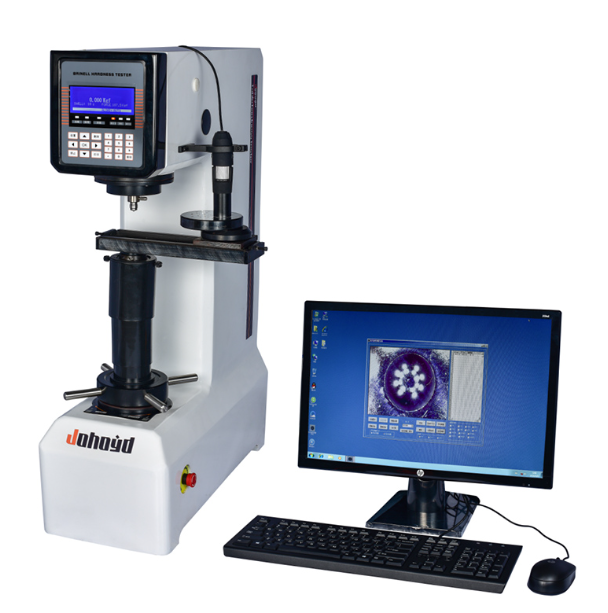
Brinell hardness testing depends on matching test load, ball diameter, material type, and expected hardness. The larger indentation is useful for castings and forgings, but only when the test condition is correct. If the load is too low, the indentation may not represent the material well. If the load is too high, the sample may deform excessively or the indentation may be too large for the available area.
Buyers should ask the supplier to confirm which loads and ball diameters are included in the machine configuration. They should also check whether the tester supports the required HBW conditions for their customer standards.
Before confirming the load configuration, check:
Material type: cast iron, steel, aluminum alloy, bronze, brass, or copper alloy.
Expected HBW hardness range.
Required Brinell test condition from drawing or customer standard.
Ball diameter and ball material.
Maximum and minimum test force supported by the machine.
Whether the indentation size is acceptable for the sample surface.
3. Check Sample Size, Weight And Worktable Capacity
Casting and forging factories often test large and heavy parts. A Brinell hardness tester must provide enough test height, throat depth, worktable capacity, and stable support for real samples. If the machine cannot fit the largest part, the factory may need a larger model, special worktable, or alternative testing method.
Buyers should send sample photos and dimensions before quotation. This helps avoid buying a tester that meets the hardness range but cannot handle actual castings, forged shafts, valve bodies, pump housings, or heavy metal blanks.
| Sample Factor | Why It Matters | What Buyers Should Send |
|---|---|---|
| Maximum height | Determines whether the part fits under the indenter | Largest sample height and test position photo |
| Throat depth | Affects whether the test point can reach the indenter | Distance from part edge to required test location |
| Sample weight | Heavy parts need stable worktable support | Approximate weight of largest casting or forging |
| Surface shape | Curved, rough, or irregular surfaces may affect indentation | Photos showing test surface and part geometry |
4. Confirm Manual, Digital Or Automatic Indentation Measurement
Brinell testing requires measuring the indentation diameter after loading. This can be done manually with an optical microscope, digitally with a camera system, or automatically with image measurement software. The measurement method affects efficiency, repeatability, and report quality.
For low-volume internal checks, manual measurement may be acceptable. For casting and forging factories with many batches, digital Brinell measurement can reduce operator differences and improve reporting. If customers require image proof, report export, or audit records, digital measurement is usually a better choice.
| Measurement Type | Suitable For | Main Benefit |
|---|---|---|
| Manual optical reading | Basic internal inspection and low-volume testing | Lower cost and simple operation |
| Digital indentation measurement | Daily batch inspection and multi-operator QC labs | Reduces manual reading variation |
| Camera and software system | Customer reports and quality traceability | Saves indentation images and exports data |
| Automatic Brinell measurement | High-volume casting or forging inspection | Improves speed, consistency, and report quality |
5. Prepare The Test Surface Correctly
Castings and forgings often have scale, sand marks, oxidation, machining allowance, rough surfaces, or uneven structures. If the surface is not prepared correctly, the indentation edge may be unclear and the result may be unstable.
The test surface should be clean, stable, and representative of the required location. For rough castings or forged blanks, light grinding or machining may be needed before Brinell testing. However, the preparation should not remove the layer that the buyer actually wants to inspect.
Surface preparation should confirm:
Whether oxide scale, sand marks, rust, or oil should be removed.
Whether the test area should be ground or machined flat.
Whether the indentation edge can be measured clearly.
Whether the test location represents the required casting or forging area.
Whether the surface preparation method is accepted by the customer.
6. What A Brinell Hardness Tester Price Should Include
When comparing Brinell hardness tester prices, buyers should check the complete configuration rather than only the main machine cost. A lower price may not include digital measurement, calibration blocks, ball indenters, software, sample supports, installation, or training.
For casting and forging factories, the quotation should clearly show the tester model, maximum load, ball diameter, sample capacity, measurement system, HBW calibration blocks, accessories, and service support.
| Quotation Item | What To Confirm | Why It Affects Price |
|---|---|---|
| Main tester model | Load range, frame size, sample capacity | Larger load and larger frame usually increase cost |
| Measurement system | Manual microscope, digital camera, or software system | Digital image measurement adds cost but improves traceability |
| Calibration blocks | HBW blocks close to working range | Traceable calibration blocks are essential for daily verification |
| Accessories and service | Ball indenters, worktable, supports, training, warranty | Complete support reduces setup problems after delivery |
Key Questions Before Requesting A Brinell Hardness Tester Quotation
To receive a suitable quotation, casting and forging factories should prepare real production information before contacting a supplier.
What materials will be tested: cast iron, steel casting, aluminum casting, bronze, brass, or forged steel?
What is the expected HBW hardness range?
Which Brinell test condition or customer standard is required?
What load range and ball diameter are needed?
What are the maximum sample size, height, diameter, and weight?
Is the test surface rough, machined, ground, oxidized, or irregular?
Do you need manual optical reading or digital indentation measurement?
Do customers require indentation images, PDF reports, or Excel data?
How many samples or batches are tested per day?
Do you need installation, training, calibration blocks, and spare ball indenters?
Conclusion: Choose Brinell Tester Configuration Around Real Castings And Forgings
A Brinell hardness tester for casting and forging factories should be selected according to material type, HBW range, load requirement, ball diameter, sample size, surface condition, and report needs. The lowest-price machine may not be the best choice if it cannot handle large samples or does not include the required measurement system.
For basic internal checks, a manual Brinell tester may be enough. For daily batch inspection and customer reports, a digital Brinell hardness tester with image measurement and report export can improve consistency and traceability.
If your factory tests castings, forgings, bronze bushings, aluminum castings, steel blanks, valve bodies, pump housings, or heavy metal parts, send sample photos, material grade, HBW range, maximum sample size, and report requirements before requesting a quotation.
FAQ
Why is Brinell testing used for castings and forgings?
Brinell testing uses a larger indentation, which can provide a more representative hardness value for castings, forgings, and materials with less uniform structures.
What affects the price of a Brinell hardness tester?
Price is affected by load range, frame size, sample capacity, manual or digital measurement, software, calibration blocks, accessories, and after-sales support.
Do rough castings need surface preparation before Brinell testing?
Usually yes. Scale, sand marks, rust, oil, or uneven surfaces should be removed or prepared so the indentation can be measured clearly.
Is digital Brinell measurement necessary?
It is not always necessary, but it is recommended for factories needing repeated batch inspection, customer reports, image records, and better measurement consistency.
Need A Brinell Hardness Tester For Casting Or Forging QC?
Send your material type, sample photos, maximum sample size, expected HBW range, required load, testing volume, and report needs. We can help recommend suitable Brinell hardness testers, digital indentation measurement systems, HBW calibration blocks, ball indenters, fixtures, and complete QC configurations.
Brinell Hardness Tester For Casting And Forging Factories Price Load And Sample Size Guide Procurement Notes
For a quality control laboratory, choosing a hardness tester or metallographic instrument is not only a model comparison. Buyers need to confirm sample material, hardness scale, test load, indentation reading method, software report format, calibration requirement, fixture configuration and after sales support. A clear specification helps the supplier recommend a practical system instead of only quoting a low price.
The related product route should start from Brinell hardness testers, testing instrument product range, ValuePro hardness tester, precision quality inspection solutions, factory capability, testing instrument cases. These pages help visitors move from the article to real hardness tester, metallographic preparation and precision inspection product categories. This also strengthens internal linking around the same measurement and quality control topic.
Information Buyers Should Prepare Before Quotation
- List the main materials, such as steel, aluminum, copper alloy, casting, forging, coating or heat treated parts.
- Confirm the required scale, including Rockwell, Brinell, Vickers, Micro Vickers, Leeb, Barcol, Shore or other testing method.
- Prepare sample size, surface condition, expected hardness range, batch quantity and whether automated report export is needed.
- Ask for fixture options, calibration blocks, indentation images, software language, report format and training support.
- Confirm spare parts, installation conditions, warranty process and future calibration service before placing an order.
Product And Service Pages For Further Review
Visitors comparing a full laboratory setup can continue with contact the measurement team, Rockwell hardness testers, Vickers hardness testers, microhardness testers, Barcol hardness testers, surface roughness measurement solutions. These links cover equipment selection, sample preparation, calibration and factory capability. For buyers who need project support, metallographic products, metallographic grinder polisher series, metallographic cutting machine series provide the next step for cases and inquiry communication.
Quality Checks Before Acceptance
Before accepting a hardness testing system, the buyer should verify load accuracy, optical reading, software report output, sample fixture fit, repeatability, calibration block value and operator workflow. For metallographic preparation equipment, the checklist should include cutting stability, grinding and polishing consistency, mounting quality, consumable availability and safety protection.
| Review Item | Why It Matters |
|---|---|
| Testing scale and load | Ensures the machine matches the material and standard method. |
| Software and report | Improves traceability and helps the lab share results with customers. |
| Calibration and fixtures | Reduces measurement error and improves repeatability. |
Search And Inquiry Value
This article now connects buyer questions with real product pages, technical terms and purchasing steps. It is designed to attract visitors who search for hardness tester selection, metallographic equipment, calibration instruments and industrial QC laboratory setup, then guide them to the correct inquiry path.