


Applications of Hardness Testers Across Industries
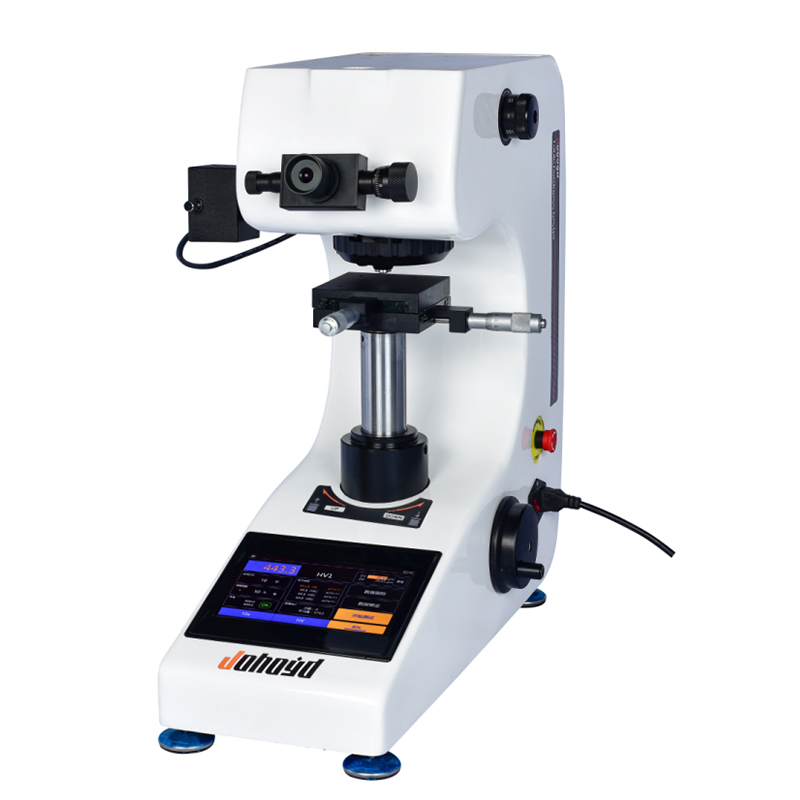
Hardness testers are indispensable tools in numerous industries where material durability, performance, and quality control are paramount. These instruments measure a material's resistance to permanent deformation, providing critical data for ensuring product reliability and safety across various sectors.
Manufacturing and Mechanical Engineering
In the manufacturing sector, hardness testers play a crucial role in quality control and process optimization. Automotive manufacturers rely heavily on these instruments to test engine components such as crankshafts, pistons, gears, and brake discs. The hardness of these parts directly affects vehicle performance, durability, and safety. Similarly, in aerospace manufacturing, hardness testers verify the integrity of aircraft components that must withstand extreme conditions, including engine parts, landing gear, and structural elements.
Metal Processing and Heat Treatment
The metal processing industry extensively uses hardness testers to monitor heat treatment processes. During quenching, tempering, and other thermal treatments, materials undergo significant changes in their mechanical properties. Hardness testing helps determine whether the heat treatment has achieved the desired hardness range, ensuring components possess the necessary strength, toughness, and wear resistance. This is particularly important for tools, dies, and machine parts that require specific hardness characteristics for optimal performance.
Materials Science and Research
Research institutions and universities utilize hardness testers to develop new materials and study material properties. These instruments help scientists understand how different compositions, microstructures, and processing techniques affect material hardness. From developing advanced alloys to studying nanomaterials, hardness testers provide quantitative data that guides material selection and optimization for specific applications.
Construction and Building Materials
In the construction industry, hardness testers assess the quality of concrete, stone, and other building materials. Concrete hardness correlates with its compressive strength, making hardness testing a non-destructive method for evaluating structural integrity. Similarly, stone hardness determines its suitability for flooring, countertops, and exterior cladding, ensuring materials can withstand wear and environmental exposure.
Plastics and Rubber Industries
The plastics and rubber sectors employ specialized hardness testers (such as Shore hardness testers) to evaluate polymer materials. These tests determine material flexibility, resilience, and wear resistance, which are critical for products ranging from automotive seals and tires to consumer goods and medical devices. Proper hardness ensures products meet performance specifications and safety standards.
Mining and Geology
Geologists and mining engineers use hardness testers to characterize rocks and minerals. The Mohs hardness scale, for example, helps identify minerals based on their scratch resistance. This information guides mining operations, mineral processing, and material selection for various industrial applications.
Quality Control and Compliance
Across all industries, hardness testers serve as essential quality control tools. They help manufacturers comply with international standards and specifications, prevent defective products from reaching consumers, and maintain consistent production quality. Regular hardness testing also supports predictive maintenance programs by identifying material degradation before failure occurs.
Key Industries and Applications of Hardness Testers
Industry | Why Hardness Matters | Common Tester Types |
|---|---|---|
Automotive | Safety and durability of engines, gears, and body panels | Rockwell, Leeb |
Aerospace | Structural integrity of special alloys and critical parts | Rockwell, Vickers |
Electronics | Thin-film and coating performance, microhardness | Vickers, nanoindentation |
Metals and Machining | Heat-treatment verification, tool life, QC pass/fail | Rockwell, Brinell, Vickers |
Construction Materials | Concrete and stone assessment, service life | Portable testers, Schmidt |
Rubber and Plastics | Elastic modulus, wear, sealing | Shore A/D, Durometer |
Coatings and Glass | Scratch and abrasion resistance, hardness of films/glass | Microhardness, Shore |
Oil and Gas, Energy | Pipeline, valve, and tool reliability | Leeb, Rockwell |
Medical Devices | Implants, instruments, and polymer parts | Shore, Vickers |
Mining and Minerals | Ore characterization and processing control | Portable testers |
These applications reflect how hardness testing underpins performance and market acceptance in global supply chains.
Emerging Applications
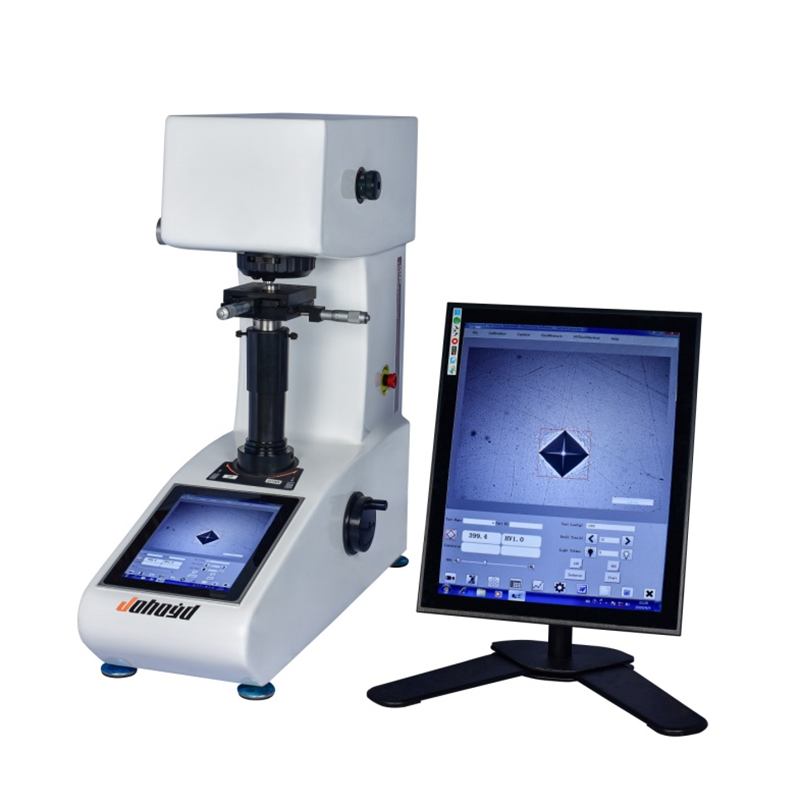
Recent technological advancements have expanded hardness testing applications into new areas. In the medical field, hardness testers evaluate biomaterials for implants and prosthetics. In electronics manufacturing, they test the durability of components and coatings. Even in archaeology and conservation, hardness testers help assess the condition of historical artifacts and determine appropriate preservation methods.
The versatility and reliability of hardness testers make them indispensable across diverse industries, from traditional manufacturing to cutting-edge research. As materials science continues to advance, the importance of accurate hardness measurement will only grow, driving innovation in both testing technology and material development.
SEO Keywords for Hardness Testers:
Hardness tester
Rockwell hardness tester
Brinell hardness tester
Vickers hardness tester
Portable hardness tester
Microhardness tester
Shore hardness tester