-
05-25 2026
Calibration Blocks For Hardness Testers: What Buyers Must Know
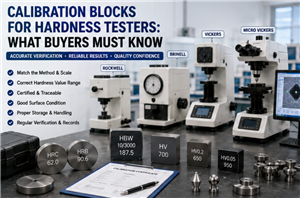
Calibration blocks are essential for reliable hardness testing. They help verify machine performance, detect abnormal readings, support daily quality checks, and strengthen customer confidence in test reports. The right block should match the hardness method, scale, value range, and certificate requirement. Buyers should avoid ordering generic “hardness blocks” without confirming the testing method and scale. Rockwell, Brinell, Vickers, Micro Vickers, Barcol, and Shore testing all require suitable references. Using the wrong block can lead to unreliable verification and quality disputes. For a complete QC system, calibration blocks should be purchased together with proper indenters, fixtures, maintenance procedures, operator training, and verification records. This creates a more stable and traceable hardness testing process.
-
05-19 2026
Hardness Tester Calibration Blocks: What Buyers Should Know Before Ordering
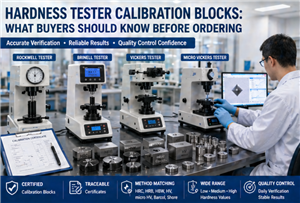
Hardness tester calibration blocks are small accessories, but they play a major role in measurement reliability. The right block helps verify tester performance, detect abnormal readings, support daily QC checks, and strengthen customer confidence in test reports. Buyers should confirm the hardness method, scale, value range, certificate, traceability requirement, surface condition, and block quantity before ordering. For laboratories using multiple hardness testers, each method should have suitable reference blocks. A complete hardness testing setup should include not only the machine, but also proper calibration blocks, indenters, fixtures, maintenance tools, software records, and operator procedures. This helps create a more stable and trustworthy quality control system.